Quartz furniture: table tops, coffee tables, consoles, desks and bar counters
Quartz started in the kitchen, but it has moved into the rest of the house. Designers now use it for coffee tables, consoles, study desks, bedside tables and home bars, because it gives the look of marble or concrete on a surface that shrugs off coffee rings, wine and ink. This guide covers where a quartz table top works, how thick it should be, how much it weighs, which edges and bases to choose, and how to look after it. For dining tables specifically, see our separate guide to quartz slab dining tables.
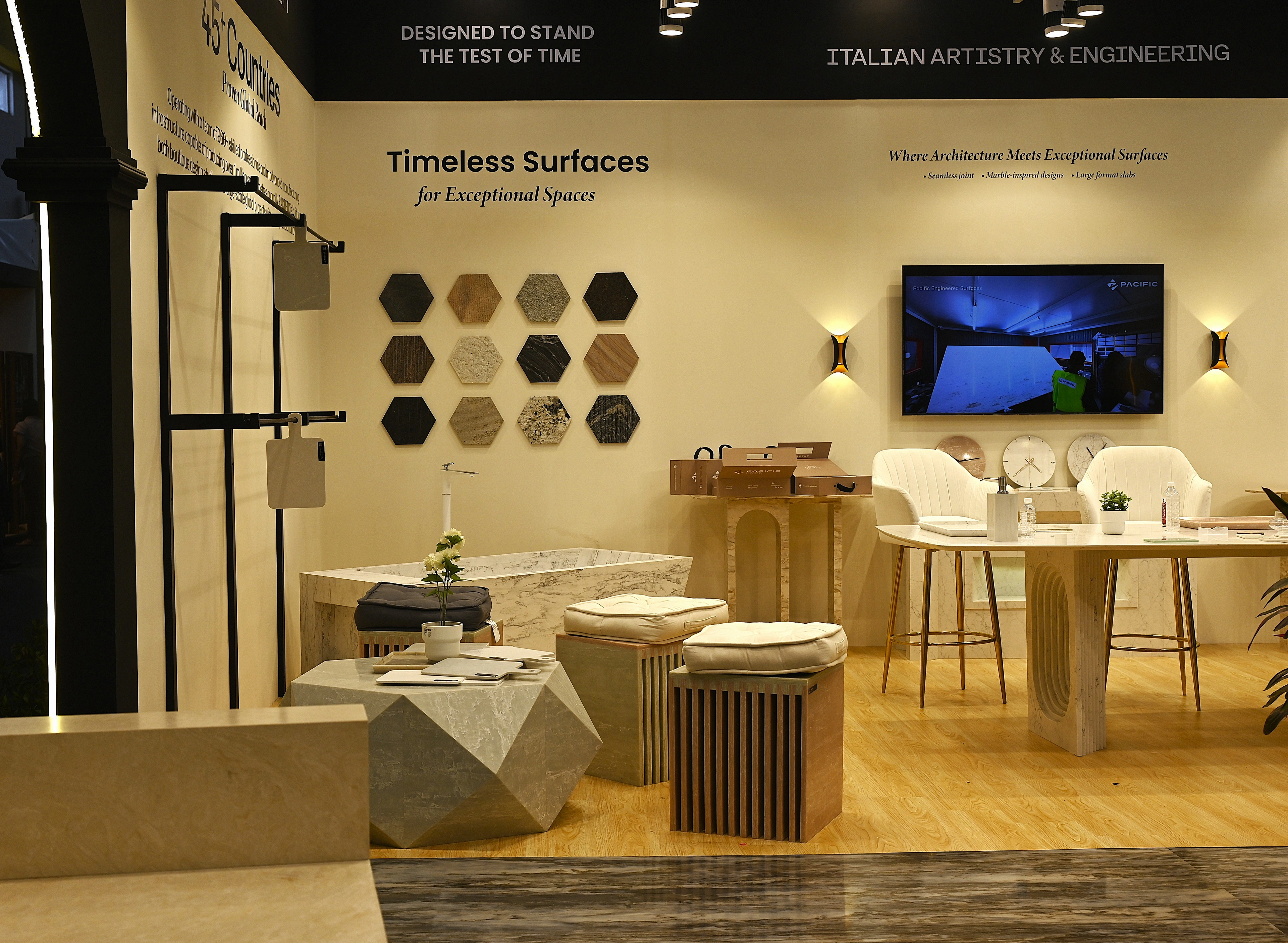
Why use quartz for furniture?
A table top takes daily abuse: mugs, glasses, keys, laptops, children's crayons. Quartz has very low porosity, so tea, coffee, wine and ink wipe off instead of soaking in. It needs no sealing, it resists scratches better than wood or glass, and it comes in finishes from glossy marble looks to soft matte concretes.
It also lets a room repeat a material. The same quartz on the kitchen island, the dining table and the living room console ties an open-plan home together.
Where quartz table tops work best
• Coffee tables. A round or rounded-rectangle top on a metal or wooden base. Rounded corners are kinder to shins and small children.
• Side and bedside tables. Small offcuts from a kitchen project are often enough, which keeps cost down.
• Console tables. A slim top on a hallway or behind-the-sofa console, often with a mitred edge so it looks like a solid block.
• Study and work desks. A matte quartz top is calm to work on and does not mind coffee or ink. Allow a cable cut-out if you need one.
• TV units. A long quartz top on a low unit, sometimes with a matching fluted panel behind the screen. See fluted quartz.
• Home bars and bar counters. Quartz handles wine, citrus and spills better than marble. Our HoReCa guide covers bar counters at commercial scale.
• Office furniture. Reception desks and conference tables in quartz look premium and stand up to heavy use.
How thick should a quartz table top be?
Most furniture uses 12 mm or 20 mm quartz.
• 12 mm is lighter and suits tops fully supported by a frame or cabinet: side tables, consoles and wall-hung desks. See our guide to 12 mm quartz slabs.
• 20 mm suits coffee tables, desks and bar tops with modest overhangs.
• 30 mm suits large tables and heavy, statement pieces.
To get a chunky look without the weight, a fabricator can mitre the edge: a strip of quartz is glued at 45 degrees under the edge so a 12 mm top looks 40 mm or more thick. More in our thickness guide.
How heavy is a quartz table top?
As a rough guide, 20 mm quartz weighs about 4.5 kg per square foot and 12 mm about 2.7 kg. A 4 ft by 2 ft coffee table top in 20 mm comes to roughly 36 kg. That is why the base matters.
Choosing a base
The base has to carry the weight without wobbling. Steel frames, solid wood legs, a single pedestal or a solid quartz waterfall base all work. Ask the fabricator how far the top can overhang its support; long unsupported overhangs need a hidden steel bracket.
For a waterfall coffee table or console, the top and side panels are cut from one slab and mitred so the veining wraps round the corner. Our kitchen island guide shows the same detail at a larger scale.
Edges
An eased or softly rounded edge suits homes with children. A bevelled or ogee edge suits classic interiors. A sharp mitred edge suits modern furniture. See our guide to quartz edge profiles.
Indoors only, mostly
Quartz furniture is made for indoor rooms. Long exposure to direct sun can fade some colours over time, so keep quartz tables out of full afternoon sun on balconies and terraces. For outdoor use, read granite or quartz for an outdoor kitchen; granite is often the better fit outside.
Care
Wipe with a soft cloth and mild soap. Use coasters under very hot cups or pots, and a mat under a hot laptop charger brick if it sits in one place all day. Avoid bleach, acids and scouring pads.
Get a quartz table top made
Pacific supplies slabs to fabricators and furniture makers across India and in more than 45 countries. Browse the quartz range, find a dealer on Where to Buy, or send us your design for a quote. Architects and furniture brands can also reach our professionals team.
FAQs
Is quartz good for table tops?
Yes. Quartz resists stains and scratches, needs no sealing and comes in marble, concrete and solid looks.
What thickness is best for a quartz coffee table?
20 mm is a good default. 12 mm works on a fully supporting frame, and a mitred edge can make it look much thicker.
How heavy is a quartz table top?
About 4.5 kg per sq ft at 20 mm and about 2.7 kg per sq ft at 12 mm, as a rough guide.
Can I put a hot cup on a quartz table?
A normal cup of tea or coffee is fine. Use a trivet for hot pans and very hot serving dishes.
Can quartz furniture be used outdoors?
It is best kept indoors. Long, direct sun can fade some colours; granite usually suits outdoor furniture better.