Quartz countertop thickness: 12 mm, 20 mm or 30 mm?
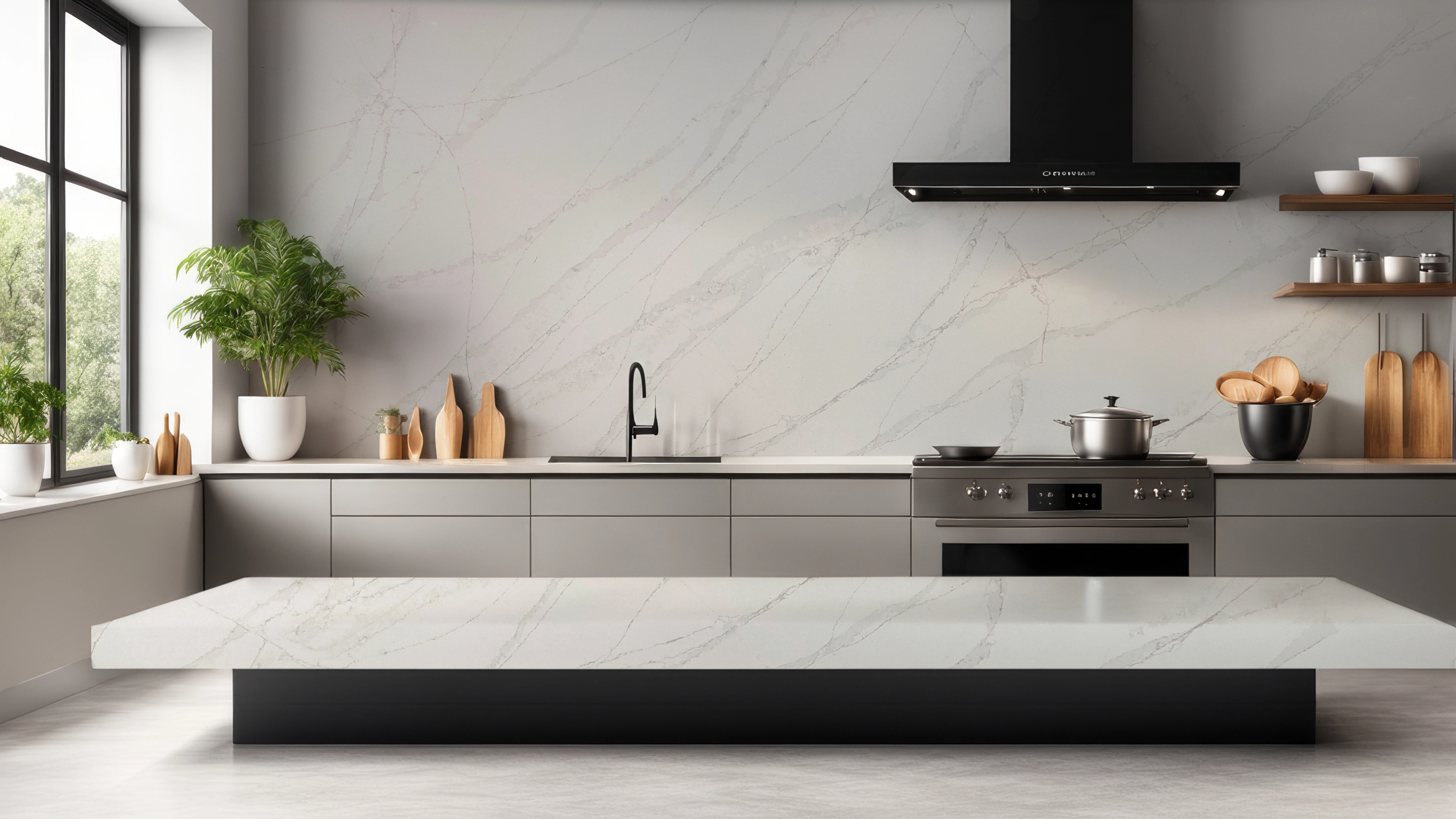
Once you've picked a colour, the next question your fabricator will ask is how thick you want the slab. It sounds like a small detail, but thickness changes how strong a counter is, how heavy it is, how much it costs and how it looks from the side.
Pacific quartz slabs come in three thicknesses: 12, 20 and 30 mm, depending on the design. This guide explains where each one fits, so you can choose with confidence.
The three thicknesses at a glance
12 mm is the thinnest. It is light enough to fix to a wall, which makes it the usual choice for backsplashes, wall cladding and shower walls. It can also be laid over an existing counter to give an old kitchen a new top without tearing anything out.
20 mm is the standard for quartz countertops. It is strong enough for daily cooking, light enough to fit easily, and the thickness most fabricators work with. For most kitchen platforms, it is the sensible default.
30 mm is the heavyweight. It gives a solid, generous edge and carries overhangs and long spans with less support. It is often used on islands and statement counters where the edge is seen from every side.
Which thickness for which space
Kitchen platform
For the main kitchen platform, 20 mm is the right choice for almost every home. It handles chopping, rolling, heavy vessels and the daily knocks of Indian cooking, and it sits well on standard base cabinets. Go to 30 mm if you want a heavier look, or if the platform has long unsupported stretches over a dishwasher or an open shelf. Our guide to quartz countertops for Indian kitchens covers finishes and care for quartz kitchen countertops too.
Kitchen island
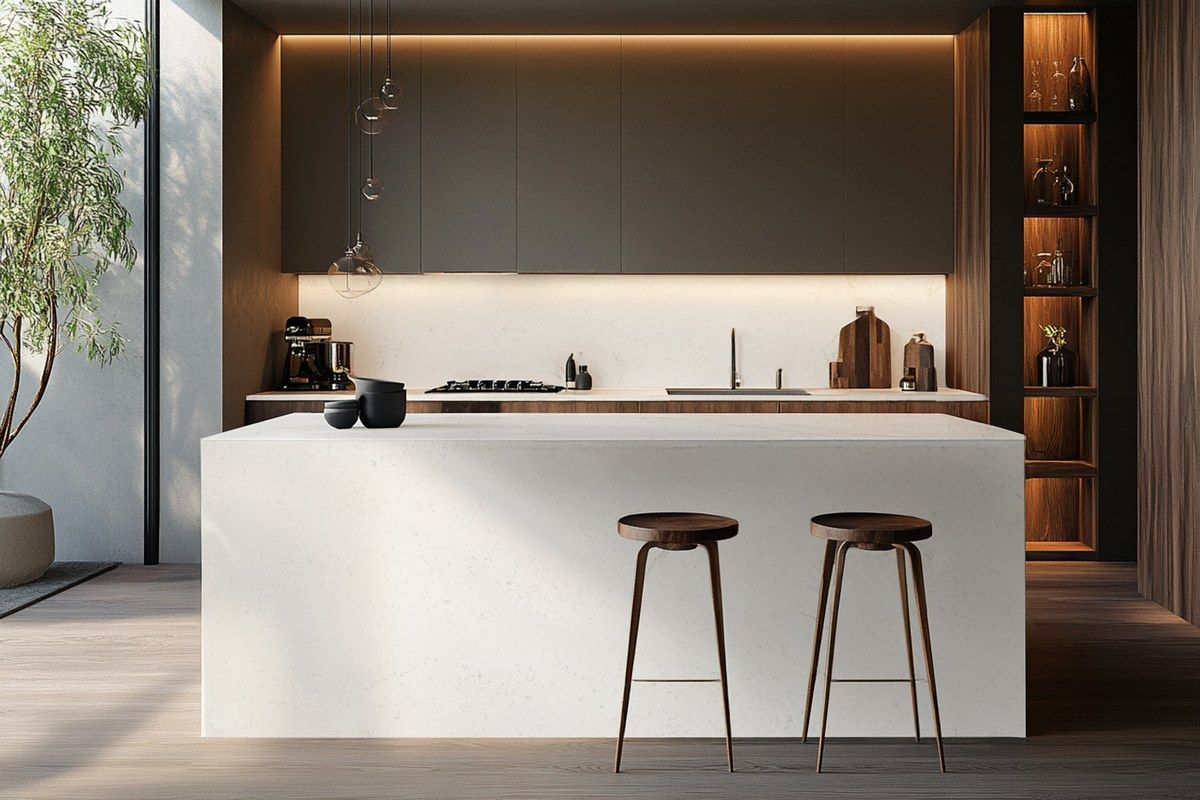
An island is seen from all sides, so its edge matters more than anywhere else. 30 mm gives the island a solid, architectural look and carries a seating overhang well. A 20 mm slab with a mitred edge can look just as thick at lower weight. Our guide to kitchen island ideas in quartz explains overhangs and waterfall ends.
Bathroom vanity
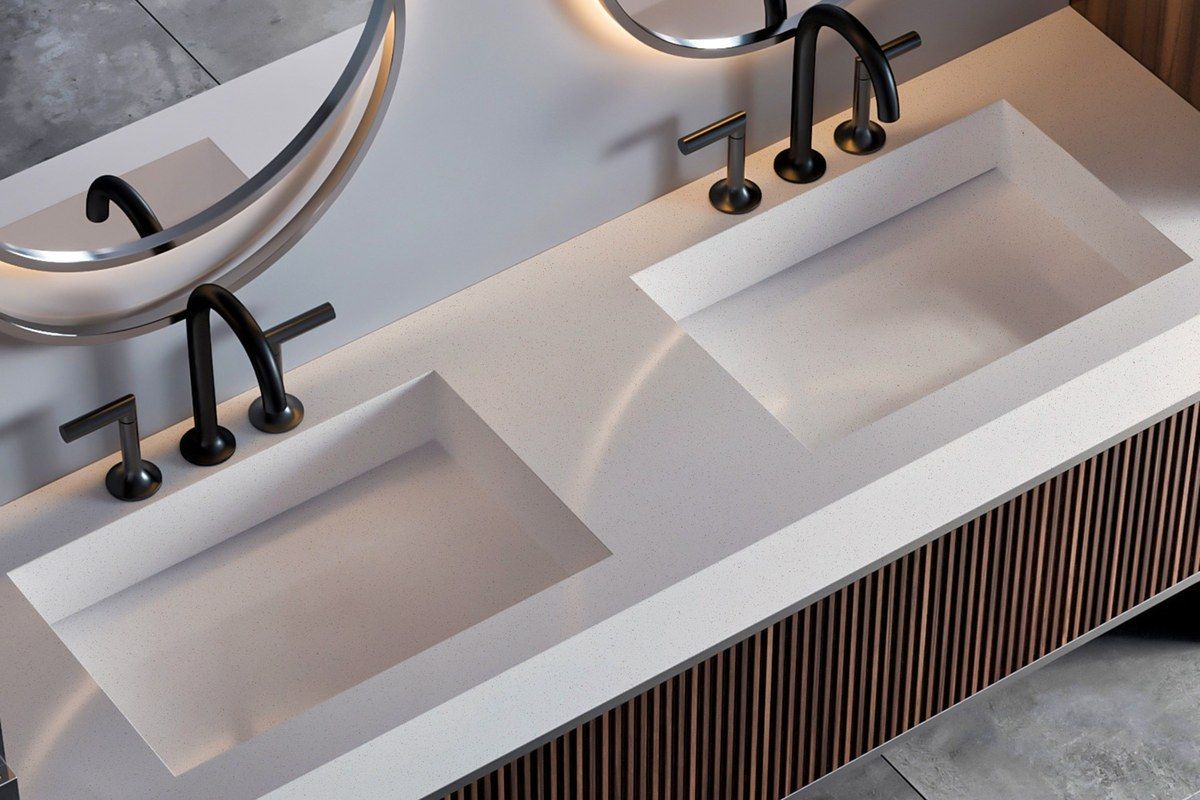
For a quartz bathroom vanity top, 20 mm is the usual choice. It is strong enough to support an undermount or integrated basin, and it keeps the vanity from looking bulky in a smaller bathroom. Use 12 mm only on a fully supported top.
Walls, backsplashes and showers
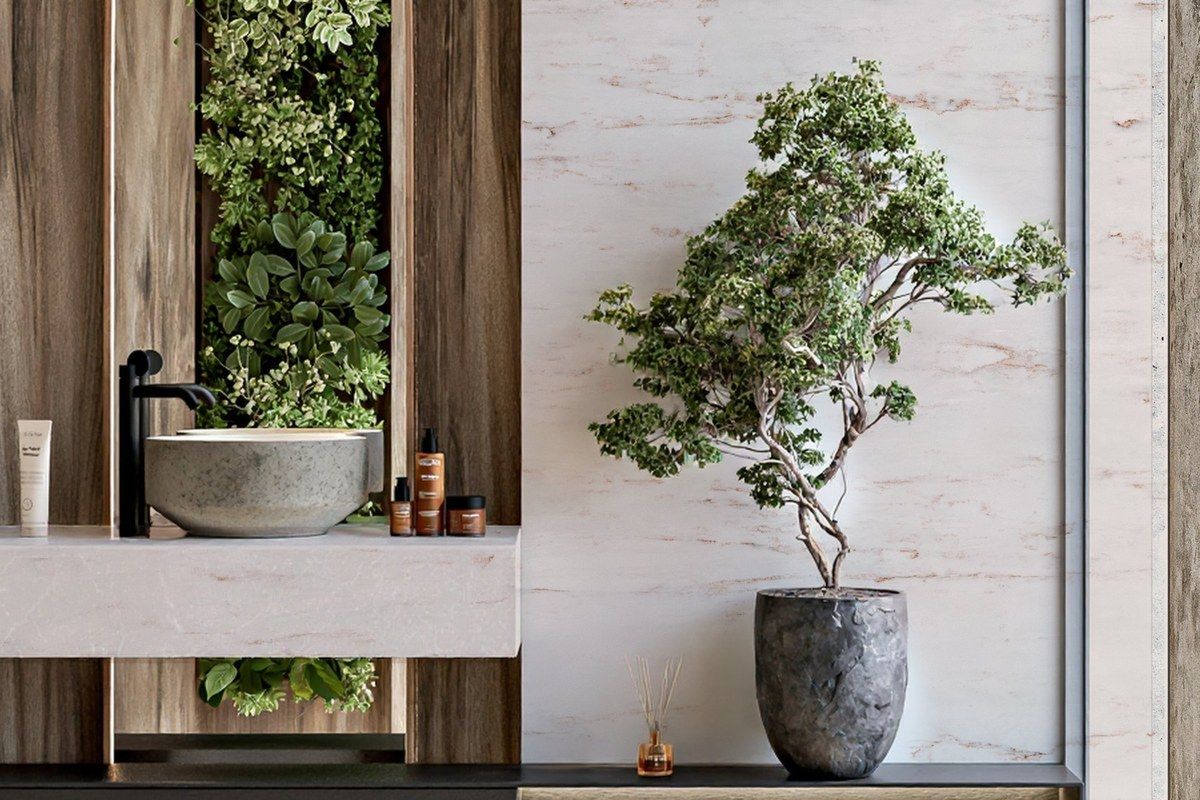
Quartz wall cladding and backsplashes are almost always 12 mm. The thinner slab weighs much less, so it is easier to fix securely to a wall and puts less load on the structure. For a backsplash that continues straight up from the counter, choose the same design so the colour and pattern carry through.
Window sills and thresholds
A quartz window sill usually works in 20 mm, which is strong enough for plant pots and the odd knock. A threshold that takes foot traffic is better in 20 mm or 30 mm, depending on the floor levels either side.
Refreshing an old counter
If your existing granite or tile counter is sound but dated, 12 mm quartz can be laid directly over it. It is quicker and less messy than a full replacement, and your fabricator will check the base is level and strong enough first. We wrote more about this in 12mm quartz slabs.
Thickness and edges
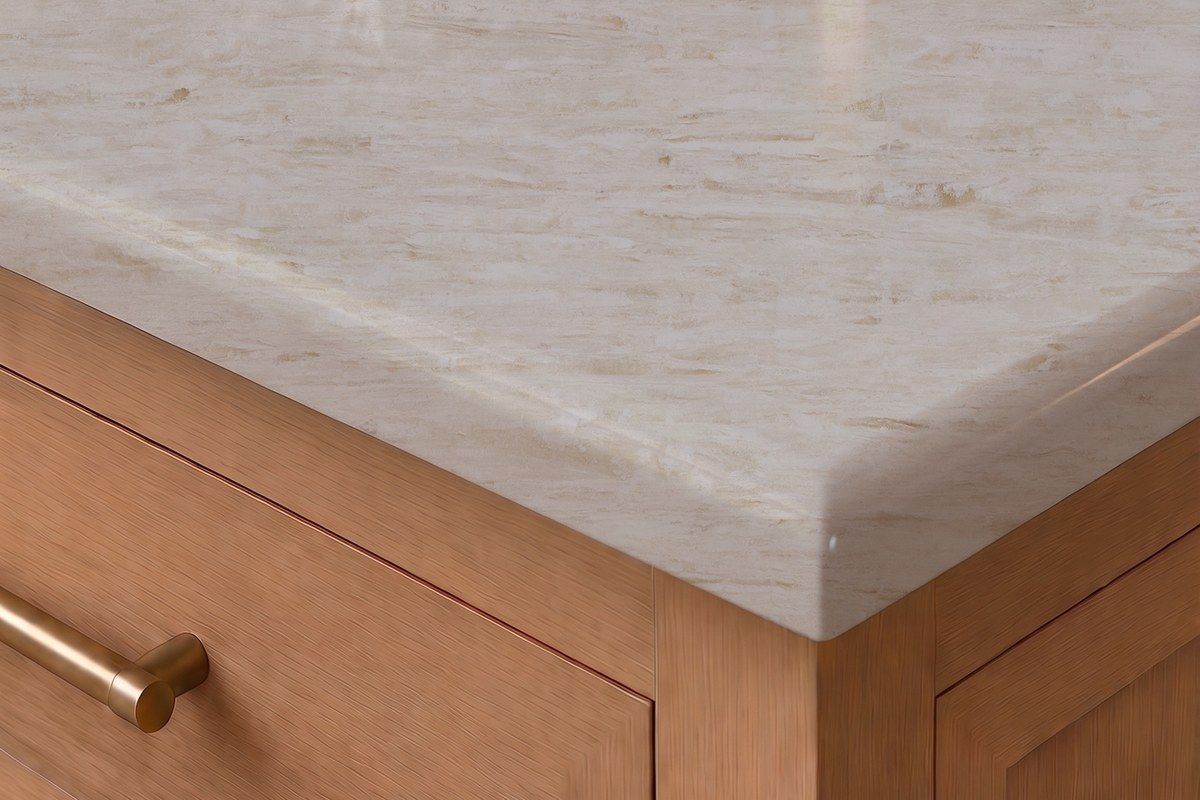
The edge you choose changes how thick a counter looks. A mitred edge, where a strip of the same slab is joined at 45 degrees, can make a 20 mm counter look 40 mm or more without the weight or cost of a thicker slab. Rounded profiles such as bullnose and ogee need enough depth to be shaped, so they suit 20 mm and 30 mm better than 12 mm. Our guide to quartz countertop edge profiles shows each option.
Thickness and weight
Quartz stone is dense. As a rough guide, a square metre of 12 mm quartz weighs around 30 kg, 20 mm around 50 kg and 30 mm around 70 kg. That matters for walls, where lighter is safer, and for long or cantilevered counters, which need the cabinets and supports to carry the load. Your fabricator will check this, but it helps to know why they might suggest one thickness over another.
Thickness and cost
Quartz price rises with thickness, because a thicker slab uses more material and is heavier to move and fit. When you compare quartz slab price per sq ft between options, compare the same thickness. A 20 mm slab with a mitred edge often costs less than a full 30 mm slab while giving a similar look.
Slab size affects cost too. A super jumbo quartz slab lets a long kitchen platform or island be cut from one piece, saving joints and offcuts. Our guide to jumbo quartz slabs explains how quartz slab size and thickness work together.
Quick guide
- Kitchen platform: 20 mm, or 30 mm for a heavier look
- Kitchen island: 30 mm, or 20 mm with a mitred edge
- Bathroom vanity: 20 mm
- Walls, backsplashes and shower walls: 12 mm
- Window sills: 20 mm
- Thresholds: 20 or 30 mm
- Overlay on an old counter: 12 mm
Not every design is made in all three thicknesses, so check the design you like before you plan your kitchen counter design around it.
Get it right first time
The right thickness depends on your layout, your cabinets and the look you want. Show your fabricator or dealer a drawing of the kitchen and they can recommend a thickness for each part of it. To see slabs in person, find a dealer near you, or send us your layout and we will help you choose.