The finishing touch: exploring quartz countertop edge profiles
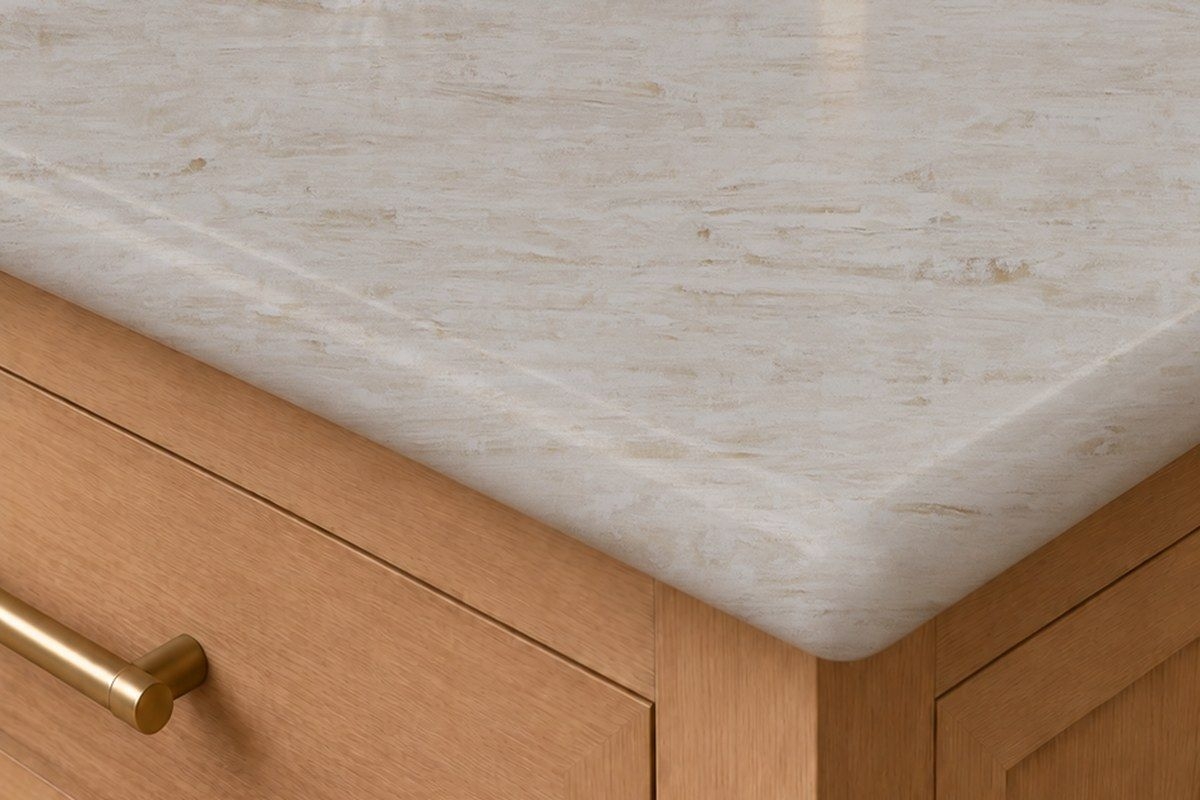
Most of the thought that goes into a counter goes into its colour. The edge gets decided in a minute at the fabricator's, and then you touch it, lean on it and wipe it every day for years.
The edge profile changes how thick a counter looks, how it feels against your hip, how well it survives a dropped pan and how easy it is to clean. On quartz kitchen countertops it is also the only place you see the slab in cross-section.
Pacific offers four edge profiles: bullnose, ogee, bevel and mitred. Below is what each one looks like and the kind of kitchen it suits.
Bullnose edge
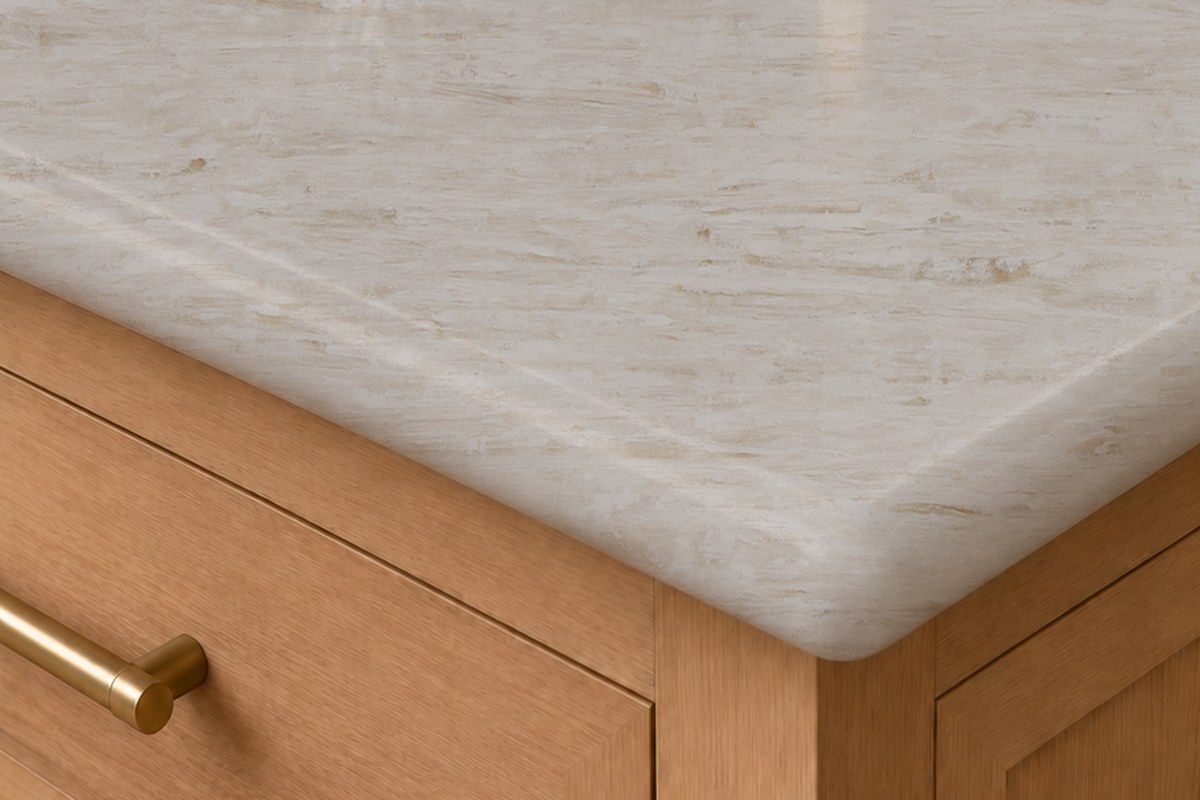
A bullnose edge is rounded from top to bottom, like the nose of a bull, which is where the name comes from. There are no corners to bump into, so it is the gentlest edge on hips and the safest around small children. With no sharp line to knock, it is also the edge least likely to chip.
The soft curve suits a relaxed, family kitchen and a pale slab. On white quartz countertops it reads clean and calm. One thing to know: a spill on the counter will run over a rounded edge more readily than over a square one, so keep a cloth handy at the front of the platform.
Ogee edge
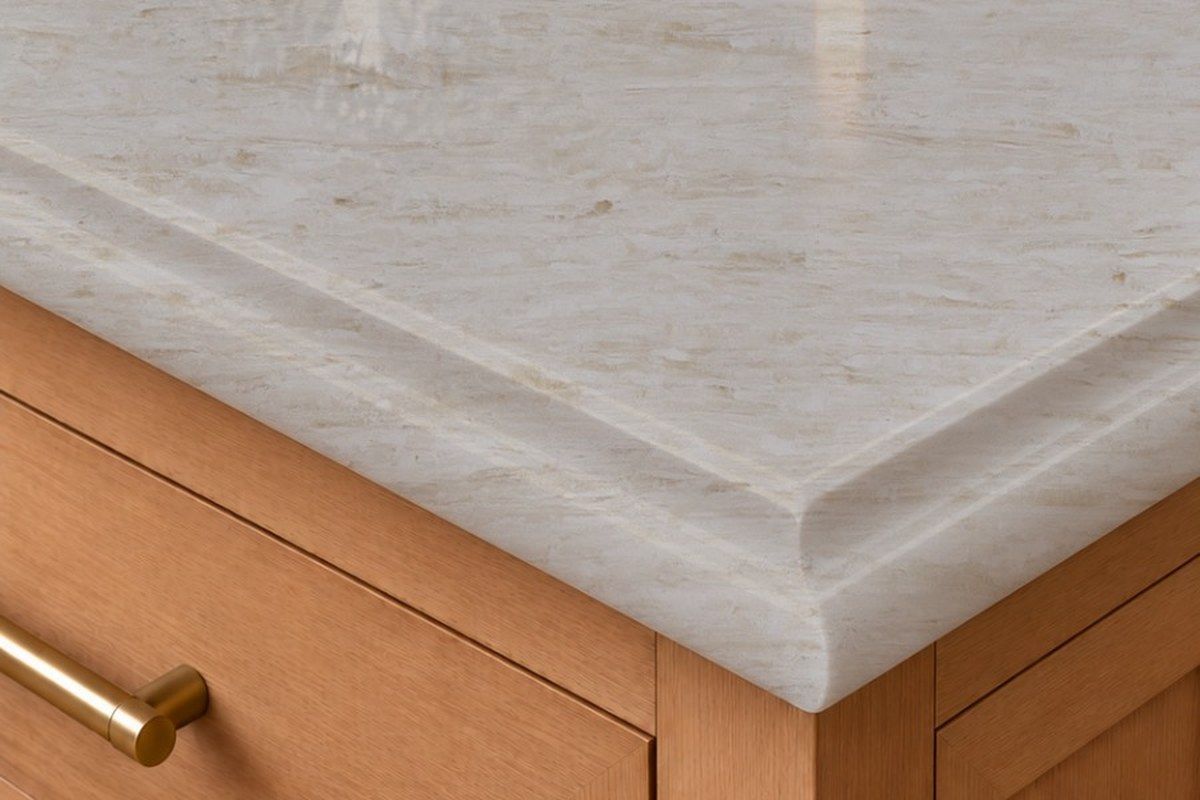
An ogee edge has an S-shaped curve: a concave cut that flows into a convex one as it drops from the top surface. It is the most decorative of the four and has a long history in furniture and architecture.
Ogee suits a classic or traditional kitchen, a kitchen with panelled or moulded shutters, or a home where the counter should feel crafted rather than minimal. Because the profile has more shape to it, it takes more fabrication work, and the curve needs a careful wipe so crumbs don't collect in it.
Bevel edge
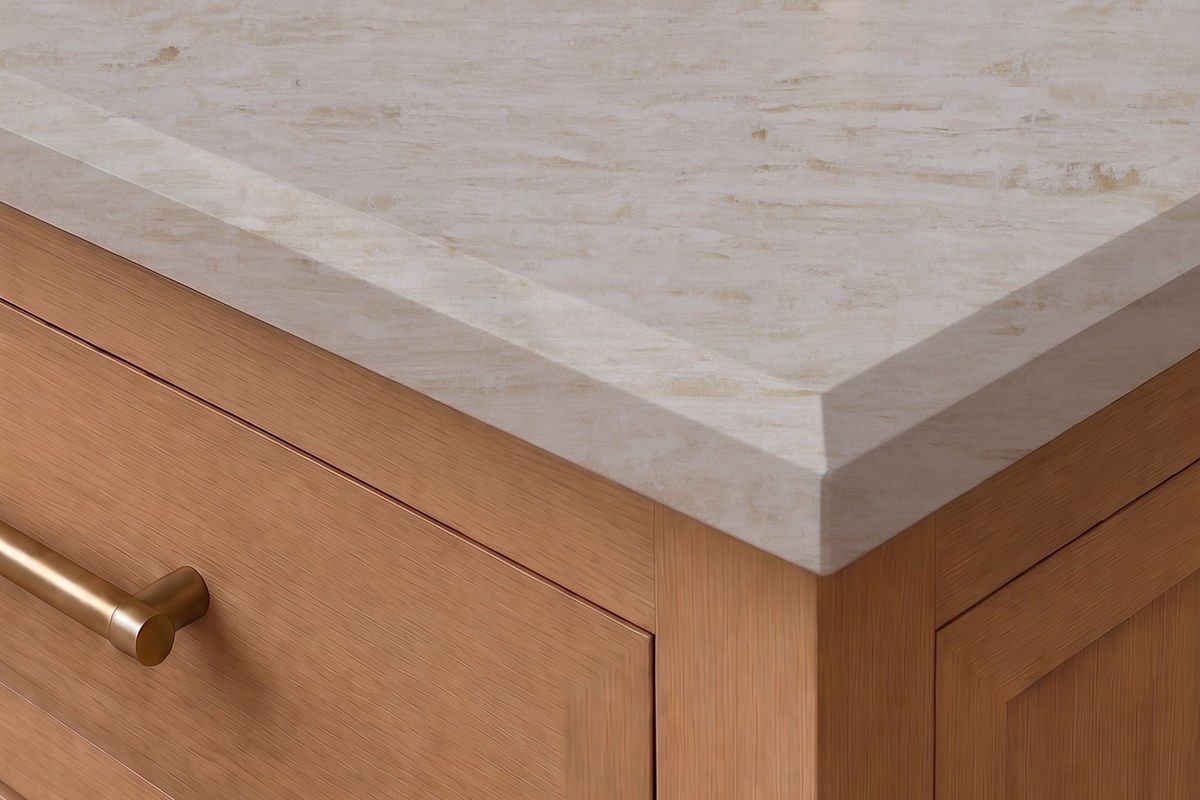
A bevel edge is cut at an angle along the top, taking the sharp corner off and leaving a narrow sloping face. It keeps the counter looking crisp and modern while softening the corner just enough to make it more comfortable and less prone to chips than a plain square edge.
The bevel catches light along its angled face, which outlines the counter nicely on darker slabs and on long, straight runs of quartz kitchen worktops. It suits contemporary kitchens with handleless or flat-panel shutters.
Mitred edge
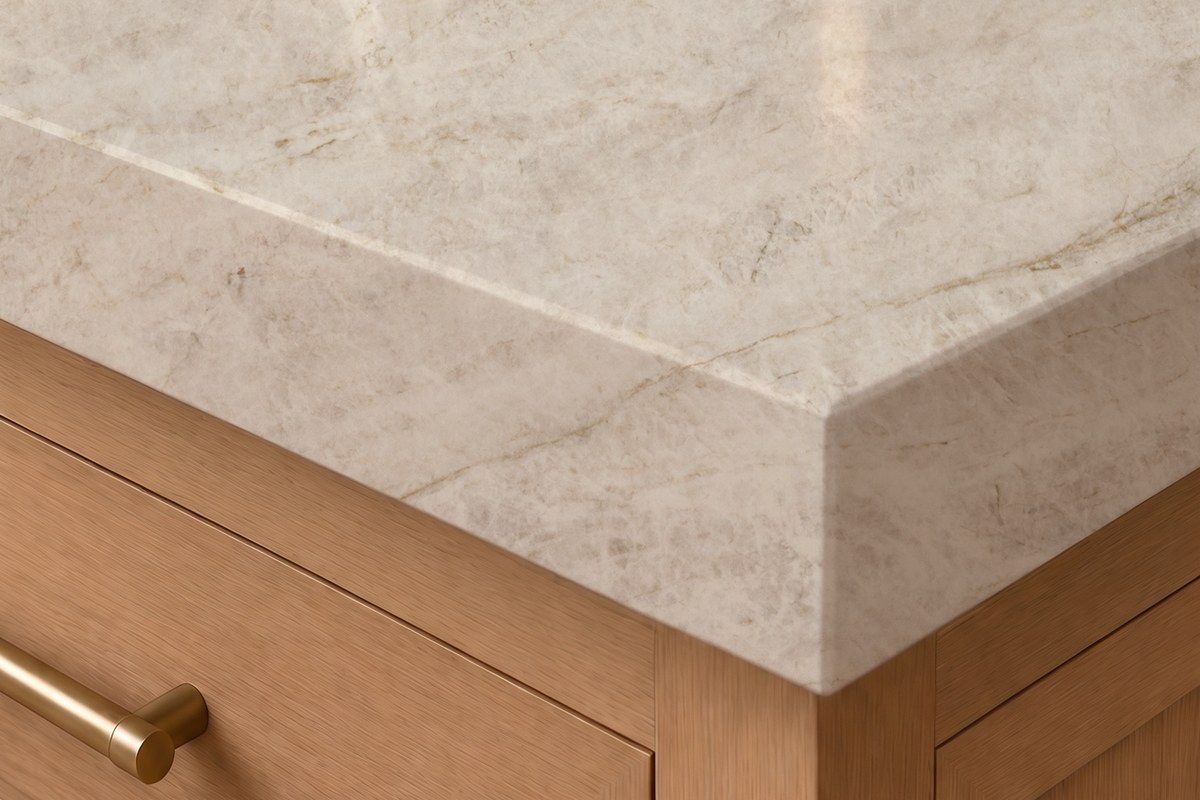
A mitred edge is made by cutting a strip from the same slab and joining it to the front of the counter at 45 degrees. The join sits on the corner, so the counter looks like one thick block of stone. A 20 mm slab can be made to look two or three times as deep, without the weight or cost of a solid slab that thick.
Because the strip comes from the same slab, the pattern carries over the corner and down the face. That is why the Eclipse collection, our marble-look series, is made with a mitred edge only. Its veining is the point of the design, and a mitre lets each vein run unbroken from the top surface down the front. Any other profile would cut through the veins at the edge.
Mitred edges are a popular choice for islands, where the edge is seen from every side, and for waterfall ends, where the slab turns down to the floor.
How to choose
Start with the people who use the kitchen. With young children at counter height, a bullnose edge removes the hard corner. In a busy kitchen where pans get dropped, a bullnose or bevel holds up better than anything with a crisp point.
Then look at the style of the room. Flat, handleless shutters and a minimal quartz kitchen sit well with a bevel or a mitre. Panelled shutters and brass fittings suit an ogee. If you have chosen a heavily veined slab for an island, a mitred edge shows it off best, and on Eclipse designs it is the only option.
Thickness matters too. Our quartz slabs come in 12, 20 and 30 mm, depending on the design. Rounded and shaped profiles need enough depth to be cut into, while a mitre adds depth to a thinner slab. Your fabricator will tell you which profiles work with the thickness you've chosen. For more on thickness and finish, read our guide to quartz countertops for Indian kitchens.
Caring for the edge
All quartz engineered stone countertops are cleaned the same way, edge included: neutral soap, a damp microfiber cloth, then a dry wipe. Pacific quartz does not stain, so turmeric or oil that runs over the edge wipes off. The edge is still the part most likely to take a knock, so avoid banging heavy vessels against it. Our care guide covers the full routine.
Edges on granite
The same four profiles can be cut on granite kitchen countertops too. Natural stone varies through its depth, so on a kitchen granite slab the edge can look slightly different from the top surface. With kitchen quartz countertops the colour runs through, so the edge matches the face.
See it before you decide
An edge is easier to judge in person than on a screen. Ask your fabricator for an edge sample in the slab you have chosen, and run your hand along it. To try a kitchen top quartz design in your own space first, upload a photo to our Visualizer. When you are ready, find a dealer near you or request a sample from the quartz company that makes the slab.