Quartz countertops for Indian kitchens: thickness, finishes and care
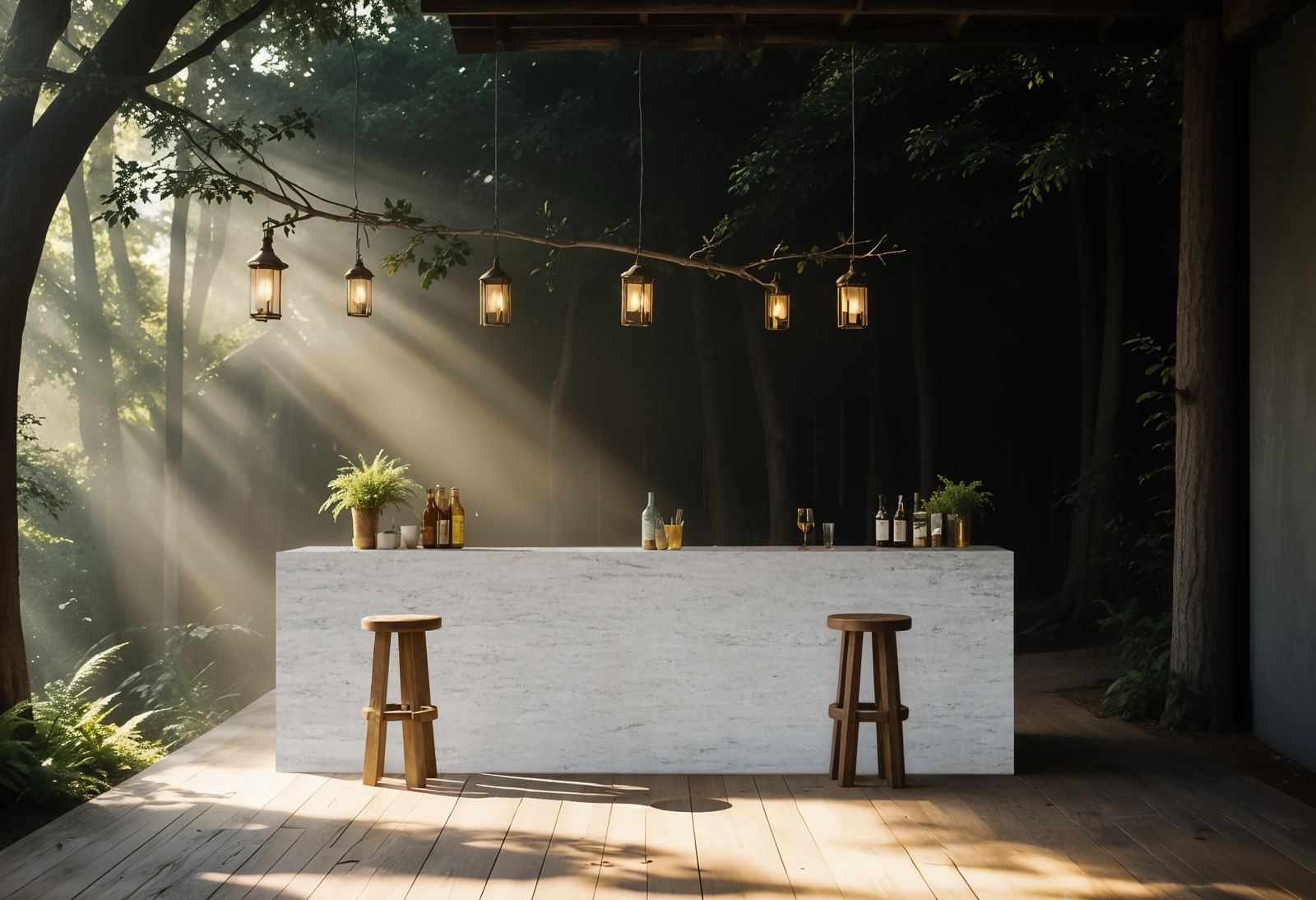
An Indian kitchen asks more of its counter than most. Tadka splutters, haldi travels, a pressure cooker hisses three times before breakfast, and the platform takes all of it, every day, for years. Choosing the surface is one of the few kitchen decisions you live with long after the paint and the fittings have changed.
Quartz countertops have become the considered choice for homes that cook seriously and still want the kitchen to look composed. This guide covers the three things that decide how a quartz counter performs: its thickness, its finish and the way you care for it.
Why quartz suits the way India cooks
A Pacific quartz slab is about 93% natural quartz, bound with a small amount of resin and pigment. The mix is pressed under vacuum on our Bretonstone lines in Hosur, which drives out the air and packs the quartz grains tightly together.
That density is the whole point. The surface has no pores for oil, turmeric or tea to settle into, so a spill stays on top until you wipe it away. It resists scratches from everyday utensils, and it does not need the periodic sealing that natural stone asks for. Our quartz is also certified to NSF/ANSI 51 for food contact, so rolling rotis or resting cut fruit directly on the counter is fine.
Choosing the right thickness
A quartz slab from Pacific comes in 12, 20 or 30 mm, depending on the design. Each has its place in a kitchen.
- 12 mm suits backsplashes, wall panels and new tops laid over an existing counter. It is light enough for walls, and on a counter it needs full support underneath.
- 20 mm is the everyday kitchen platform and works for most L- and U-shaped layouts. It is the standard most fabricators work with, and the best balance of strength and cost.
- 30 mm is for islands, breakfast counters and statement edges. It reads as solid and generous, and carries an overhang for bar stools more comfortably.
For most Indian homes, 20 mm is the sensible default for the main platform. Thirty millimetres comes into its own on an island, where the edge is seen from every side. And if you are renovating without tearing out an old granite or tiled counter, 12 mm over the top can be the quickest route to a new kitchen slab. We wrote more about that format in 12mm quartz slabs; ask your fabricator to check the base before committing.
Size matters too. Our largest slabs run up to 3,480 × 2,007 mm, which lets a long platform or island be cut from one piece with fewer joints.
Edges
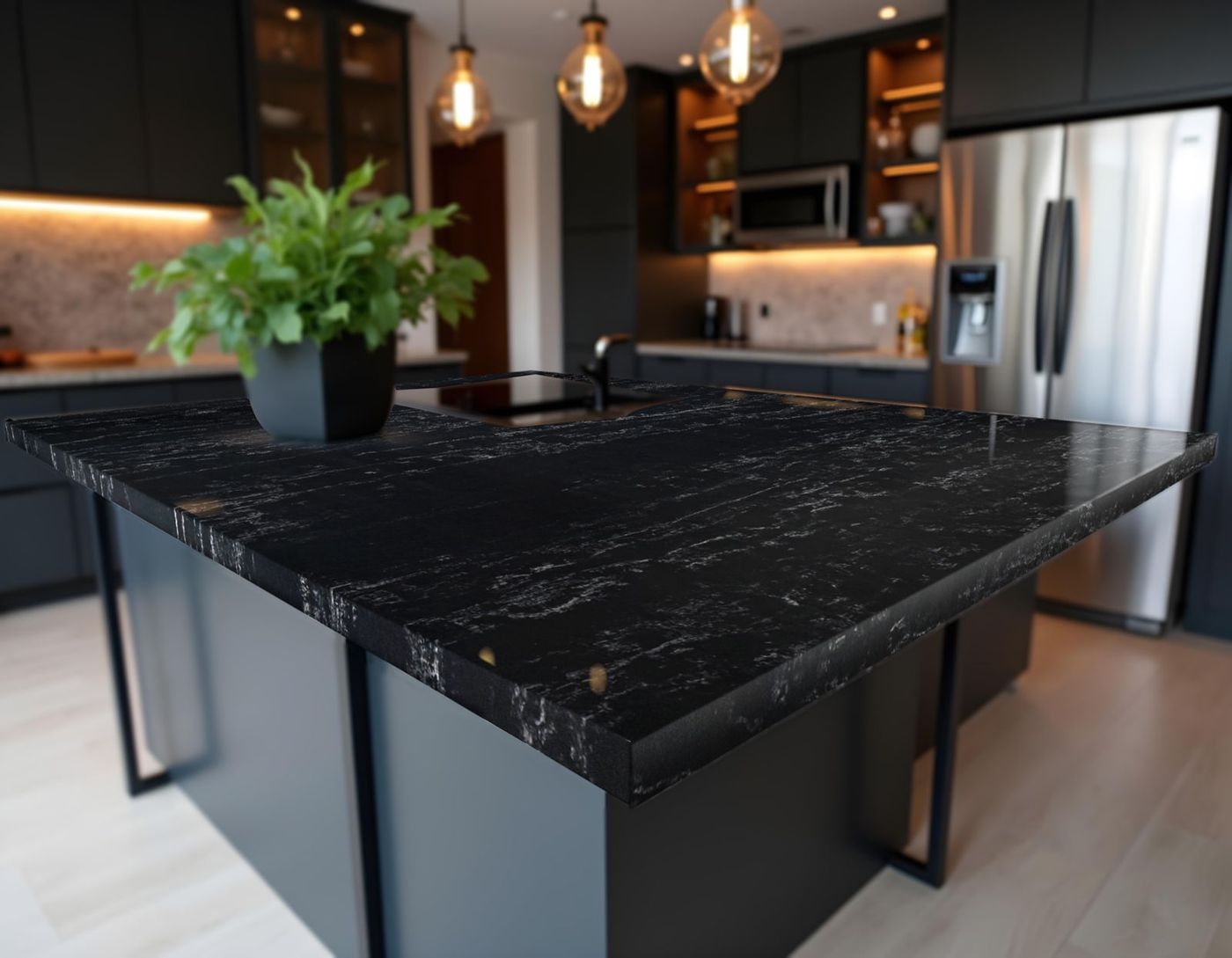
The edge profile changes how thick a counter looks. A straight, eased edge feels modern and clean. A bevelled or rounded edge is kinder on hips and small children in a busy kitchen. A mitred edge, where a strip of the same slab is joined at 45 degrees, makes a 20 mm counter look like a 40 mm one without the weight or cost of a thicker slab. Your fabricator will show you the profiles they can cut.
Finishes and how they live
The finish is the part of the counter you touch most, and it changes the character of the whole kitchen. Most Pacific designs are made in polished, matte, suede and velvet finishes, though availability varies by design.
- Polished is the classic. It deepens colour and veining and reflects light around the room, which helps in a compact Indian kitchen with a single window. Water marks and fingerprints show a little more, so a quick wipe after cooking keeps it at its best.
- Matte has a soft, low-sheen surface that feels contemporary and calm. It hides fingerprints well. Because the surface is a touch more textured, oil from a busy evening is easier to see, so clean up on the same day.
- Suede and velvet are textured finishes with a tactile, almost leathered feel under the hand. They suit darker slabs and warmer schemes, and they give a counter the quiet luxury of honed natural stone.
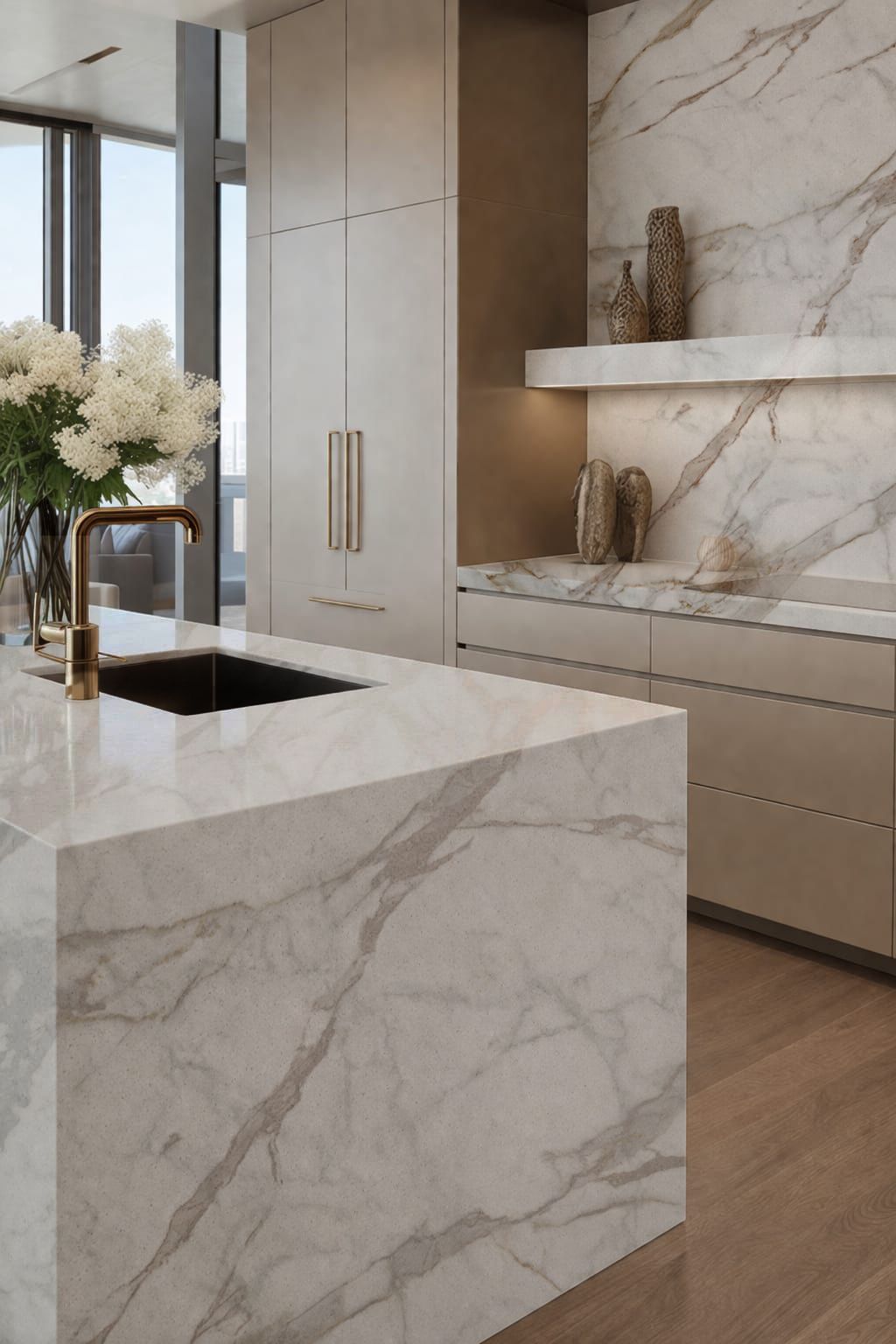
One practical rule: the darker the slab, the more a matte or textured finish will flatter it day to day. On white quartz and pale marble looks, polished is usually the most forgiving.
Colour, sink and layout on the kitchen platform
A kitchen platform in India is often long and narrow, with the hob, the sink and the prep space sharing one run. Colour has to work across all three.
White quartz opens up a small kitchen and pairs with almost any cabinet. Many families still hesitate over marble for kitchen counters, worried about the stains a white natural stone collects. A marble-look quartz from our Eclipse collection gives the veining without that worry. Mid-tones and darker slabs hide the small marks of daily cooking near the hob, which is why some homes choose a darker platform and a lighter island.
The sink is where a counter is tested most. An undermount sink lets you sweep crumbs and water straight in, and it keeps the counter edge clean. For a single, continuous kitchen slab, our Integra quartz sinks are made from the same material as the counter, so the two read as one piece.
Still deciding on the best stone for kitchen slab work overall? We set the two most popular choices side by side in quartz vs granite for Indian kitchens. To see a design in your own space before you choose, upload a photo to our Visualizer.
Caring for quartz countertops
Quartz is easy to keep, and a few habits keep it looking new for decades.
Every day wipe the counter with a soft cloth, warm water and a few drops of mild dish soap, then dry it. That is all most kitchens need.
Turmeric, oil and tea. Wipe spills the same day. Because the surface is non-porous, stains sit on top rather than soaking in, and a non-abrasive cleaner lifts anything that has dried. Avoid scouring powder and steel wool, which can dull a polished finish.
Heat. Quartz handles the warmth of daily cooking, but the resin that binds it does not like direct, sustained heat. Put a trivet under a kadai or pressure cooker straight off the flame, and keep the tawa off the counter.
Chemicals and blades. Keep bleach, paint thinner and oven cleaner away from the surface. Use a chopping board; the quartz will survive the knife, but the knife will not survive the quartz.
Our quartz care guide covers stubborn marks in more detail, and every Pacific slab carries a lifetime warranty.
A word on quartz price
Quartz price for a kitchen depends on the design, the thickness, the finish and the amount of fabrication: edge profiles, sink and hob cut-outs and installation. A 30 mm island with a mitred edge will cost more than a 20 mm straight platform in the same colour. For a figure on your kitchen, send us your layout and the designs you like.
Before you choose
Bring a sample home. Hold it against your cabinet shutters and flooring in morning and evening light, and spill a little haldi on it if you like. A counter should earn its place in your kitchen, and we are happy to send you the samples to prove it. Request yours here.