Quartz countertops for restaurants and cafés: a HoReCa guide to counters, tables and bars
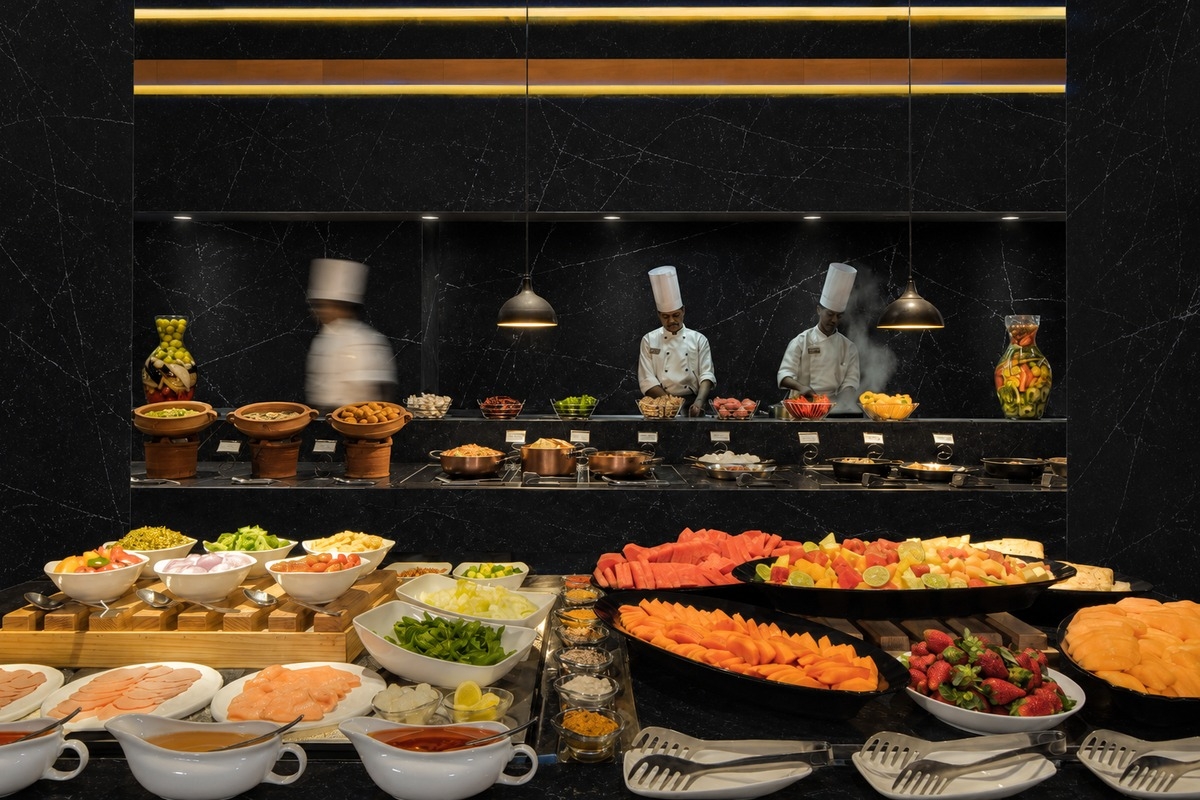
A busy restaurant counter sees more spills in one evening than most home kitchens see in a month. Coffee, wine, curry, sauces and syrups land on it, trays slide across it, and it gets wiped down between every rush. In hotels, restaurants and cafés, the HoReCa trade, the surfaces have to stay clean and good-looking through all of it, with no time off for repairs.
That is why quartz countertops are a popular choice for restaurants and cafés. This guide goes zone by zone through a restaurant or café, from the service counter to the washroom, and explains how to specify quartz for busy service.
Why quartz suits restaurants and cafés
Quartz engineered stone is pressed under vacuum into a dense slab made mostly of natural quartz. For a food and beverage business, that brings practical benefits:
- It is food safe. Is a quartz countertop safe for food service? Pacific Surfaces quartz is certified to NSF/ANSI 51 for food contact, the standard used for materials in food equipment.
- It doesn't stain. Water absorption is below 0.03% (EN 14617-1) and stain resistance is rated "not affected" (ASTM C1378), so coffee rings, red wine and turmeric wipe away.
- It handles daily wear. A Mohs hardness of 6.5 to 7.5 means trays, cutlery and glasses don't scratch it.
- It never needs sealing, so there is no downtime for maintenance between services.
- It looks the same in every outlet. Because quartz is made to a set design, a chain can use the same counter in every café.
Service counters and live kitchens
The service counter is where customers order, pay and pick up, and it is the first thing they see. A quartz counter there looks sharp under bright lights and stays clean through the day's rush.
For live kitchens, buffets and open counters, quartz works on the counter top, the front panels and the wall behind, so the whole station reads as one piece. In the hotel restaurant above, black Alabaster Noir quartz runs across the live counter and up the walls, and food stations sit on it all day. Keep induction hobs and chafing dishes on proper stands or trivets, and the quartz stays looking new.
Café counters often double as display cases for cakes and pastries. Quartz is safe for direct food contact, so pastries can be served and plated straight on the counter.
Bar counters
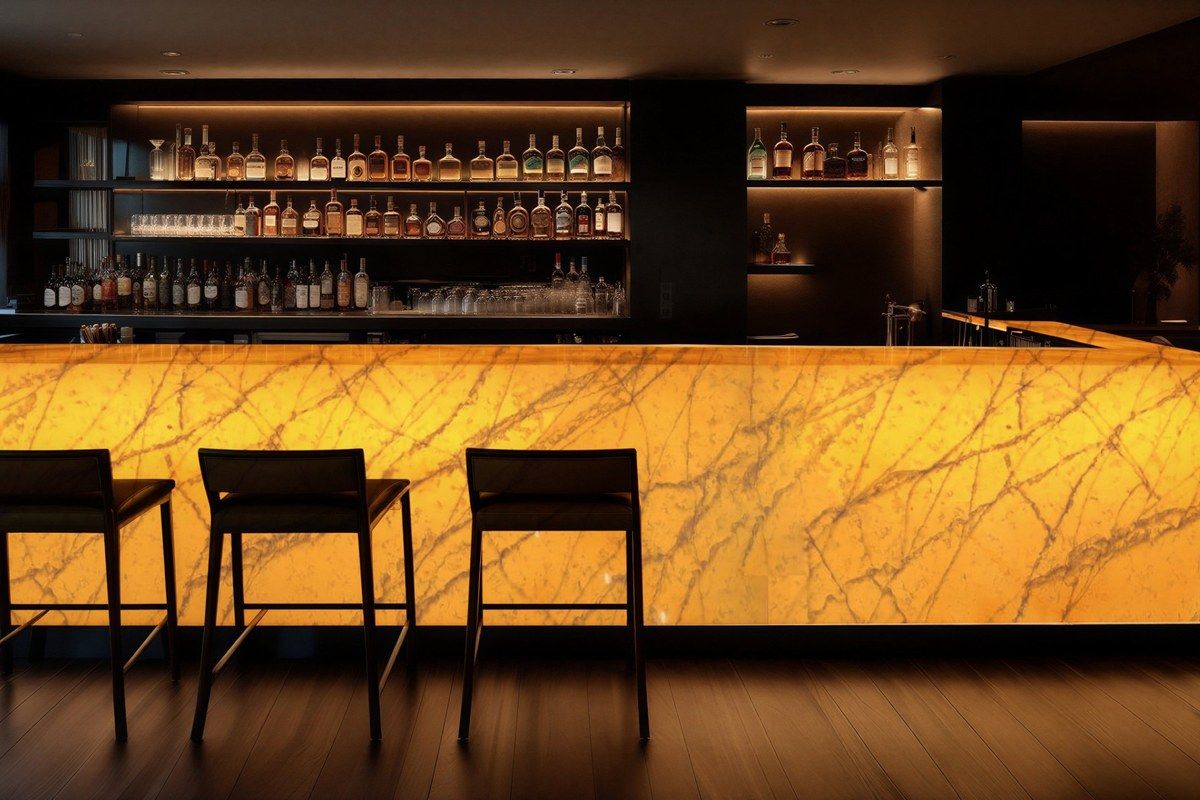
A bar top takes wine, citrus, sugar syrups and constant wet glasses. Marble etches under lemon and lime, and wood swells with water. Quartz handles both, and spills wipe off at the end of the night.
For the bar front, consider a backlit quartz panel. Lit from behind, a translucent quartz design glows and becomes the signature of the room. Our guide to backlit quartz explains how it works. For the bar top, a matte or suede finish hides glass rings between wipes, while a polished front catches the light.
Table tops
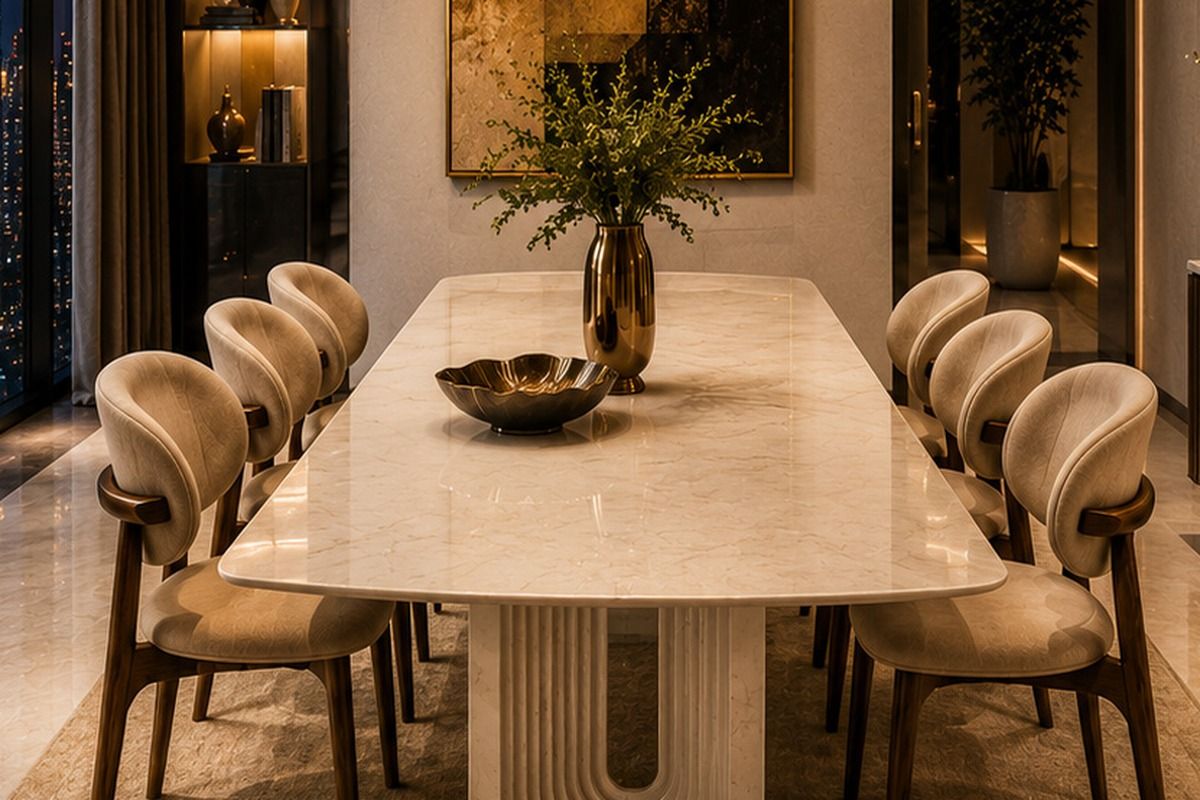
Restaurant and café tables are wiped dozens of times a day and take plates, wet glasses and spilled sauces. Serve sizzlers and hot stone dishes on their wooden bases, as you would on any table. Quartz table tops shrug this off. Each top is cut to size from a quartz slab, so you can match round café tables, long communal tables and high bar tables in one design.
A few points for busy dining rooms:
- Choose 20 mm for most tables, or 30 mm for long communal tables and heavy use.
- Pick a rounded or eased edge. It is softer on guests' forearms and stands up better to knocks from chairs and trolleys.
- Matte, suede and velvet finishes hide fingerprints and glass rings between table turns. Polished suits fine dining under warm lights.
- Use heavy, stable bases, because quartz is dense and heavy.
Our guide to quartz dining tables covers shapes and sizes in more detail.
Washrooms
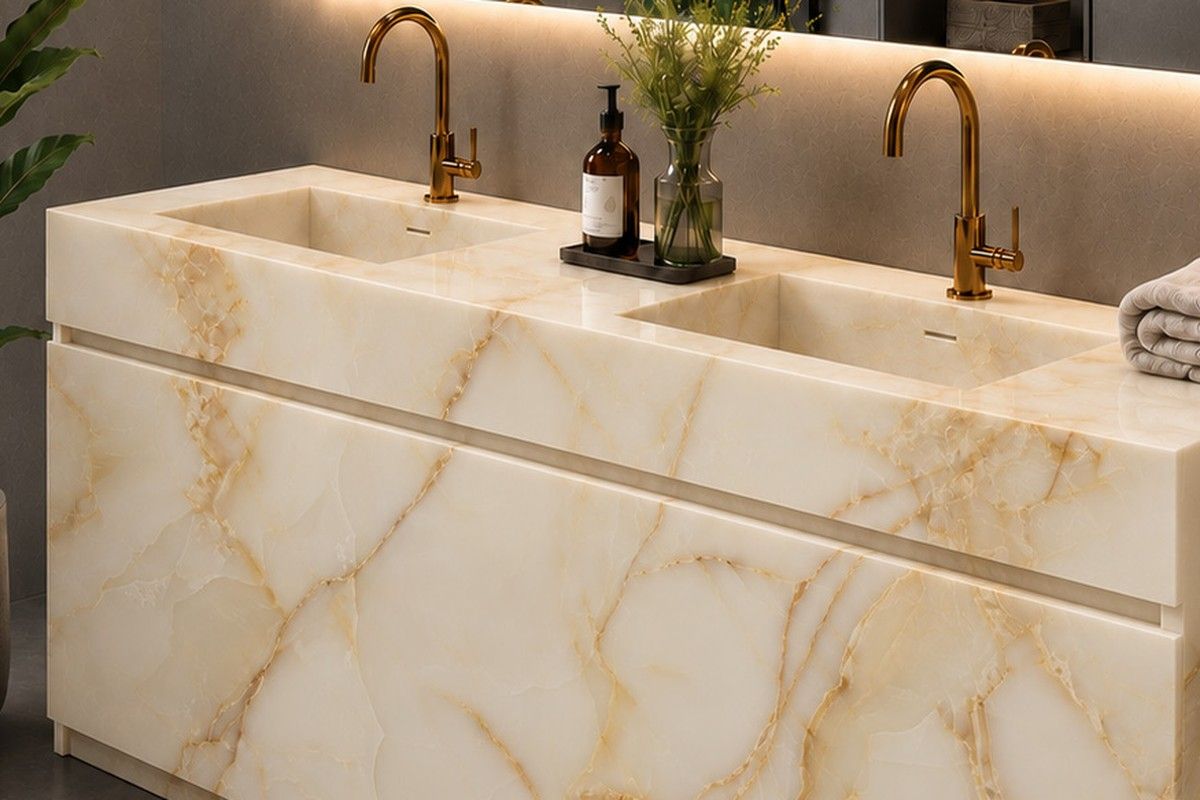
Guests judge a restaurant by its washroom. A quartz bathroom vanity top with an integrated basin has no rim or seam for dirt to collect, so housekeeping can keep it spotless between checks. Quartz wall cladding behind the basins finishes the room and replaces grout lines that darken over time. Our guide to quartz bathroom vanity tops shows the basin styles.
Back of house
In the kitchen, quartz belongs where food is prepared rather than cooked:
- Cold kitchens and salad stations.
- Pastry and bakery stations, where dough is rolled straight on the counter.
- The pass, where plates are finished and handed to service.
- Prep counters with integrated quartz sinks, which have no seam where food and water collect.
Keep the cooking line in steel, and give the quartz counters trivets and landing pads for hot pans and trays. Our guide to integrated quartz sinks explains how one-piece sinks work.
Chains and multi-outlet brands
For café chains, QSR brands and hotel groups, consistency matters as much as durability. Every outlet should look the same. Quartz is made to a set design, so the counter in your 20th café matches the one in your first.
To keep it that way:
- Fix one design, finish, thickness and edge as your brand standard.
- Order slabs for each fit-out together, so they come from the same production batch.
- Work directly with the quartz slab manufacturer rather than several local suppliers, so the same specification reaches every city.
Specifying quartz for busy service
A quick guide to choosing thickness, edge and finish for each zone:
- Service and café counters: 20 or 30 mm, eased or bullnose edge, polished or suede.
- Bar tops: 20 or 30 mm, eased edge, matte or suede to hide glass rings.
- Bar and counter fronts: 12 mm panels, polished, or backlit quartz for a feature.
- Table tops: 20 mm, or 30 mm for long tables, rounded edge, matte, suede or velvet.
- Washroom vanities: integrated basin tops, matte or suede to hide water spots.
- Walls and cladding: 12 mm, any finish.
- Prep counters: 20 or 30 mm, polished for the easiest wipe-down.
A super jumbo quartz slab from Pacific Surfaces runs to about 3.5 metres, so long bars, service counters and communal tables need fewer joints. Pacific Surfaces' standard warranty covers normal residential use, so ask us about warranty terms for commercial projects before you order.
A simple cleaning routine for staff
Quartz needs no sealing or polishing. A short routine, posted where cleaning supplies are kept, keeps every surface looking new:
- Wipe down counters and tables after each service with warm water and a pH-neutral cleaner.
- Avoid bleach, oven cleaners, strong acids and scouring pads.
- Use trivets and landing pads for hot pans, chafing dishes and trays.
- Wipe up strong dyes and colourings, such as food colour and beetroot, quickly.
- Dry polished surfaces after cleaning to prevent water spots.
Our quartz countertop maintenance tips can be adapted into a housekeeping checklist.
Plan your next restaurant or café with Pacific Surfaces
Quartz countertops give restaurants and cafés surfaces that are food safe, stain resistant and easy to keep spotless through every service. As a quartz company and one of the quartz slab manufacturers in India that presses its own slabs on Italian Breton technology, Pacific Surfaces works with restaurant owners, HoReCa groups, architects, F&B consultants and quartz slab suppliers on projects in India and in more than 45 countries.
For more on hotels and other commercial spaces, read our guide to quartz stone for hotels, hospitals and restaurant kitchens. To discuss samples, designs and quantities for your project, get in touch with our team.