Best quartz brands in Kerala: choosing quartz for kitchens in Kochi, Thiruvananthapuram, Kozhikode and Thrissur
A Kerala kitchen asks a lot of its countertop. Coconut oil goes into almost everything, turmeric stains anything porous, and the kudampuli in a fish curry is acidic enough to mark soft stone. Then the monsoon arrives and the air stays damp for months. If you are looking at quartz in Kerala, whether for a flat in Kakkanad or a family home in Thrissur, the slab has to handle all of that every day. This guide covers what Kerala homes should check before buying quartz, how the choice changes between a show kitchen and a work kitchen, and where Pacific Surfaces fits.
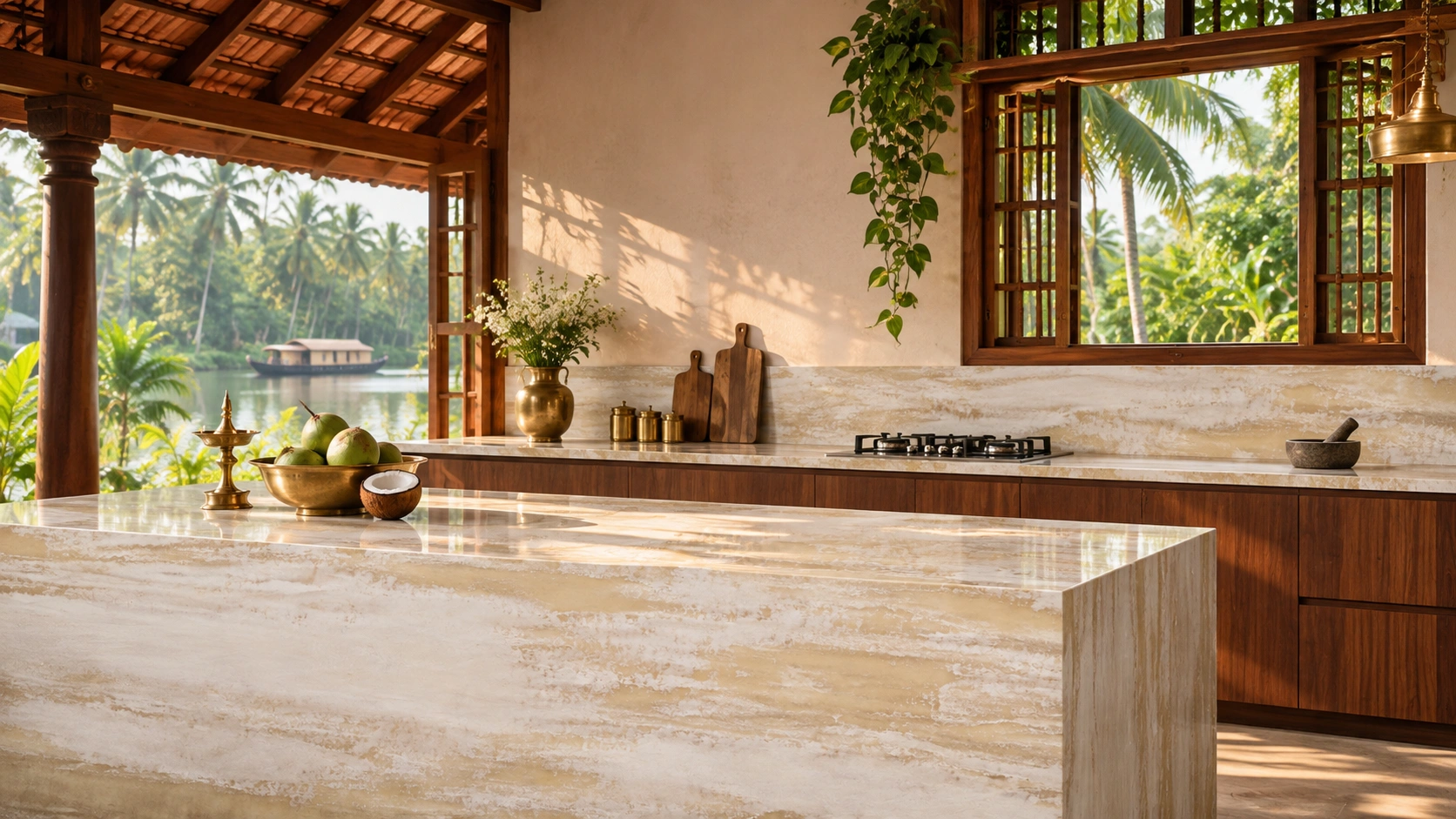
What Kerala's climate and cooking ask of a countertop
Humidity is the first test. Quartz is an engineered stone with very low porosity, so it does not soak up moisture and does not need the yearly sealing that some natural stones do. That matters in a state where walls sweat through June and July.
Stains are the second. Turmeric, coconut oil, tamarind and kudampuli all wipe off a good quartz surface with mild soap and water if you clean up the same day. Acidic spills that would dull marble leave quartz alone.
Heat is where you need care. Quartz contains resin, and a kadai or appam chatti straight off a high flame should go on a trivet, not the bare slab. Our guide is quartz heat resistant? explains the limits in detail.
Show kitchen and work kitchen
Many Kerala homes, especially those built or renovated with Gulf earnings, have two kitchens: an open show kitchen near the dining area and a work area behind it where the real cooking happens. The two do not need the same slab.
In the show kitchen, a marble-look or clean white quartz gives the room a calm, finished look. In the work kitchen, families often prefer a mid-tone or speckled surface that hides daily wear, and some choose granite there. Pacific makes both quartz and granite, so you can match the two rooms in tone while choosing each stone for its job. Our quartz vs granite guide for Indian kitchens sets out the trade-offs honestly.
How to judge a quartz brand in Kerala
Most showrooms in Kochi or Kozhikode will show you a dozen slabs that all look good under shop lights. The differences show up later. Before you commit, ask about:
1. How the slab is made. Breton vacuum vibro-compression, which Pacific uses at its Hosur plant, gives dense slabs and consistent batches.
2. Batch matching. If your platform needs two or three slabs, will they match? Ask to see the batch, not just a sample.
3. Silica and safety. Pacific EcoSurfaces are SGS-certified low and zero silica, which protects the people who cut and fit your stone.
4. Warranty in writing. Pacific offers a lifetime residential warranty. Ask who honours it locally.
5. Slab size. Long Kerala platforms often run past 10 feet, and a jumbo slab can mean fewer joints.
6. Natural light. Look at the sample by a window. A white that looks cool under LED tubes can turn creamy in a home lit by a nadumuttam courtyard.
Notes for each city
Kochi. Much of the new demand is in apartments in Kakkanad, Edappally and along the Vyttila stretch. Check lift and staircase sizes before ordering; a long slab may need to be cut into pieces that join neatly on site. Our guide on hiding joints on a long quartz platform helps here.
Thiruvananthapuram. Villas and independent homes give more room for kitchen islands and waterfall ends. See our kitchen island ideas in quartz.
Kozhikode and Malappuram. Large family kitchens with several people cooking at once wear a platform hard. A 20 mm slab with an eased edge is a sensible default, and an integrated quartz sink removes the seam where water and grime collect.
Thrissur and Kottayam. Renovations of older homes often pair stone with teak or rosewood joinery. Warm whites, beiges and matte finishes sit well against dark timber.
Colours that suit Kerala homes
Warm whites and soft beiges work with the wood and laterite tones common in Kerala interiors. Greys and darker shades suit modern flats and hide the odd oil mark better. If you love white but worry about turmeric, read our guide to white quartz that stays white.
For finish, polished is the easiest to wipe in humid weather. Matte and suede look softer but show oily fingerprints sooner, so they suit vanities and low-use counters better than a busy cooking platform.
Monsoon care routine
Wipe the slab daily with a soft cloth, warm water and mild dish soap. Dry it afterwards so water spots do not form. Avoid bleach, acids and scouring pads, and use trivets for hot pans. That is all quartz needs. More in how to care for quartz kitchen countertops.
Where to see Pacific quartz in Kerala
Use Where to Buy to find a Pacific dealer near you, or ask us for a quote and samples. If you want to see full slabs, our factory experience centre in Hosur, on NH44 near Bengaluru, shows the whole range of 54 Indian colours.
FAQs
Is quartz good for Kerala's humid climate?
Yes. Quartz has very low porosity, so it does not absorb moisture and needs no sealing, which suits Kerala's long monsoon.
Does turmeric or coconut oil stain quartz?
Not if you wipe spills the same day with mild soap and water. Quartz does not absorb oil or turmeric the way porous stone can.
Can I use quartz in a Kerala work kitchen?
Yes. Many families choose a mid-tone or speckled quartz for the work area. Keep hot vessels on trivets.
Quartz or granite for a Kerala kitchen?
Both work well. Quartz gives a uniform look and very low porosity; granite brings natural variation and has a long track record in Indian kitchens. Pacific makes both.
Where can I buy Pacific quartz in Kochi or Thiruvananthapuram?
Find the nearest dealer on the Where to Buy page at pacific-surfaces.com, or request samples through the contact form.