Kitchen slab with an integrated quartz sink: how it works and why it's a smarter choice
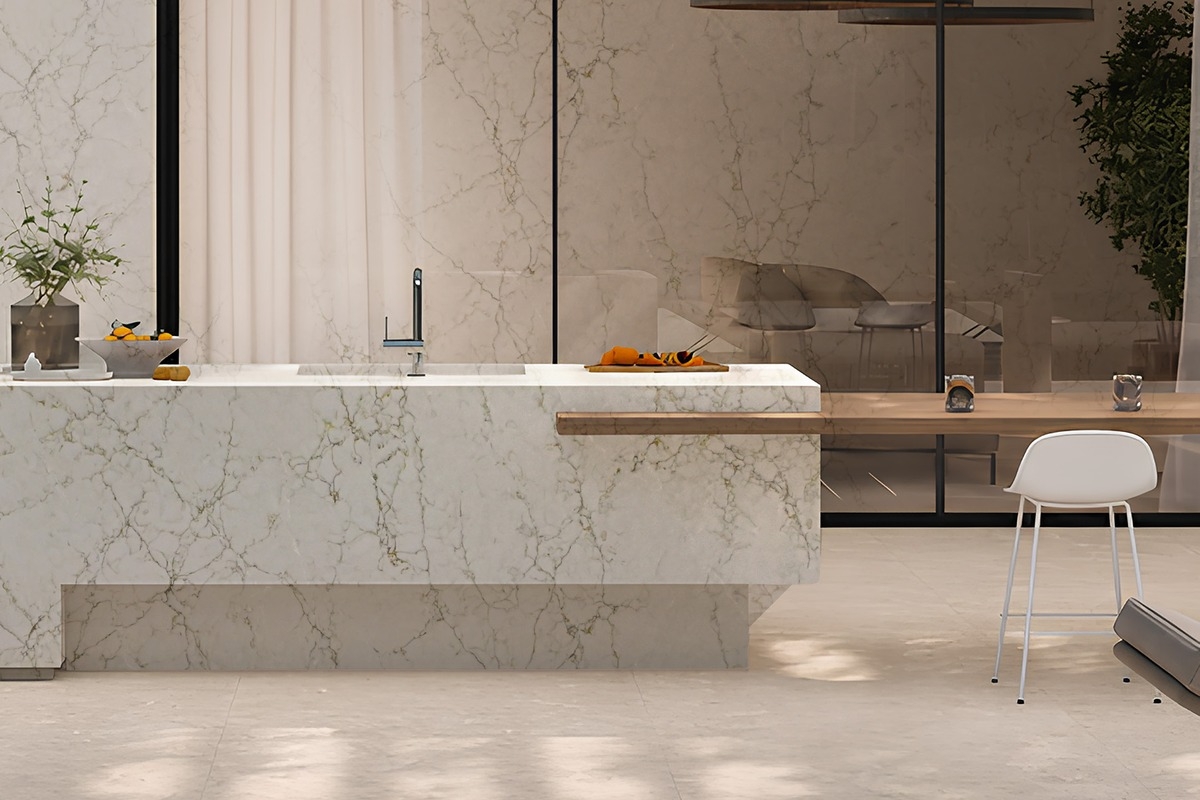
The sink is where a kitchen slab works hardest. Water runs over the edge all day, grease builds up around the rim, and the joint between sink and counter is the first place grime settles. An integrated quartz sink removes that joint. The basin is part of the counter itself, so the kitchen platform runs straight into the sink in one continuous surface.
This guide explains how an integrated sink is made, how it compares with a steel sink, and how to plan and look after one.
How an integrated quartz sink works
With an ordinary sink, the fabricator cuts a hole in the kitchen slab and fixes a steel or ceramic basin underneath or on top. There is always a seam where the two meet, sealed with silicone that discolours and needs replacing.
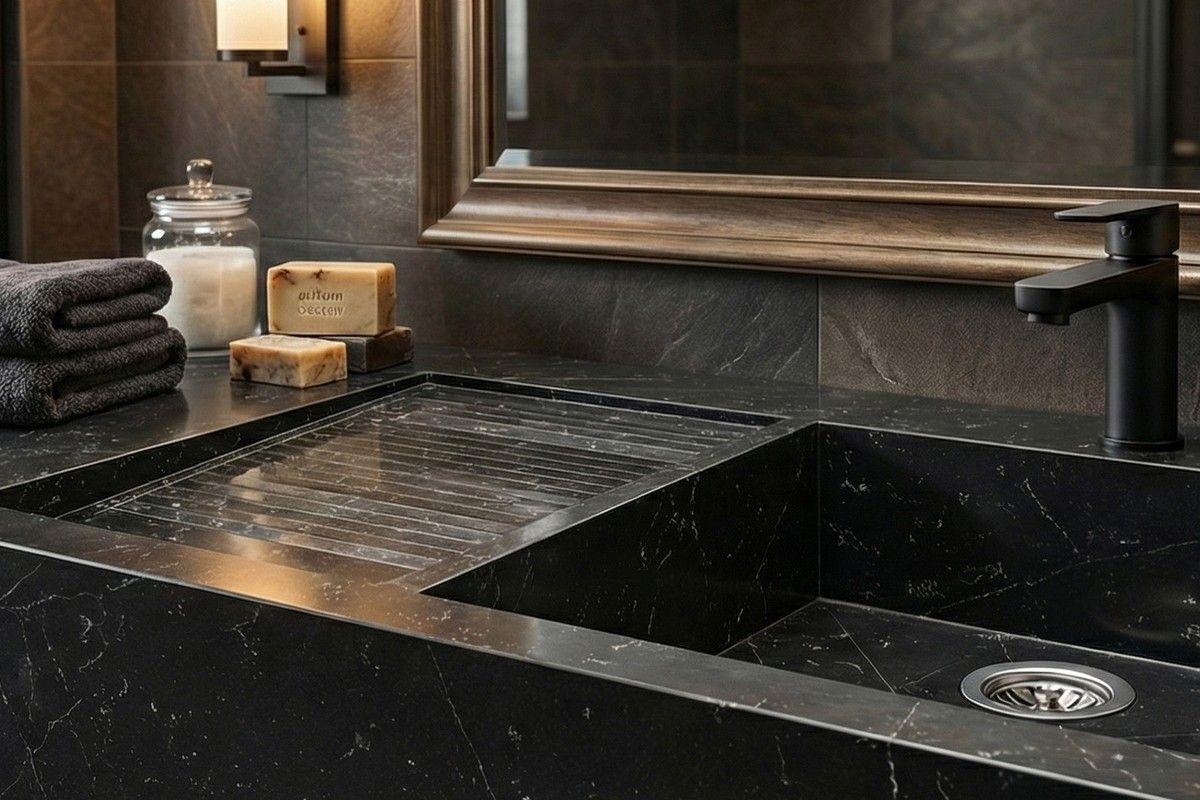
An integrated sink is made differently. Pacific's Integra sinks are moulded, machined and finished as one piece with the counter, from the same high-density low silica quartz composite, so the worktop flows into the basin with no rim and no joint. Some designs go further, with a drainboard carved into the counter beside the basin, as on the Alabaster Noir sink above, so wet dishes drain straight back into the sink.
The benefits are practical:
- No seam. There is nowhere for food, water or mould to collect between sink and counter.
- One material. The sink matches the colour and pattern of your quartz kitchen countertops exactly.
Easy to wipe. You can sweep crumbs and water straight from the kitchen top quartz into the basin. - Built to last. Pacific's integrated sinks are made to resist thermal shock, mechanical wear and chemical exposure, and they carry a lifetime warranty against manufacturing defects, discolouration and structural failure.
A note for Indian kitchens
Indian cooking means large vessels: kadais, pressure cookers and big steel pateelas. An integrated quartz sink is ideal for prep, rinsing and everyday washing, and it suits an island, a bar or a pantry especially well. For the heaviest pots, many kitchens pair it with a deep steel sink on the main platform. Ask us about basin depth before you order, so the sink fits the way you cook.
Colours
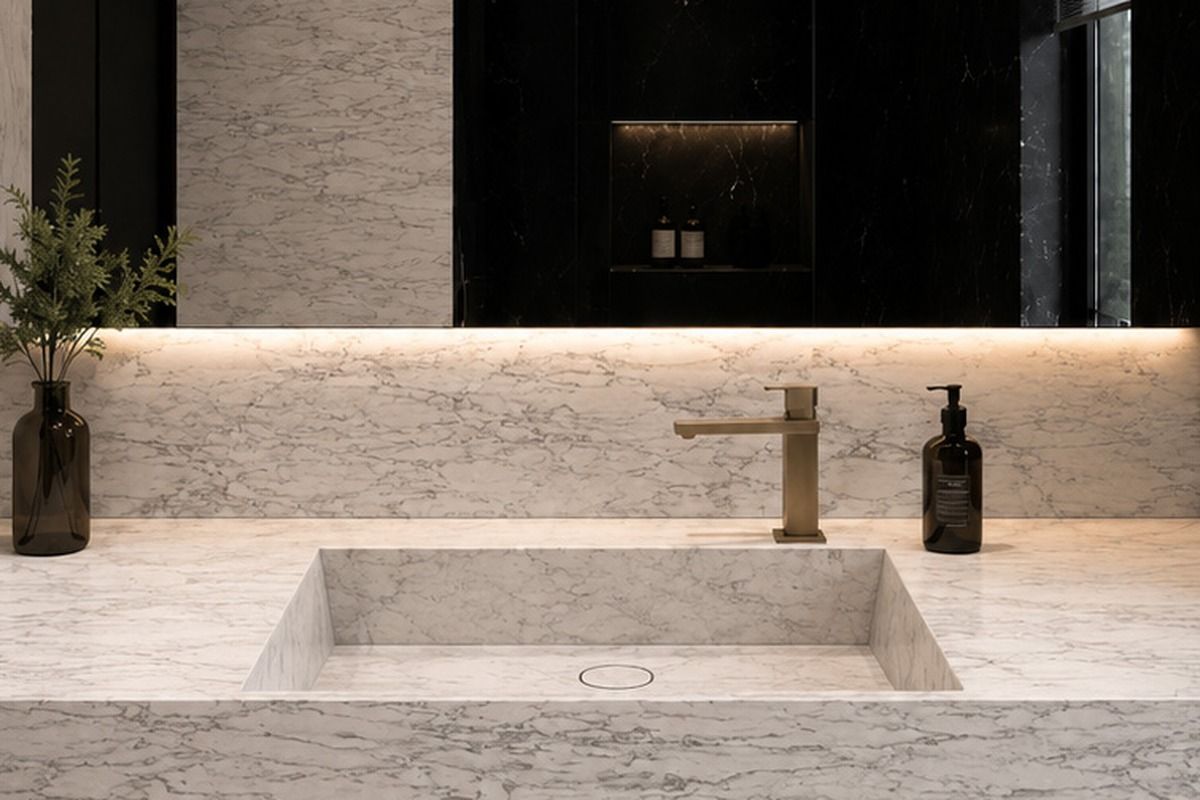
An integrated sink comes in the same designs as the counter, so it disappears into the kitchen platform. Popular choices include Alabaster Noir, a deep black with fine white veining; Maple Gaze, a soft silvery white; Super White, a pure solid white; and veined designs such as Astral Mist and Winter Haze. Every design is available in polished, matte, suede and velvet finishes. Matte and suede hide water spots well, which helps around a busy sink.
Integrated quartz sink vs a steel sink
A steel sink set into a quartz counter is the most common choice in Indian kitchens, and it works. Here is how an integrated quartz sink compares on the things that matter day to day.
- Hygiene. A steel sink has a seam where it meets the counter, sealed with silicone that discolours and can trap grime. An integrated sink has no seam at all.
- Looks. A steel sink breaks up the counter. An integrated sink matches your quartz kitchen countertops in colour and pattern, so the kitchen platform reads as one surface.
- Noise. Quartz is dense, so running water and dropped spoons make less noise than in a thin steel sink.
- Marks. Steel shows water spots and fine scratches. A matte or suede quartz finish hides water spots well, and the surface resists scratches from everyday utensils.
- Depth. Steel sinks are usually deeper, which helps with the biggest pots. That is why many kitchens use both.
For a minimal kitchen, an island, a bar or a pantry, the integrated sink is the cleaner, quieter and better-looking option.
Installation
An integrated quartz sink is heavier than a steel one, so the cabinet below needs a strong frame. Plan the plumbing early, because the drain position is fixed by the basin design. Your fabricator will fit the top, connect the drain and seal the backsplash. Because the sink is part of the top, there is no separate sink to clamp or seal.
On a long run of quartz kitchen worktops, place the integrated sink away from any joint in the slab, so the basin sits within a single piece of stone.
Care
The quartz countertop maintenance tips for an integrated sink are simple. Rinse it after use and wipe it dry with a soft cloth. Use a mild cleaner and a non-abrasive sponge. Avoid bleach, drain cleaner and steel wool. When you pour very hot water or pasta water into the sink, run the cold tap at the same time, and use a trivet for hot pans on the counter around it.
Is it safe for food? Yes. The surface is non-porous, and the low silica quartz composite is also safer for the people who cut and fit it. Our care guide covers stubborn marks.
Is an integrated sink right for your kitchen?
An integrated quartz sink makes the most sense on an island, a prep counter, a bar or a pantry, or as part of a minimal quartz kitchen where a clean, joint-free look matters. For heavy daily washing of big vessels, pair it with a deeper steel sink, or ask about a deeper basin.
For more on choosing the stone for kitchen slab work, see our guides to quartz countertops for Indian kitchens and kitchen island ideas in quartz. To see Integra sinks in person, visit our sinks page, find a dealer near you, or get in touch with the quartz company that makes them.