Is quartz heat resistant? What Indian cooks should know
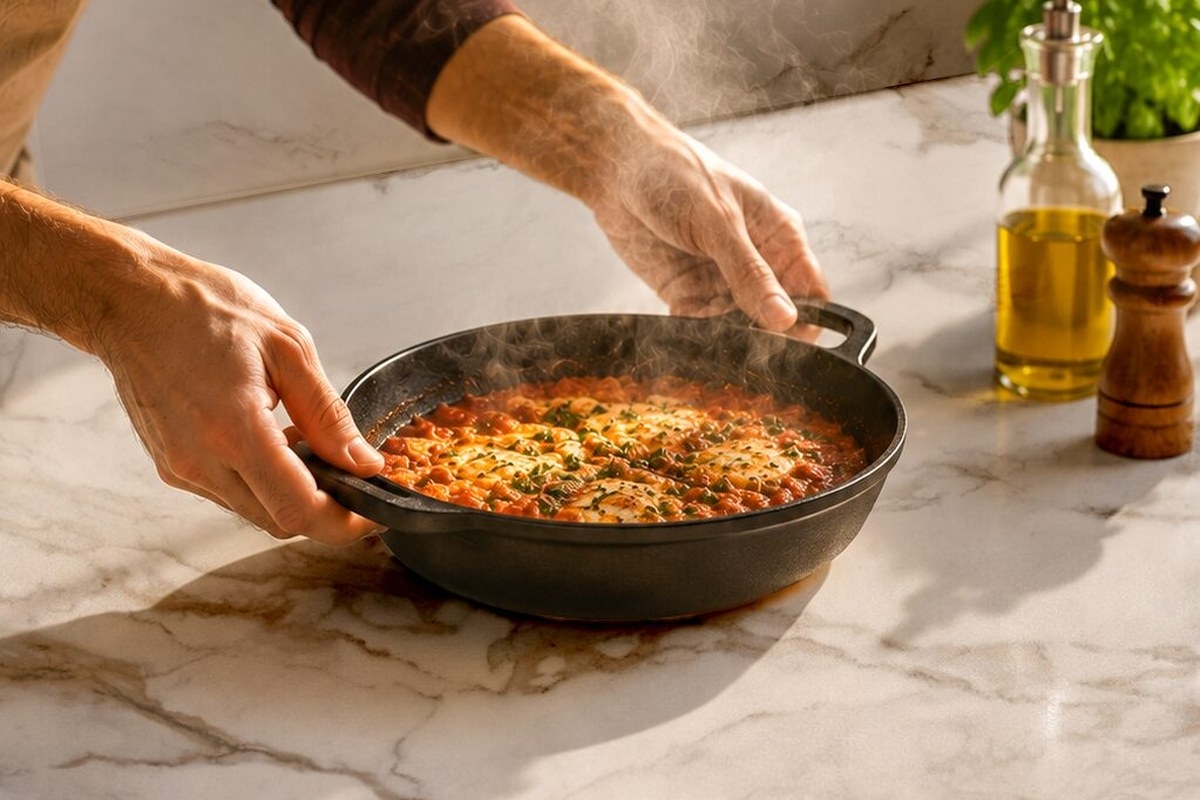
An Indian kitchen runs hot. The pressure cooker whistles before breakfast, the tawa stays on the flame through a stack of rotis, and the tadka pan comes off the gas smoking. So one of the first questions people ask before choosing quartz kitchen countertops is simple: can quartz take the heat?
The short answer is that quartz handles the everyday warmth of cooking well, but it should never take a pan straight off the flame. This guide explains why, and the few habits that keep a quartz counter looking new.
What quartz is made of
A Pacific slab is about 93% natural quartz stone, one of the hardest minerals in nature. The rest is a small amount of resin and pigment that binds the quartz grains together. The mix is pressed under vacuum on Bretonstone lines at our plant in Hosur, which gives a dense surface with no pores.
The quartz itself copes with heat easily. The resin is the part to think about. It is what makes quartz engineered stone countertops non-porous and stain-proof, and it is also what reacts to direct, concentrated heat.
What heat can do to a quartz counter
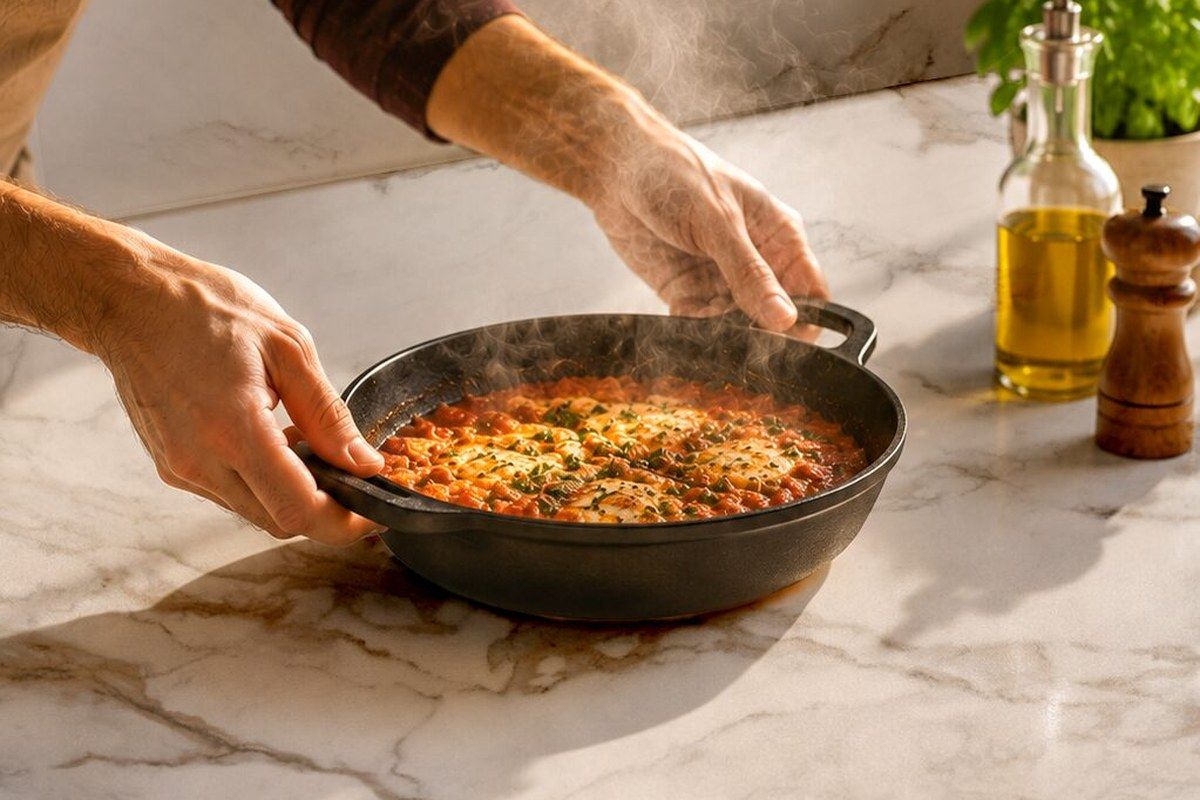
Warm plates, a casserole of hot rice or a cup of chai straight from the stove won't harm quartz. The problems come from very hot metal sitting directly on the surface.
A kadai, tawa or pressure cooker straight off a gas flame can be well over 200°C at the base. Left on quartz, that heat can scorch the resin and leave a pale or yellowish ring that won't wipe off. A very sudden change in temperature on one spot, called thermal shock, can also crack the slab, especially near a cut-out or an edge.
These marks are hard to repair, so prevention matters far more with heat than with stains. Pacific quartz does not stain, but heat damage is a different matter.
The hot spots in an Indian kitchen
A few everyday items cause most heat damage on a quartz kitchen. Each one has an easy fix.
- The tawa and kadai. Never move them from the burner to the counter. Rest them on a trivet, a wooden board or the cold burner grate.
- The pressure cooker. After the last whistle, the base is still very hot. Let it cool on the hob or on a stand, not directly on the counter.
- The tadka pan. It is small, but the oil in it is hotter than almost anything else you cook, so it needs a trivet too.
- Electric appliances. Air fryers, OTGs, toasters and sandwich makers vent heat from the bottom or back. Give them a heat-resistant mat and some space from the wall.
- Hot water and steam. Pouring boiling water into a cold vessel standing on the counter is fine, but a kettle left on a warm base for hours can leave a ring. Use a mat.
Habits that protect your counter
The best quartz countertop maintenance tips for heat are the cheapest. Keep two or three trivets within reach of the hob, so there is always somewhere to put a hot pan without thinking. Treat the counter as a place for serving dishes, not cooking vessels.
When something hot does land on the counter, lift it off at once and let the area cool on its own. Don't pour cold water on a hot spot, as the sudden change in temperature is what causes thermal shock. For everyday cleaning, a few drops of neutral soap on a damp microfiber cloth is all quartz needs. Our care guide covers the full routine.
Planning the hob area
Some heat protection is built in at the planning stage. When the fabricator cuts the opening for a built-in hob, they leave a gap between the hob and the stone, and they round the inside corners of the cut-out so stress doesn't gather at a sharp point. Follow the hob maker's installation guide for clearances, and let the fabricator know which hob you are buying before they cut.
Keep the burners a little away from the front edge and any joint in the kitchen platform, since edges and seams are where a crack is most likely to start. A good chimney helps too. It pulls heat and oil away from the counter as well as the cooktop. For layouts that work for Indian cooking, see our kitchens page.
Quartz vs granite on heat
Heat is the one area where granite has the edge. Granite kitchen countertops are natural stone with no resin, so they tolerate hot vessels better. If your household often puts pans straight down without thinking, or cooks on a heavy-duty burner or a tandoor, granite near the hob may suit you better. Our granite collection has over 100 natural designs.
On almost everything else, quartz is the easier surface to live with. It doesn't stain, never needs sealing, and comes in a consistent pattern from slab to slab. Many families get the best of both: granite near the hob and quartz on the rest of the platform or the island. Our guide to quartz vs granite compares the two in full.
Is a quartz countertop safe?
Yes, for everyday cooking and food preparation. Pacific quartz is certified to NSF/ANSI 51 for food contact, so you can knead dough or roll rotis directly on it. For the people who cut and fit it, our Ecosurfaces range is low-silica and certified by SGS at 0% crystalline silica.
If heat damage happens
A scorch mark or crack from heat usually can't be cleaned away, and repairs need a professional. Check your warranty terms, since heat damage is treated differently from manufacturing defects by most makers. Pacific quartz carries a lifetime warranty, and your dealer can explain what it covers.
Cooking on quartz with confidence

Kitchen quartz countertops suit Indian cooking well, as long as hot vessels go on a trivet rather than straight onto the stone. Build that one habit, and a kitchen top in quartz will stay as clean and even as the day it was fitted. Our guide to quartz countertops for Indian kitchens covers thickness, finishes and more for quartz kitchen worktops.
To see designs in person, find a dealer near you or request samples from the quartz company that makes the slab.