Quartz stone: What is it, how is it made and where it works the best
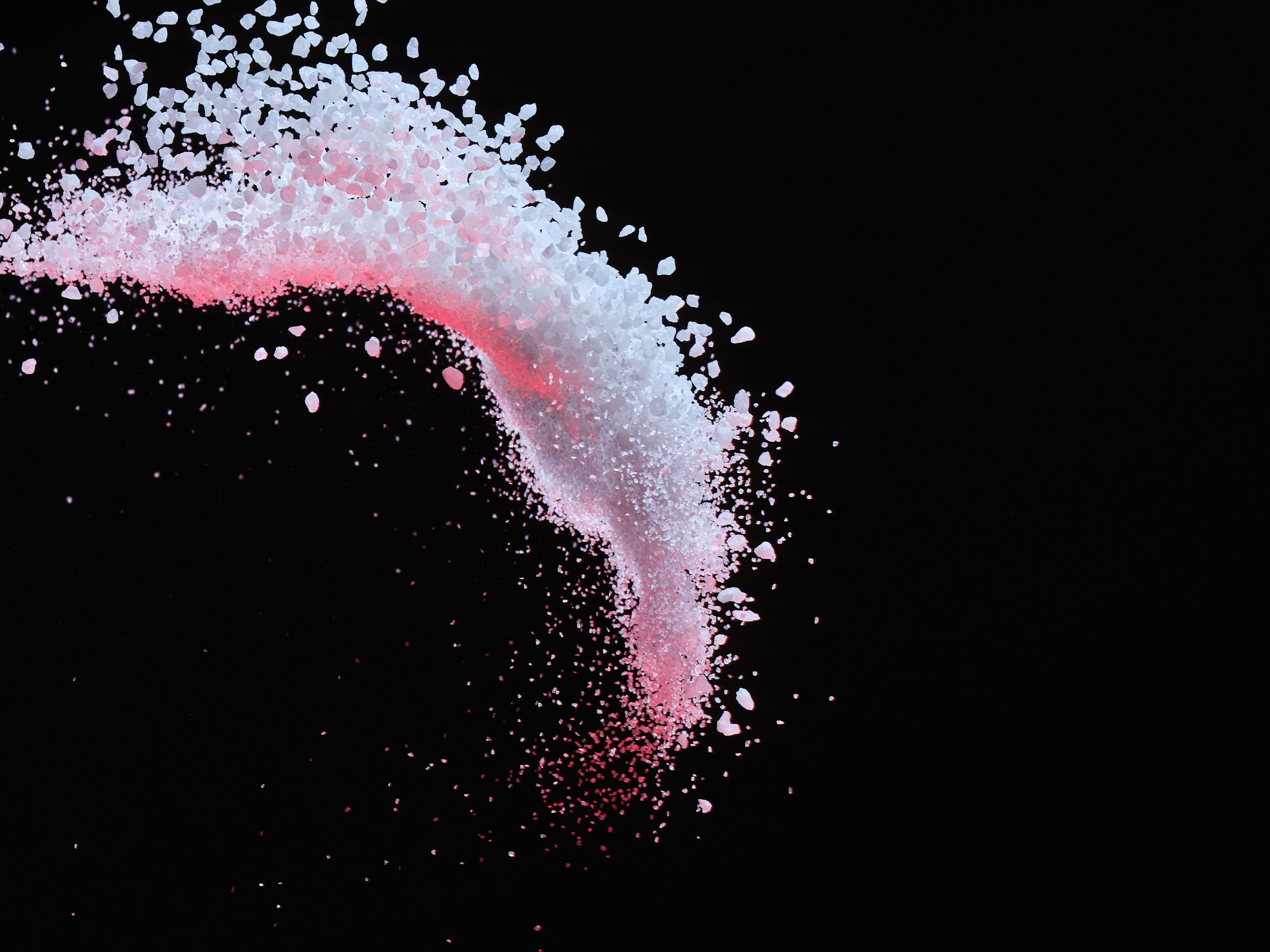
What is Quartz Stone?
Quartz stone is an engineered surface. Crushed natural minerals are bound with a small amount of resin and pigment, then compacted into a dense slab. The minerals give it hardness. The engineering gives it something nature rarely offers: a surface that holds its character from one end of the slab to the other, and from one slab to the next.
That consistency is why designers specify it. A natural stone is chosen slab by slab, and a long island or a run of matching vanities can turn into a hunt. With quartz, the color you approve on a sample is the color that arrives on site.

How a Pacific slab is made
Our slabs are pressed on Bretonstone lines, the Italian technology that first made engineered stone possible at industrial scale. Breton built the machines. We built the plant around them in Hosur, with raw material selection, pressing, curing, calibration and polishing all under one roof.
Our quartz slabs are about 93% natural quartz, one of the hardest minerals in nature. The rest is resin and pigment, just enough to bind the grains and give each design its color.
The mineral mix is spread into a mould and compacted by vibration under vacuum. Pressing the air out packs those quartz grains so tightly that the slab is left with no hidden pockets. That density makes the surface non-porous, so it does not drink in oil, wine or the turmeric that finds its way onto every Indian counter. It is also why the surface stands up to scratches and to the everyday heat of a busy kitchen.
The facility covers 470,000 sq ft and produces 12 million sq ft of quartz a year. Each design is made to pass a fabricator's precision test and an architect's critical eye.
Quartz slab sizes and thicknesses
A quartz slab from Pacific comes in three thicknesses.
Thickness - Where it suits
- 12 mm - Wall cladding, shower walls, furniture tops and refits over an existing counter
- 20 mm - Most kitchen counters and bathroom vanities
- 30 mm - Islands and counters where you want a heavier, more architectural edge
Our largest format runs up to 3,480 × 2,007 mm, among the largest engineered stone formats made in India. On a long island that means fewer joints, and on a feature wall it can mean none at all. The thinner format has its own following too; we wrote about it in 12mm quartz slabs.
Where quartz belongs in a home
The kitchen platform
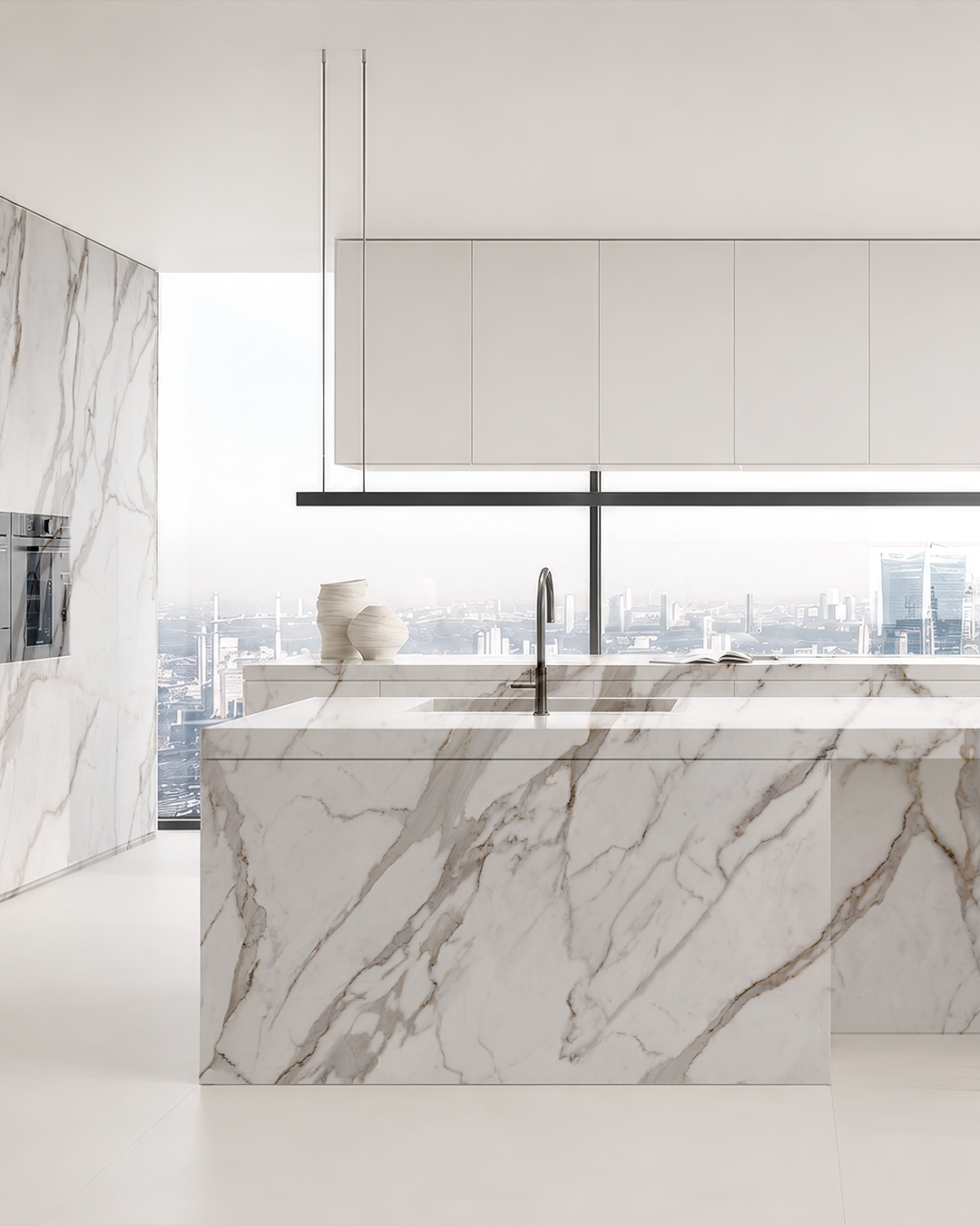
The kitchen platform is where quartz does its best work. Indian cooking is generous with heat, oil and spice, and a counter here is used hard three times a day. Quartz countertops resist scratches and stains, and they wipe clean without sealing.
If you are weighing up the best stone for kitchen slab work, the honest answer depends on how you cook and the look you want. We set quartz and granite side by side in quartz vs granite for Indian kitchens. For a single, seamless kitchen slab with the sink built in, look at our Integra quartz sinks.
One habit worth keeping: set very hot pans on a trivet. Quartz is tough, but its resin binder prefers not to meet a kadai straight off the flame.
Bathrooms
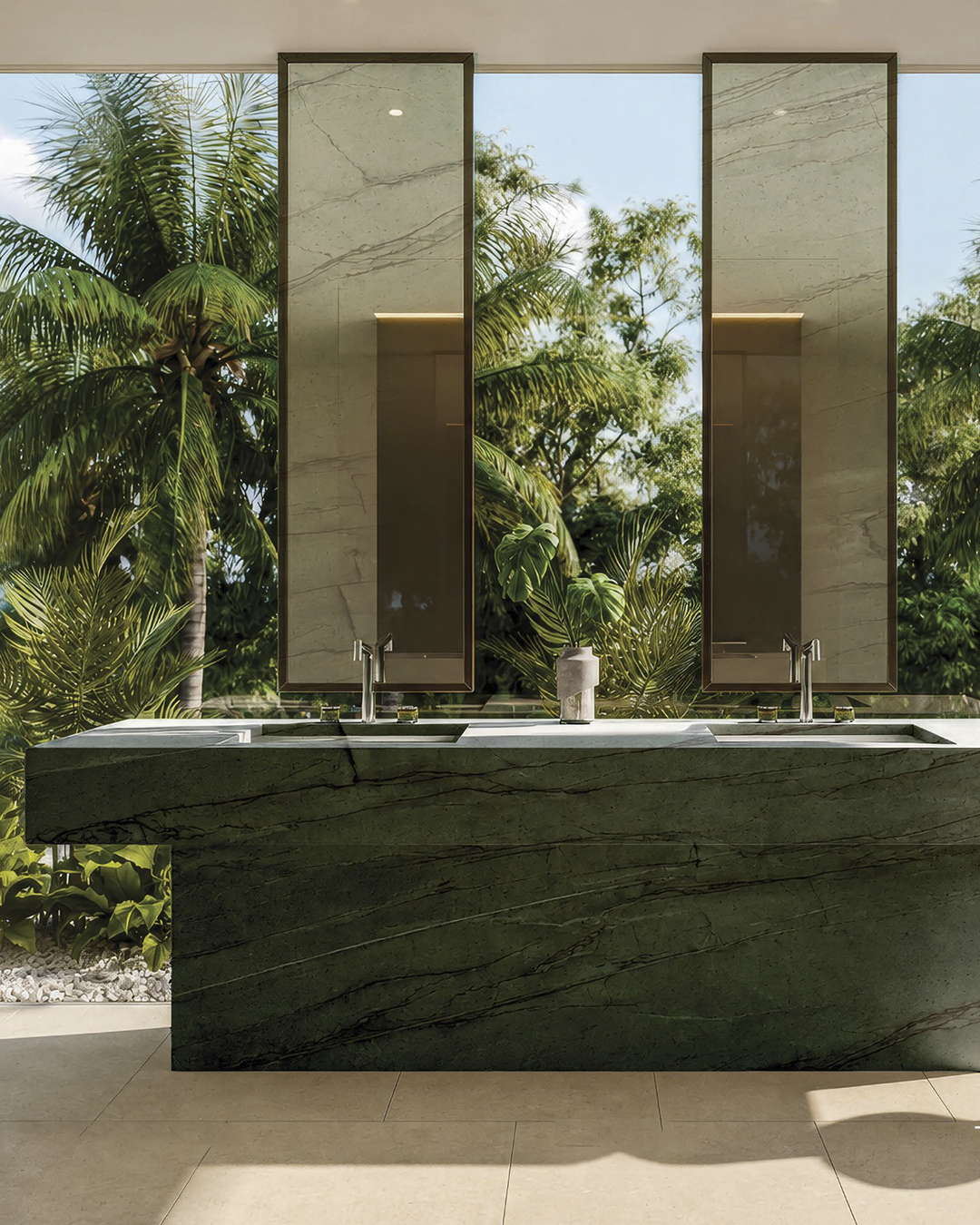
Quartz is non-porous, so it will not hold moisture or harbour bacteria in a damp room. On bathroom vanity tops and shower walls it gives the look of fine marble without the upkeep marble demands. Our earlier piece on quartz vs marble for bathrooms goes into the detail.
Walls and larger spaces
With slabs close to 3.5 metres long, a single piece can clad an entire feature wall behind a bed, a bar or a staircase. Hotels, restaurants and hospitals specify the same surfaces for commercial spaces, since they are certified food-contact safe and take heavy traffic well.
Colours, veining and finish
White quartz
Many kitchens begin with white, and a good white is rarely just white. Brilliant White is clean and bright. Alabastercarries a soft glow, and Arva White sits a shade warmer. Choose white quartz by the light in your room: a north-facing kitchen will want warmth, while a sunlit one can take a cooler, crisper white.
The Marble look
Many of our clients come to us wanting Italian marble. They love the veining and the depth, and they hesitate over the care. Marble is soft and porous, so lemon, tea and haldi leave their mark, which makes marble for kitchen counters a hard choice to live with.
Marble quartz answers that. Our Eclipse collection is designed around veined stone, from the crystal white of Lumina Cristal to the Italian-inspired Bellagio. For warmer schemes, the Nebula collection brings in golden veining.
Finishes
Most designs come in polished, matte, suede and velvet finishes. Polished reflects light and reads as classic. Matte and suede feel quieter and more contemporary, and they show fingerprints less, which matters on a dark slab. Availability varies by design, so check the product page or ask us.
Made with care for the people who cut it
Crystalline silica dust is a real concern for fabricators who cut and polish stone. Our Ecosurfaces are low-silica, mineral-infused surfaces made with premium and recycled minerals, and SGS has certified the full Ecosurfaces range at 0% crystalline silica. Across our portfolio, surfaces carry NSF/ANSI 51 food-contact certification, Greenguard Gold for low emissions, CE marking and ISO 9001:2015.
Caring for quartz
Daily care is a soft cloth and warm water with a mild cleaner. Skip abrasive pads and harsh chemicals, use a chopping board, and keep a trivet near the hob. That is most of it. Our quartz care guide covers stubborn marks, and every slab is backed by a lifetime warranty.
What decides quartz price
Quartz price depends on more than the slab. The main factors are:
- The design. Intricate veining takes more work to produce than a solid colour.
- Thickness and size. A 30 mm or jumbo slab costs more, though it can save on joints and labour.
- Finish. Specialist textures sit above standard polish.
- Fabrication. Edge profiles, cut-outs and installation are often priced separately by the fabricator.
For a figure on your project, ask us for a quote with your layout and preferred design.
Choosing your slab
Stone is best judged in person, in your own light. Start with the room: how much daylight it gets, the tone of the cabinetry, the flooring it will sit beside. Narrow it to two or three designs, then hold the samples against your materials at different times of day.
If you would like to see a design in place first, our Visualizer lets you upload a photo of your kitchen or bathroom and try any Pacific slab on the counter, vanity or splashback. When you have a shortlist, request a sample and we will send it to you.
Still comparing materials? Our granite collection has 116 natural designs, and the beginner's guide to choosing a surfacewalks through the decision step by step.