Quartz kitchen countertops: the complete guide for Indian homes (2026)
Quick answer
Quartz kitchen countertops are engineered stone counters made mostly of natural quartz, bound with a small amount of resin and pressed into dense slabs. They are non-porous, so they don't stain or need sealing, and they resist scratches from everyday cooking. For most Indian kitchens, a 20 mm quartz kitchen countertop is the standard choice. Use a trivet for hot pans and keep quartz indoors, away from strong direct sun.
The rest of this guide answers the questions people ask most before they buy.
What is a quartz kitchen countertop?
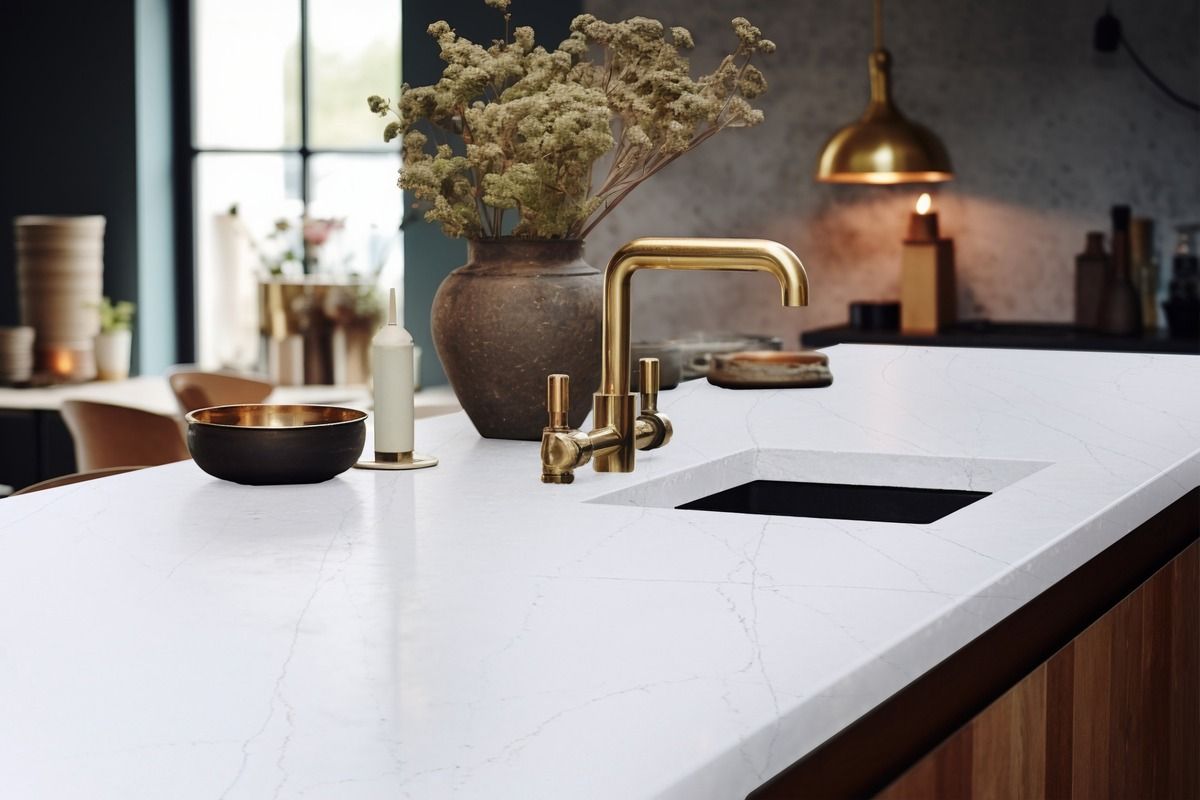
A quartz kitchen countertop is a counter cut from an engineered quartz slab. The slab is made mostly of crushed natural quartz stone, one of the hardest minerals on earth, mixed with a little resin and pigment. The mix is pressed under vacuum and vibration, then cured into a solid, dense surface.
Pacific Surfaces makes its slabs this way at its own plant in Hosur, on the Bretonstone process developed by the Italian company Breton. Because the slab is made to a recipe, every quartz slab of a design matches the next, which isn't possible with natural stone.
Why are quartz countertops popular in Indian kitchens?
Quartz handles the things that make Indian cooking hard on a counter: turmeric, oil, tamarind, chai and achaar.
- It doesn't stain. The surface has no pores, so spills sit on top and wipe away. Pacific Surfaces quartz is rated "not affected" for stain resistance (ASTM C1378) and absorbs less than 0.03% water (EN 14617-1).
- It never needs sealing, unlike granite and marble.
- It resists scratches from steel vessels and utensils, with a Mohs hardness of 6.5 to 7.5.
- It is easy to keep clean. A wipe with mild soap and water is enough.
- It gives a consistent look, so a long kitchen platform and an island can match exactly.
Pros of quartz kitchen countertops, and what to keep in mind
The pros:
- Stain resistant and non-porous.
- No sealing, ever.
- Scratch resistant for everyday use.
- Food safe and hygienic.
- Wide range of colours, including white quartz and marble quartz looks.
- Large slabs, so fewer joints on long counters.
A few things are worth knowing, and Pacific Surfaces has an answer for each:
- Very hot pans. Like most surfaces, quartz is happiest with a trivet under a pan straight off the flame. Pacific Surfaces quartz is pressed under vacuum on Breton lines into a dense, even slab, so it copes well with everyday kitchen warmth. For a counter right next to a high-heat cooking range, we can also supply natural granite in a matching tone, so every part of the kitchen gets the right stone.
- Outdoor kitchens. Quartz is made for indoor spaces. Because Pacific Surfaces supplies both quartz and natural granite, you can use our quartz inside and our granite on the terrace or balcony, from one supplier, with designs that sit well together.
- Sharp edges. A sharp square corner on any stone counter can take a knock on a busy platform. Pacific Surfaces offers a full range of edge profiles, including bullnose, eased and ogee, plus 20 and 30 mm thicknesses for extra strength where you need it.
Our guide to whether quartz is heat resistant explains what heat can and can't do.
Are quartz kitchen countertops safe?

Yes. A finished quartz kitchen countertop is safe to cook on, eat from and live with every day. Pacific Surfaces quartz is certified to NSF/ANSI 51 for food contact, so you can knead dough or roll rotis directly on it, and it holds Greenguard Gold certification for low indoor emissions.
The safety question that matters most is about cutting, not using, the counter. Cutting any stone releases dust, and the crystalline silica in it is a risk for fabricators. That is why Pacific Surfaces also makes low silica quartz, in its Ecosurfaces range. Our guide to Pacific Surfaces' safety certifications explains each one.
Quartz vs granite: which is better for a kitchen?
For most indoor Indian kitchens, quartz is the easier choice, because it doesn't stain and never needs sealing. Granite is the better choice for outdoor kitchens and for counters next to very strong, direct heat, because natural stone handles sun and heat better.
- Stains: quartz resists stains without sealing. Granite resists most stains once sealed.
- Heat: granite handles direct heat better. Quartz needs a trivet for pans straight off the flame.
- Upkeep: quartz needs only a wipe. Granite kitchen countertops need resealing every year or two.
- Look: quartz gives a consistent pattern. Granite is natural, and every slab is different.
Our full guide to quartz vs granite for your kitchen goes into more detail.
How thick should a quartz kitchen countertop be?
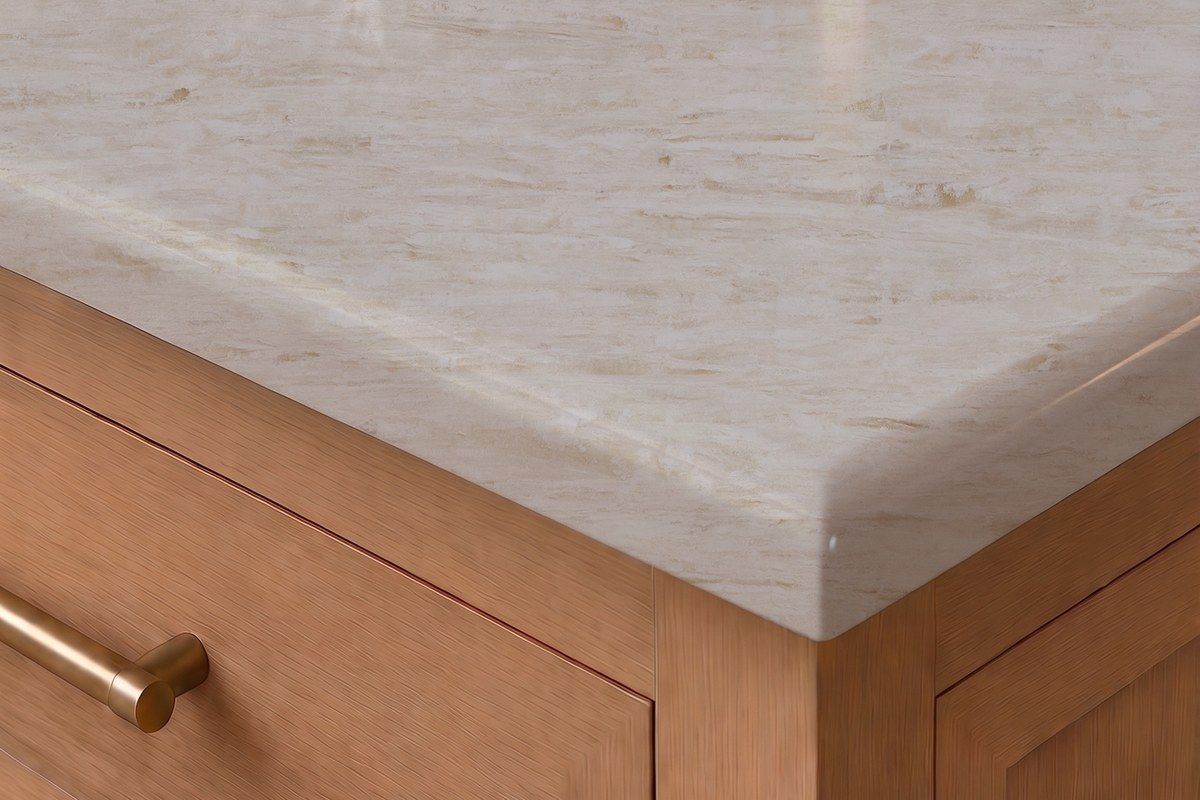
For most kitchen platforms, 20 mm is the right thickness. It is strong enough for daily cooking and the standard most fabricators work with. Choose 30 mm for a heavier look or for islands with large overhangs, and 12 mm for backsplashes, wall cladding or laying over an old counter. Pacific Surfaces quartz comes in 12, 20 and 30 mm.
Slab size matters too. A super jumbo quartz slab from Pacific Surfaces runs to about 3.5 metres, so long platforms and islands need fewer joints. Our guide to quartz countertop thickness covers each option.
Which colour and finish should you choose?
White quartz is the most versatile choice. It brightens small kitchens and suits almost any cabinet colour. Marble quartz gives the look of Italian marble without the staining and etching. Warm creams and beiges suit wooden kitchens, and dark designs such as Alabaster Noir make a strong contrast.
For the finish, polished is the easiest to wipe and brings out veining. Matte, suede and velvet hide water spots and fingerprints better. Every Pacific Surfaces design comes in all four finishes. Our guide to quartz finishes room by roomexplains when to use each.
How do you care for a quartz kitchen countertop?
Wipe it with a few drops of neutral soap on a damp microfiber cloth, then dry. That is all the daily care it needs.
- Use a trivet or mat under hot pans, pressure cookers and tawas.
- Avoid bleach, oven cleaners and abrasive pads such as steel wool.
- Wipe up spills of strong dyes promptly.
- Never seal or polish it. Quartz doesn't need either.
Our quartz countertop maintenance tips cover stubborn marks.
How long do quartz countertops last?
With normal care, a quartz kitchen countertop can last as long as the kitchen itself. The surface doesn't wear through, fade indoors or need refinishing. Pacific Surfaces quartz carries a lifetime warranty against manufacturing defects, discolouration and structural failure under normal residential use.
How do you choose a quartz countertop brand?
Check who makes the slab, what it is made of, which certifications it holds, what slab sizes are available and what the warranty covers. Pacific Surfaces is one of the quartz slab manufacturers in India that presses its own slabs, on Italian Breton technology, and exports to more than 45 countries. Our guide to choosing the best quartz countertop brand in Indiahas a full checklist.
Frequently asked questions
Is quartz a natural stone?
Quartz countertops are engineered stone. They are made mostly from natural quartz, a mineral, bound with a small amount of resin and pressed into slabs in a factory.
Can you put hot pans on a quartz countertop?
Use a trivet for pans straight off the flame, as you would with most surfaces. Pacific Surfaces quartz is a dense, vacuum-pressed slab that handles everyday kitchen warmth well, and a trivet keeps it looking new for years.
Do quartz countertops stain?
No, not with normal kitchen use. Quartz is non-porous, so turmeric, oil, tea and wine stay on the surface and wipe away.
Do quartz countertops need sealing?
No. Quartz never needs sealing, unlike granite and marble.
Are quartz countertops scratch resistant?
Yes. Quartz has a Mohs hardness of 6.5 to 7.5, so everyday utensils and steel vessels don't scratch it. Always use a chopping board for cutting.
Can quartz be used outdoors?
Quartz is designed for indoor kitchens and bathrooms. For terraces and outdoor kitchens, Pacific Surfaces supplies natural granite, which suits strong sun, so you can use our quartz inside and our granite outside.
Is quartz better than marble for a kitchen?
For most Indian kitchens, yes. Marble stains and etches with lemon, tamarind and tomato, while marble-look quartz gives a similar look without those problems.
What size is a quartz slab?
Sizes vary by brand. A super jumbo quartz slab from Pacific Surfaces runs to about 3.5 metres long, in 12, 20 and 30 mm thickness.
Find your quartz kitchen countertop
Quartz kitchen countertops suit the way Indian families cook: they don't stain, never need sealing and stay easy to clean for years. As a quartz company that makes its own slabs in Hosur, Pacific Surfaces offers white, marble-look, warm and dark designs in four finishes, backed by a lifetime warranty.
To see full slabs, find a dealer near you, try designs on your own kitchen with our Visualizer, or request samples.