Marble quartz: the marble look without the upkeep
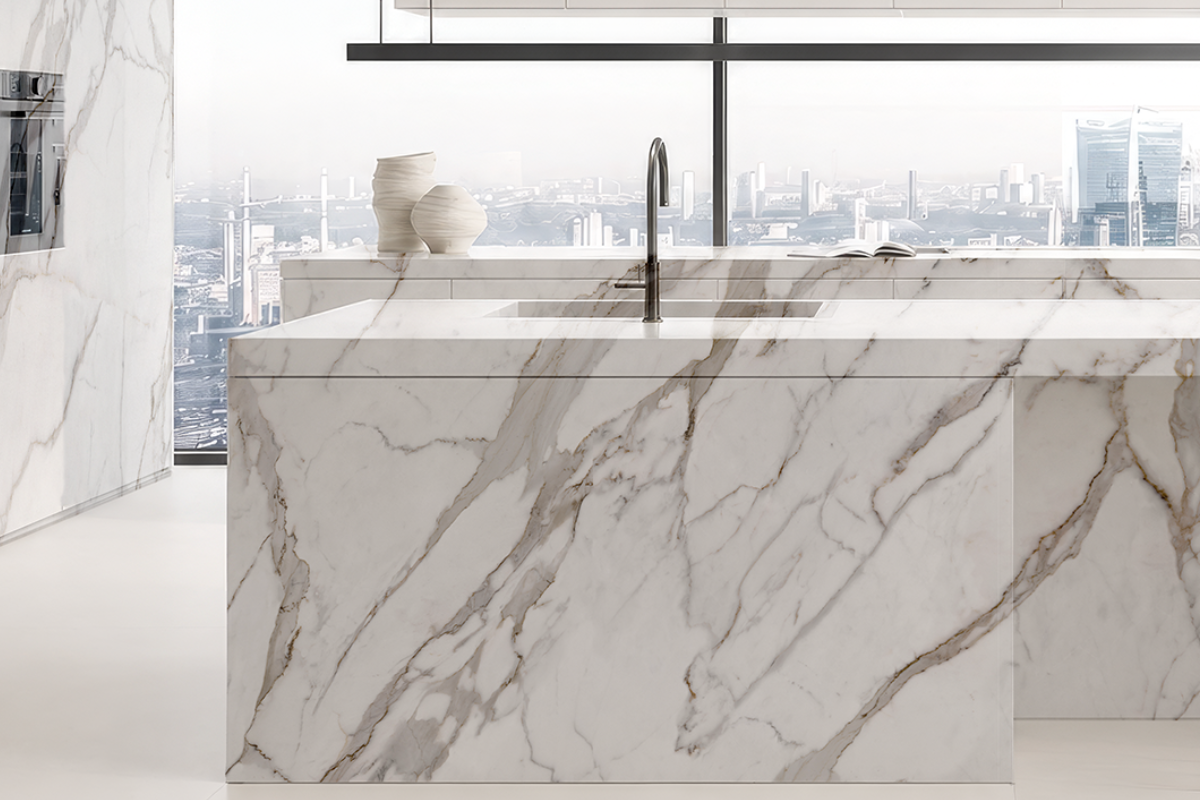
Italian marble has a look that is hard to beat: soft white stone crossed with grey or gold veins. Many people want it for a kitchen or bathroom until they find out what it takes to live with.
Marble quartz gives you the look of marble on a surface built for daily use. This guide covers how the two compare, the marble looks you can get in quartz, and where marble quartz works best.
The trouble with marble in an Indian kitchen
Marble is mostly calcite, a soft and porous mineral. That causes three problems in a kitchen where people cook every day.
First, it etches. Lemon, tamarind, tomato and vinegar react with the stone and leave dull marks on a polished surface, even when they are wiped up quickly. Second, it stains. Turmeric and oil can soak into the pores and leave a mark that won't come out with a cloth. Third, it scratches more easily than harder stones, and it needs sealing from time to time to slow the staining.
None of this makes marble a bad material. It is a beautiful stone that ages and changes with use, and some people love that. But for most families, marble for kitchen counters means accepting marks they would rather not see.
What marble quartz is
Marble quartz is engineered quartz stone designed to look like marble. A Pacific slab is about 93% natural quartz, one of the hardest minerals in nature, bound with a small amount of resin and pigment. The veining is built into the slab as it is made, and the mix is pressed under vacuum on Bretonstone lines at our plant in Hosur.
Pressing out the air leaves a surface with no pores, so turmeric, oil and lemon sit on top and wipe away, and Pacific quartz does not stain. Acids don't etch it, and it never needs sealing.
Marble vs marble quartz
- Stains: marble can absorb turmeric and oil; Pacific quartz does not stain.
- Acids: lemon and vinegar etch marble; quartz is unaffected by everyday kitchen acids.
- Sealing: marble needs resealing from time to time; quartz never does.
- Scratches: marble scratches fairly easily; quartz is far harder.
- Pattern: every marble slab is different, so a long counter may not match; marble quartz is made to a set design, so slabs match.
- Heat: marble copes well with heat; quartz needs a trivet under a pan straight off the flame.
Marble still wins on heat and on being one of a kind. For almost everything else in daily use, quartz is easier.
The marble looks you can get in quartz
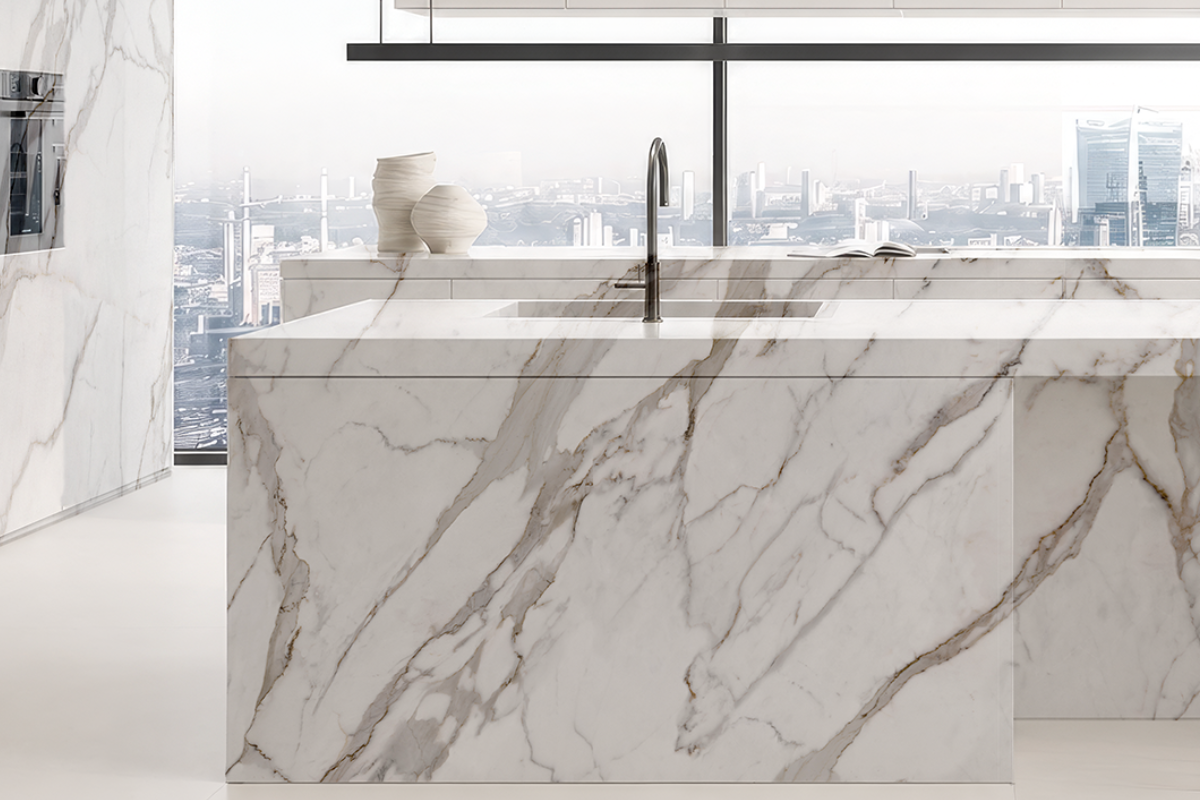
Statuario style
A bright white base with bold, dramatic grey veins, inspired by statuario marble. It works best on an island, a feature wall or a vanity where the veins have room to show. Pacific's Statuario design is the one to start with for this look.
Calacatta style
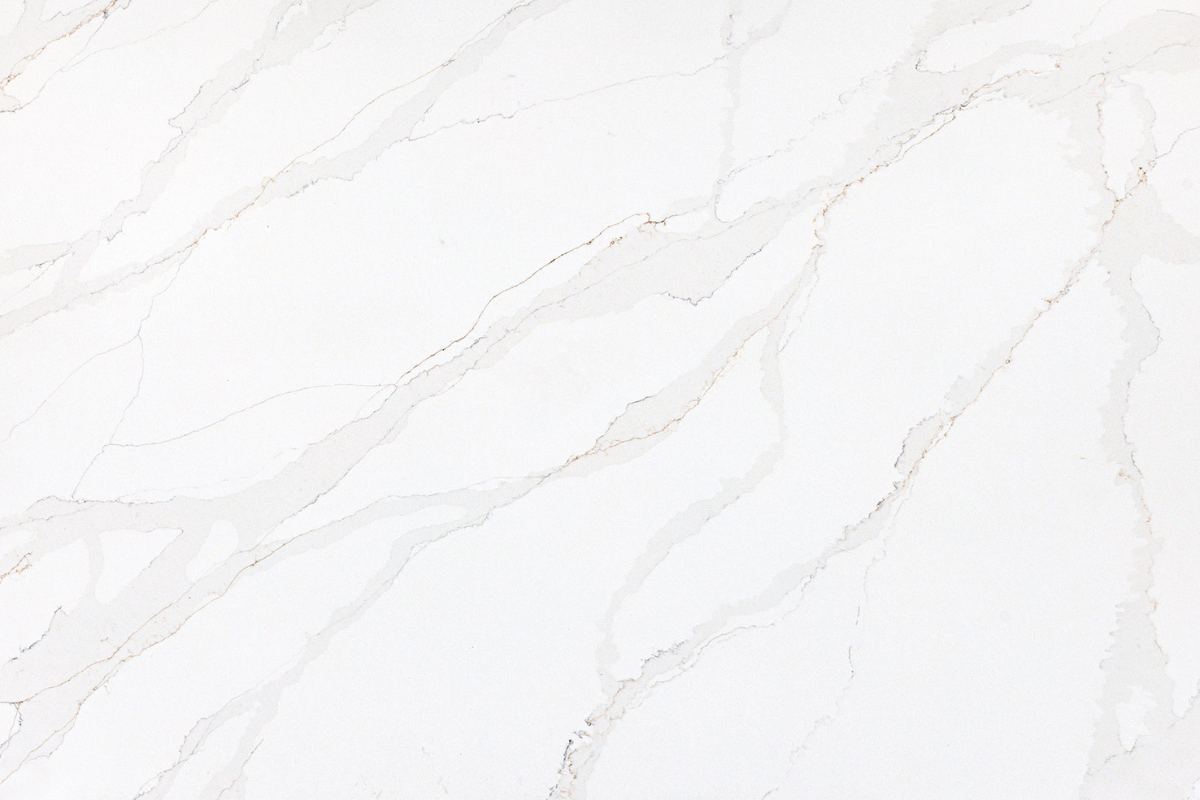
A warmer white with thick veins that can run grey, taupe or gold. It reads rich and classic, and suits kitchens with wooden shutters or brass fittings. Antonio, from our Nebula collection, has the gold veining that gives this look.
Carrara style
A softer grey-white with fine, feathery veining. It is the quiet option, easy to match across a kitchen platform and an island.

Gold-veined white
A white quartz with warm golden veins, for kitchens and bathrooms that lean warm. The Nebula collection brings in golden veining.
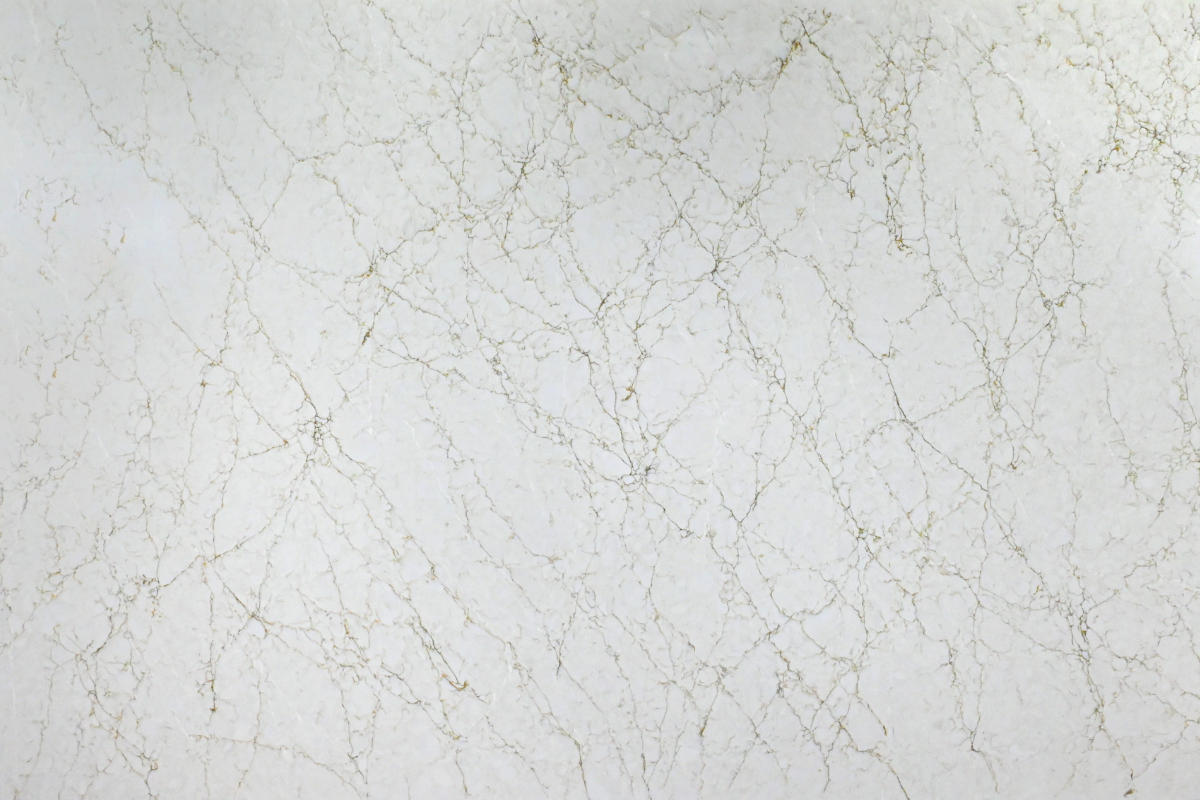
Our Eclipse collection is designed around veined marble looks, and the Italian-inspired Bellagio is another design to see.
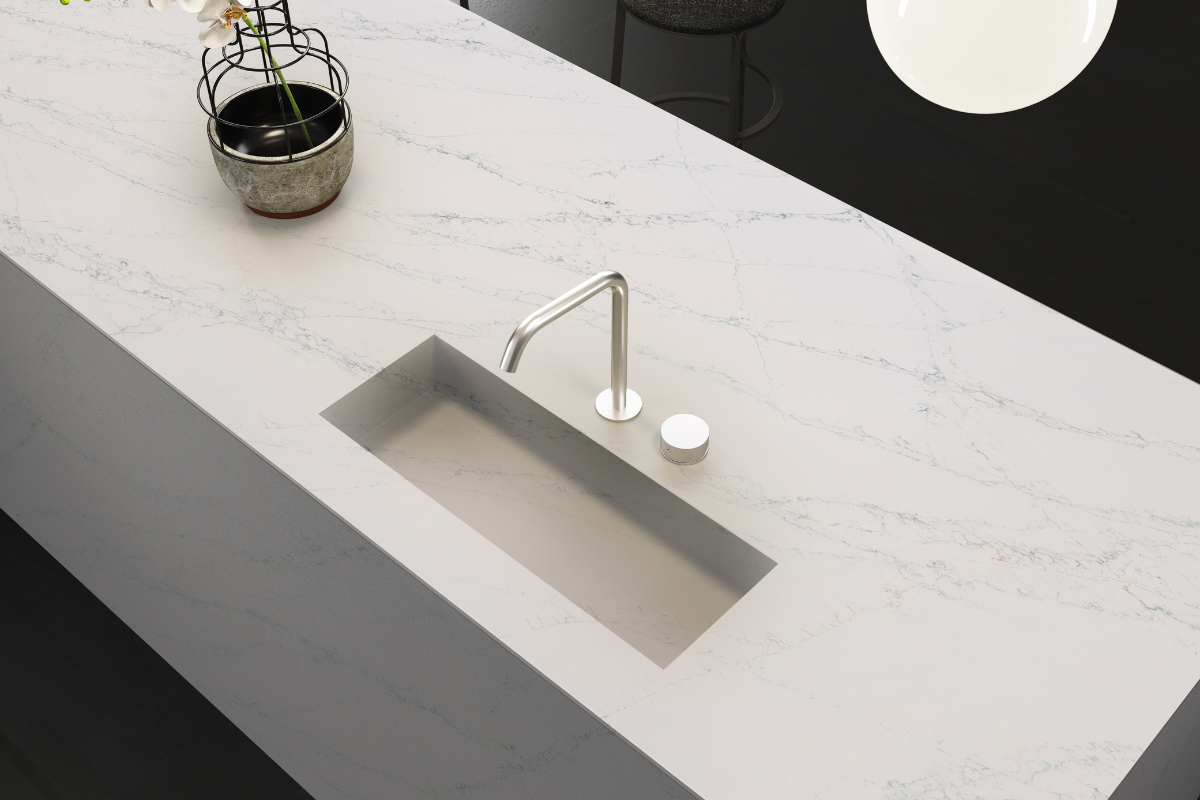
Where marble quartz works best
The kitchen is the obvious place. Marble-look quartz kitchen countertops give you the veining of white marble on a kitchen platform that takes heavy daily cooking. An island is where it shows best, since the slab is seen from every side. See our kitchens page for layouts and kitchen counter design ideas.
In the bathroom, a marble-look quartz bathroom vanity top resists soap, toothpaste and water marks, and our vanity rangeis a good place to start. Marble-look quartz wall cladding behind a bath, a bed or a television gives you a full wall of veining with very few joints. Our architecture page shows walls in finished projects.
Getting the marble look right
Three details decide whether marble quartz looks like real stone or a print.
The first is the joint. Veins that stop at a seam give the game away, so use the largest slab you can. A super jumbo quartz slab from Pacific runs up to 3,480 × 2,007 mm, enough for most islands and long platforms in one piece. Ask your fabricator to match the veins across any joint you can't avoid.
The second is the edge. A thin, square edge can make a veined slab look like a laminate. Eclipse designs are made with a mitred edge only, so the veins wrap over the corner and down the face, and the counter reads as a solid block. Our guide to quartz countertop edge profiles explains the options.
The third is the finish. Polished marble quartz looks like classic polished marble. A matte or suede finish gives the softer look of honed marble and shows fewer fingerprints.
Caring for marble quartz
The daily routine is a few drops of neutral soap on a damp microfiber cloth, a rinse and a dry wipe. Two quartz countertop maintenance tips matter most: keep steel wool and bleach off the surface, and put a trivet under a kadai straight off the flame. Our quartz care guide covers the rest.
Is a marble-look quartz countertop safe?
Yes. Pacific quartz engineered stone countertops are certified to NSF/ANSI 51 for food contact. For the people who cut and fit them, our Ecosurfaces are low-silica and certified by SGS at 0% crystalline silica.
What it costs
Quartz price for a marble look depends on the design, the thickness and the fabrication: edges, cut-outs and installation. Veined designs usually cost more than plain ones. Compared with Italian marble, the bigger saving often comes later, since quartz needs no sealing and doesn't need repolishing to remove etch marks.
Seeing it in person
Veining is best judged on a full slab rather than a small sample. Ask to see the actual slabs for your project, and try a design in your own space first with our Visualizer. When you are ready, find a dealer near you or request samples from the quartz company that makes the slab.