Jumbo quartz slabs: why slab size matters for islands and long platforms
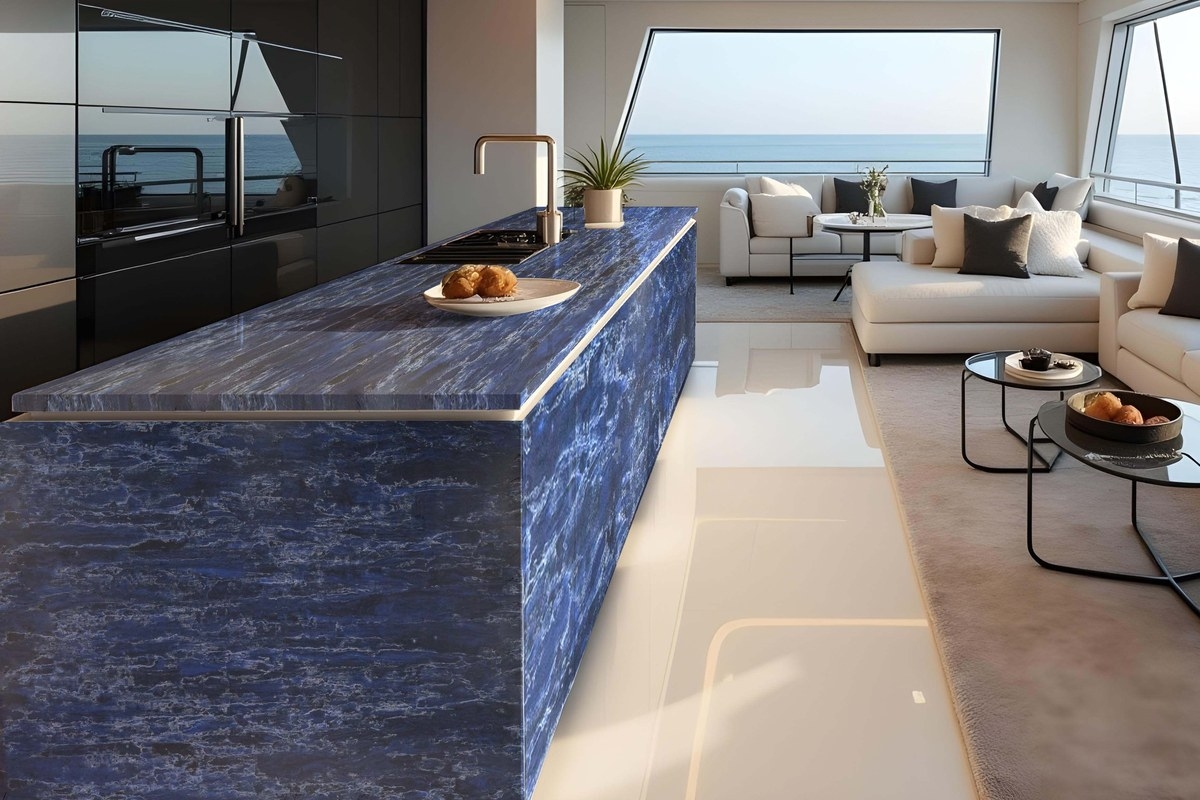
A counter is usually chosen by its colour, and slab size rarely comes up. Yet slab size decides how many joints run across the finished kitchen, and where they fall. On a long kitchen platform or a large island, that matters as much as the design.
This guide explains quartz slab sizes, what a jumbo slab changes, and what to plan for before you order one.
Quartz slab sizes, explained
Quartz slabs are made in a few broad size bands. Standard slabs from many makers are around 3 metres long and 1.4 metres wide. Jumbo slabs are larger, often around 3.2 by 1.6 metres. Super jumbo slabs are the largest made.
A super jumbo quartz slab from Pacific measures up to 3,480 × 2,007 mm, among the largest engineered stone formats made in India. Our quartz slabs come in 12, 20 and 30 mm thicknesses, depending on the design. The exact quartz slab size available varies by design, so check with us or your dealer for the one you like.
All our slabs are pressed on Bretonstone lines at our plant in Hosur. Each one is about 93% quartz stone, with a non-porous surface that does not stain.
Why joints matter
Whenever a counter is longer or wider than the slab, the fabricator has to join two pieces. A good fabricator makes the joint tight and colour-matched, but it is still there, and three things follow from it.
You can see it. On a plain or speckled slab, a well-made joint is hard to spot. On a white or veined design, it is easier to see, because the pattern stops at the seam.
It needs cleaning. A joint is a thin line of adhesive between two pieces of stone, and food and grime can collect along it over time.
It is a weak point. Joints are where a counter is most likely to chip or crack if something heavy lands on it, so fabricators try to keep them away from the hob and the sink.
A larger slab means fewer joints, or none at all.
Islands
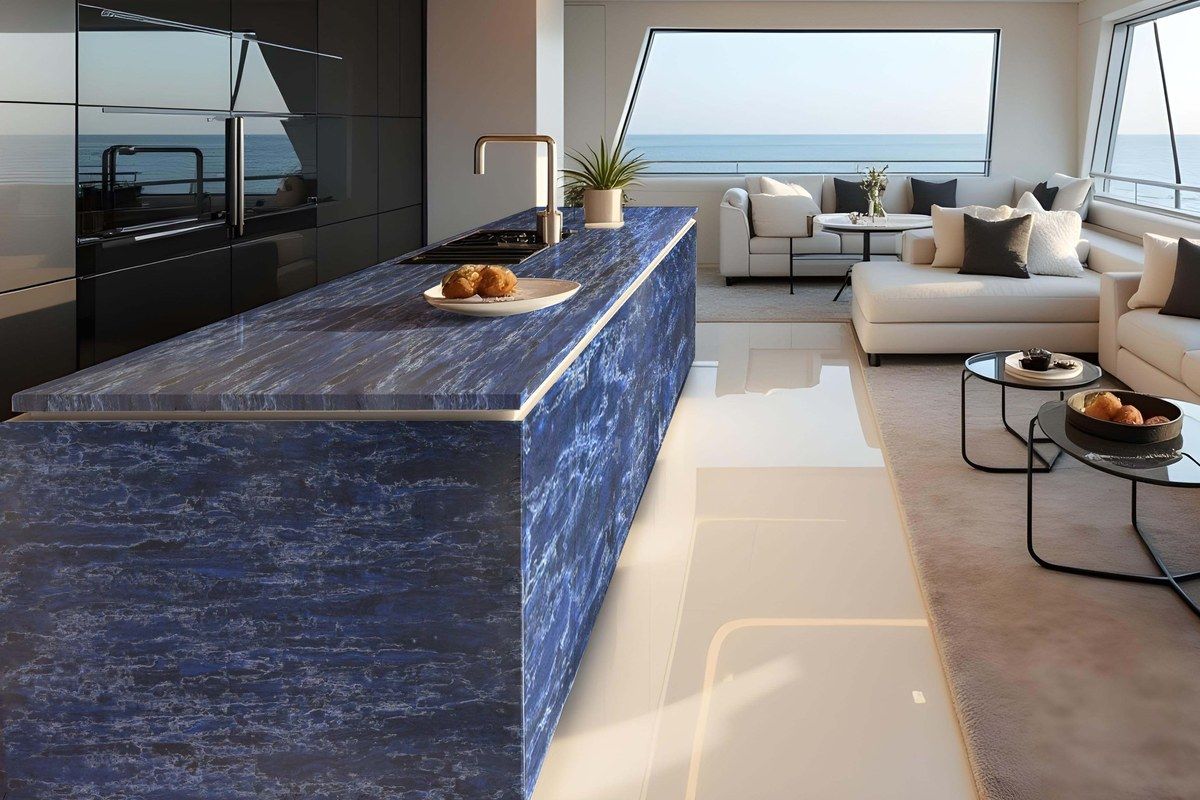
An island is the one counter seen from every side, so a joint across the middle of it is hard to hide. A typical island is somewhere between 1.8 and 3 metres long and 0.9 to 1.2 metres deep. A super jumbo slab covers that in one piece, with room left over.
If you want a waterfall end, where the slab turns at the edge and runs down to the floor, size matters even more. The top and the side panel should come from the same slab so the colour and veining match at the corner. A larger slab gives the fabricator enough length to cut both. Our guide to kitchen island ideas in quartz covers waterfalls, overhangs and seating in detail.
Long kitchen platforms
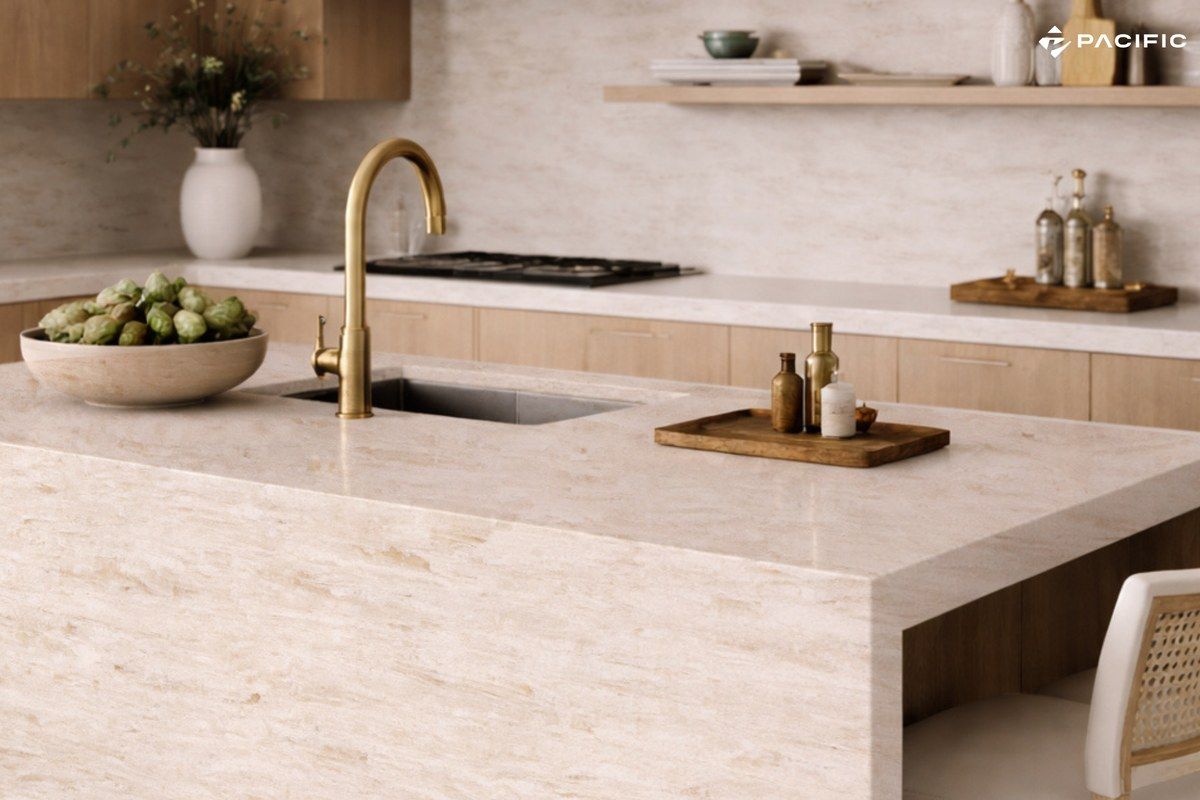
A straight kitchen platform longer than about 3 metres usually needs a joint with a standard slab. In an L- or U-shaped kitchen platform design, there are joints at the corners as well. A super jumbo slab lets the fabricator run the longest stretch in one piece and plan the remaining joints where they will be least seen, away from the hob and sink.
This also helps with cut-outs. A hob or sink opening near a joint weakens both, and a longer slab gives more freedom to keep them apart.
Veined and marble-look designs
Slab size makes the biggest difference on veined designs. On marble quartz, the veins are the point of the design, and a joint breaks them. Fewer joints mean the pattern runs further without a break, and where a joint can't be avoided, the fabricator can line the veins up across it more easily with a large slab to work from. Our Eclipse collection is designed around marble looks, and our guide to marble quartz explains the styles.
Walls and cladding
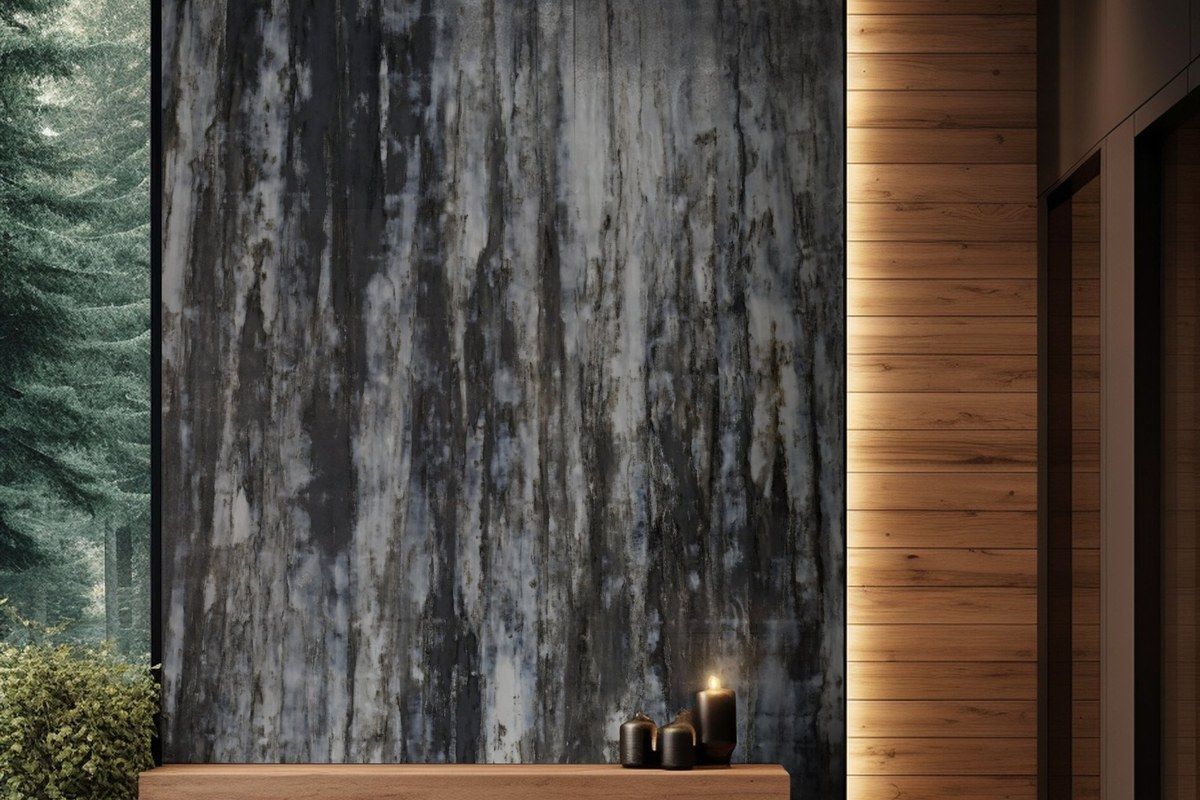
Slab size counts for quartz wall cladding too. At just over 2 metres wide and close to 3.5 metres long, a single slab can cover a feature wall behind a bed, a television or a bar. In a bathroom, it can cover a shower wall with no grout lines at all. See our architecture page for walls in finished projects.
What it does to cost
A larger slab costs more per piece, but that doesn't always make the kitchen more expensive. Quartz price for a project depends on the total area, the design, the thickness and the fabrication. When a long counter fits on one super jumbo slab instead of two standard ones, there can be less offcut wasted and fewer joints to cut, polish and seal.
When you compare quartz slab price per sq ft between suppliers, ask how many slabs your layout needs at each size and what fabrication is included. That gives you a fairer comparison than the per-sq-ft figure alone.
Delivery and fitting
A super jumbo slab is long, heavy and must be carried upright on an A-frame. Before you order, check the route into your home: the lift, the staircase, any tight landings and the width of the lane outside. In some apartment buildings, a full slab can't be carried in, and the fabricator will need to plan joints around that.
The fabricator also needs the right equipment to cut and move a slab this size. Ask your dealer or fabricator early whether they work with super jumbo formats.
When a standard slab is enough
Not every kitchen needs the largest slab. A compact straight platform under 3 metres, a small L-shaped kitchen with short runs, or a bathroom vanity top will often fit comfortably on a standard slab. Plain and speckled designs also hide joints well, so slab size matters less there.
Jumbo slabs make the most difference on islands, long runs of quartz kitchen countertops, waterfall ends, feature walls and veined designs.
Planning your layout
Get a measured drawing of your kitchen and ask your fabricator to mark where each joint would fall with a standard slab and with a super jumbo one. Seeing the two side by side makes the choice easy. If you've chosen a veined design, ask to see the actual slab before it is cut, so you know where the strongest veins will land on the island or platform.
For more on choosing thickness, finish and edges for kitchen quartz countertops, read our guide to quartz countertops for Indian kitchens.
If you're comparing quartz slab manufacturers in India, ask each one what slab sizes they make, where the slabs are pressed and what the warranty covers. Pacific is a quartz company that presses its own slabs in Hosur, exports to more than 45 countries and backs its quartz with a lifetime warranty. To see a design at full size, find a dealer near you. Trade buyers and quartz slab suppliers can get in touch with us directly.