Why coffee doesn't stain a quartz counter: choosing the best surface for your coffee shop
Quick answer
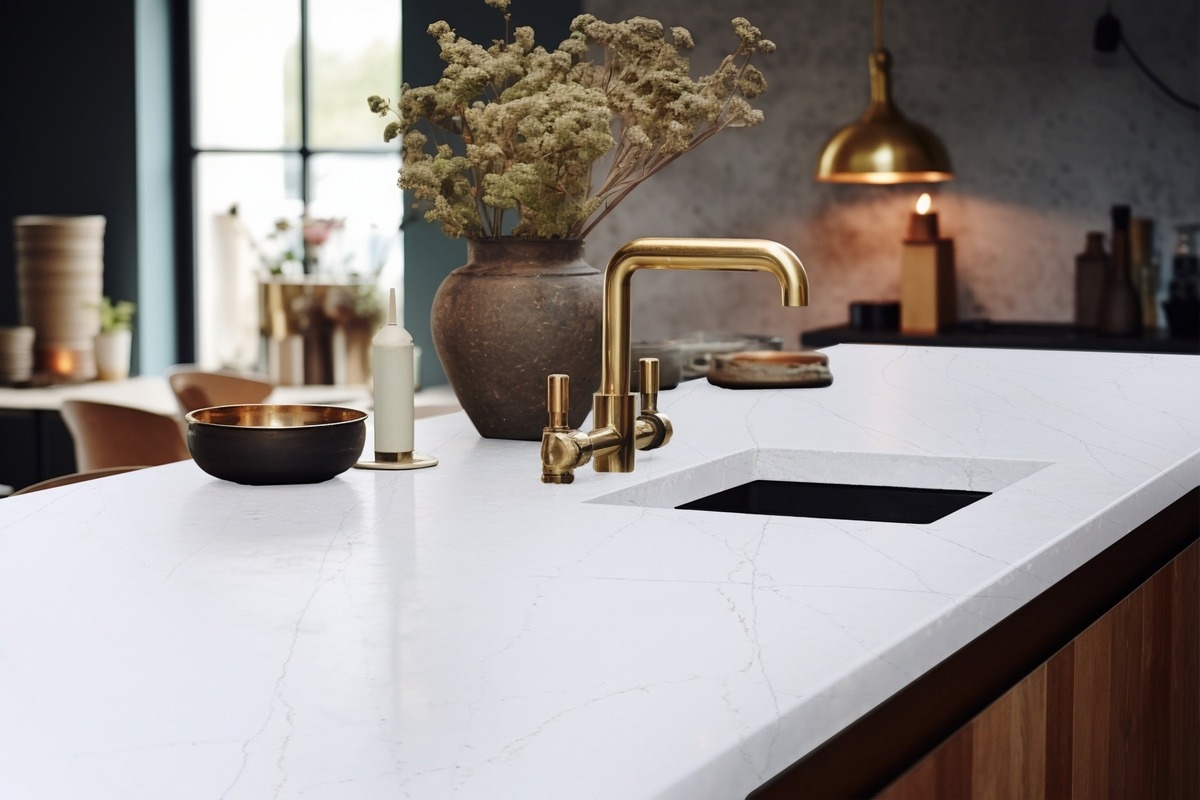
Coffee doesn't stain a quartz counter because quartz is non-porous. The coffee stays on the surface instead of soaking in, so it wipes away with a damp cloth, even after it has dried. Quartz also doesn't react with the mild acids in coffee, so it doesn't etch the way marble does. That makes quartz countertops one of the easiest surfaces to keep clean in a coffee shop.
Why coffee stains other counters
Anyone who has run a café knows the brown rings that build up around the espresso machine and the pick-up counter. Coffee stains a surface for two reasons.
First, it is full of dark compounds, including tannins and the browned sugars and oils from roasting. On a porous surface, the liquid seeps into tiny pores and carries those compounds with it. Once they dry inside the pores, no amount of wiping removes them.
Second, coffee is mildly acidic. On stones made of calcite, such as marble, that acid eats into the polished surface and leaves dull etch marks. This is why white marble counters in cafés often end up dotted with rings where cups have stood.
Wood soaks up coffee and swells, and many natural stones need regular sealing to keep coffee from sinking in.
Why coffee doesn't stain quartz
Quartz engineered stone is made mostly of natural quartz, bound with a small amount of resin and pressed under vacuum into a dense slab. Pressing out the air leaves a surface with no pores for coffee to sink into.
The test results show it. Pacific Surfaces quartz absorbs less than 0.03% water (EN 14617-1), and its stain resistance is rated "not affected" (ASTM C1378). Quartz is also a hard, stable mineral that the mild acids in coffee don't etch.
In practice, that means:
- An espresso drip or a latte splash wipes away with a damp cloth.
- A ring left under a cup overnight still comes off in the morning.
- The counter never needs sealing to stay stain-free.
And because Pacific Surfaces quartz is certified to NSF/ANSI 51 for food contact, the same counter is safe for pastries, sandwiches and anything else you serve.
What about other café spills?
Coffee is only part of a café's day. Quartz handles the rest of the menu too:
- Milk and foam from the steam wand wipe away before they can sour.
- Sugar syrups and caramel leave a sticky film, not a stain. Warm water lifts it.
- Matcha, chai and hot chocolate sit on the surface like coffee does.
- Lemon and lime for iced teas won't etch the counter the way they etch marble.
- Turmeric lattes are the strongest colour on the menu. Wipe them up promptly, as you would on any surface, and they come off cleanly.
Where quartz works in a coffee shop
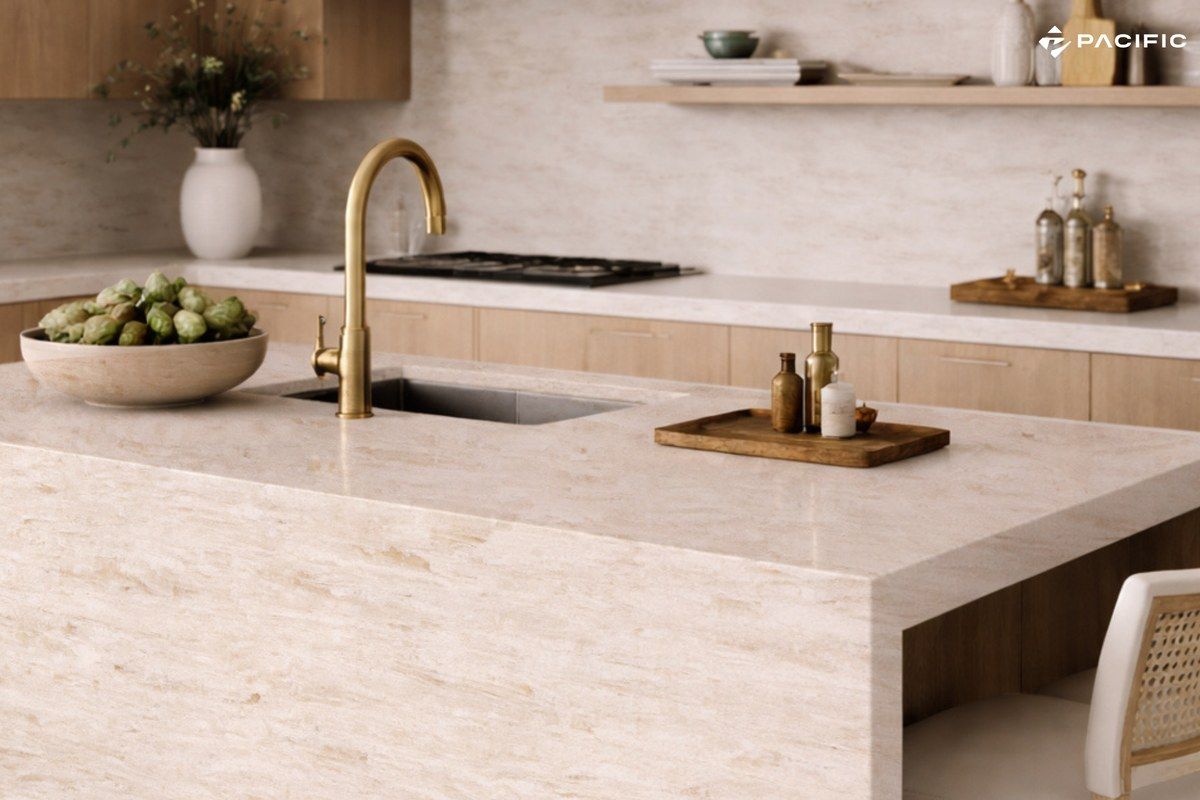
Quartz countertops suit nearly every surface a customer or barista touches:
- The espresso bar and back bar, where drips and grounds land all day.
- The order and payment counter, the first thing every customer sees.
- The pick-up counter, where cups sit waiting and rings build up.
- The condiment and self-service station, with its sugar, milk and stirrers.
- Pastry and food display counters, where quartz is safe for direct food contact.
- Table tops and high bar tables, which are wiped between every customer.
Because each piece is cut from a quartz slab to size, the counter, bar and tables can all share one design, which helps a café look finished and on-brand.
Tips for the espresso station
The espresso station is the hardest-working part of any coffee shop counter. A few simple habits keep the quartz there looking new:
- Use a rubber tamping mat. It protects both the counter and the portafilter, and baristas tamp better on it.
- Keep a knock box for spent grounds, rather than knocking the portafilter on the counter edge.
- Rest hot milk jugs and portafilters on a mat or the drip tray rather than straight on the stone.
- Wipe the area under and around the grinder through the day, so fine grounds don't build up in corners.
- Leave a small gap behind the machine for air, which also makes the wall behind it easier to clean.
Choosing a colour and finish
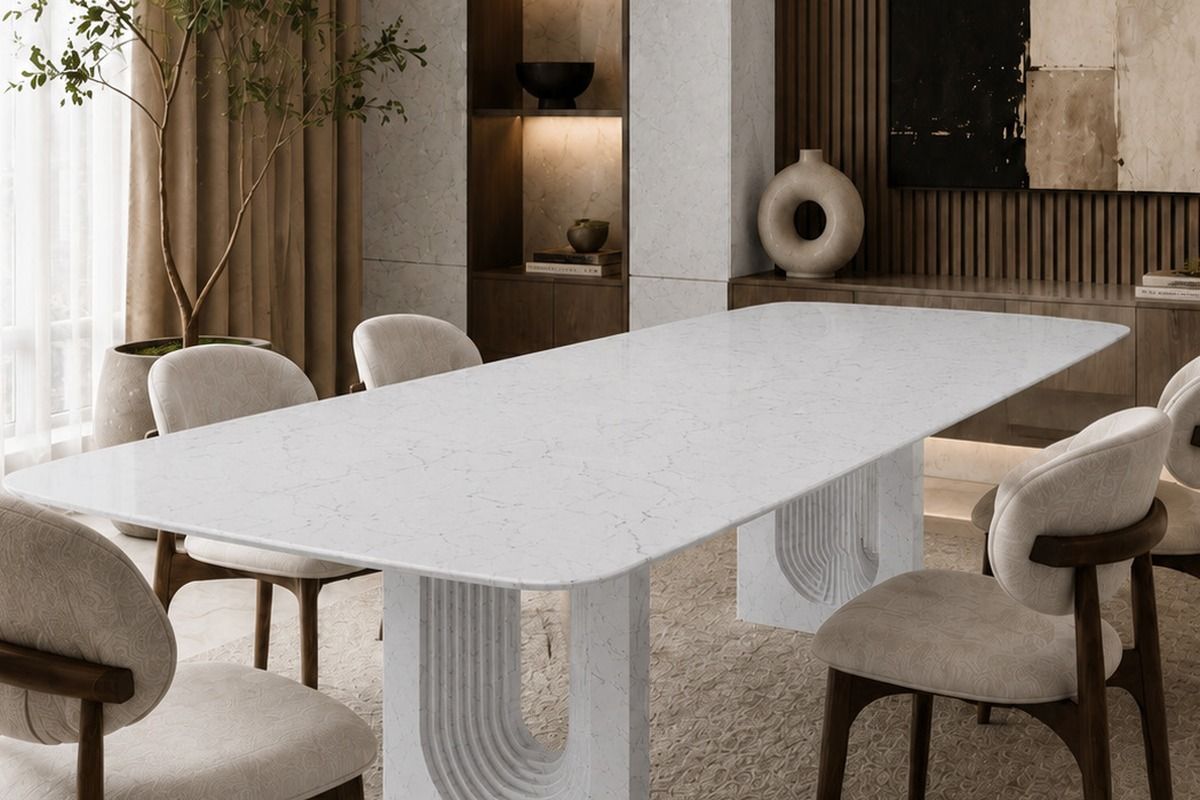
Fittingly, two Pacific Surfaces designs are named after coffee. Pacific Surfaces' Cappuccino and Latte Luxe have soft beige and caramel tones that suit wood, brass and warm lighting, and they hide drips and dust between wipes.
White quartz gives a bright, clean café. Drips show more on white until they are wiped, but they wipe away without leaving a mark. Marble quartz gives the classic marble café look that white marble is known for, without the cup rings and etch marks real marble collects.
For the finish, matte and suede hide cup rings and water spots well, which helps on the pick-up counter and on tables. Polished suits the front of the counter and the back bar, where you want the colour and veining to catch the light.
A five-minute closing routine
At the end of the day, quartz needs very little:
- Clear the counter and brush away grounds and crumbs.
- Wipe every surface with warm water and a pH-neutral cleaner.
- Lift sticky syrup with a cloth soaked in warm water.
- Dry polished areas to prevent water spots.
- Skip bleach, oven cleaner and scouring pads, which can dull the surface over time.
Our quartz countertop maintenance tips cover stubborn marks.
Frequently asked questions
Does coffee stain quartz?
No. Quartz is non-porous, so coffee stays on the surface and wipes away, even after it dries.
Can I put a hot coffee cup on quartz?
Yes. A cup of hot coffee is fine on quartz. For very hot items, such as a milk jug straight from the steam wand or a pan off the stove, use a mat or trivet.
Does a quartz café counter need sealing?
No. Quartz never needs sealing, so there is no downtime for maintenance.
Is quartz safe for food in a café?
Yes. Pacific Surfaces quartz is certified to NSF/ANSI 51 for food contact, so food can be served and prepared directly on it.
Plan your coffee shop counter
From a single neighbourhood café to a chain of outlets, Pacific Surfaces can help you choose a quartz design that suits your brand and stays clean through every service. As a quartz company that makes its own slabs, we work directly with café owners, designers and quartz slab suppliers, and can match the same design across every outlet.
For more on fitting out restaurants and cafés, read our HoReCa guide to quartz countertops. To see the designs, find a dealer near you or request samples.