Stone for kitchen slab: granite, quartz, marble or sintered stone?
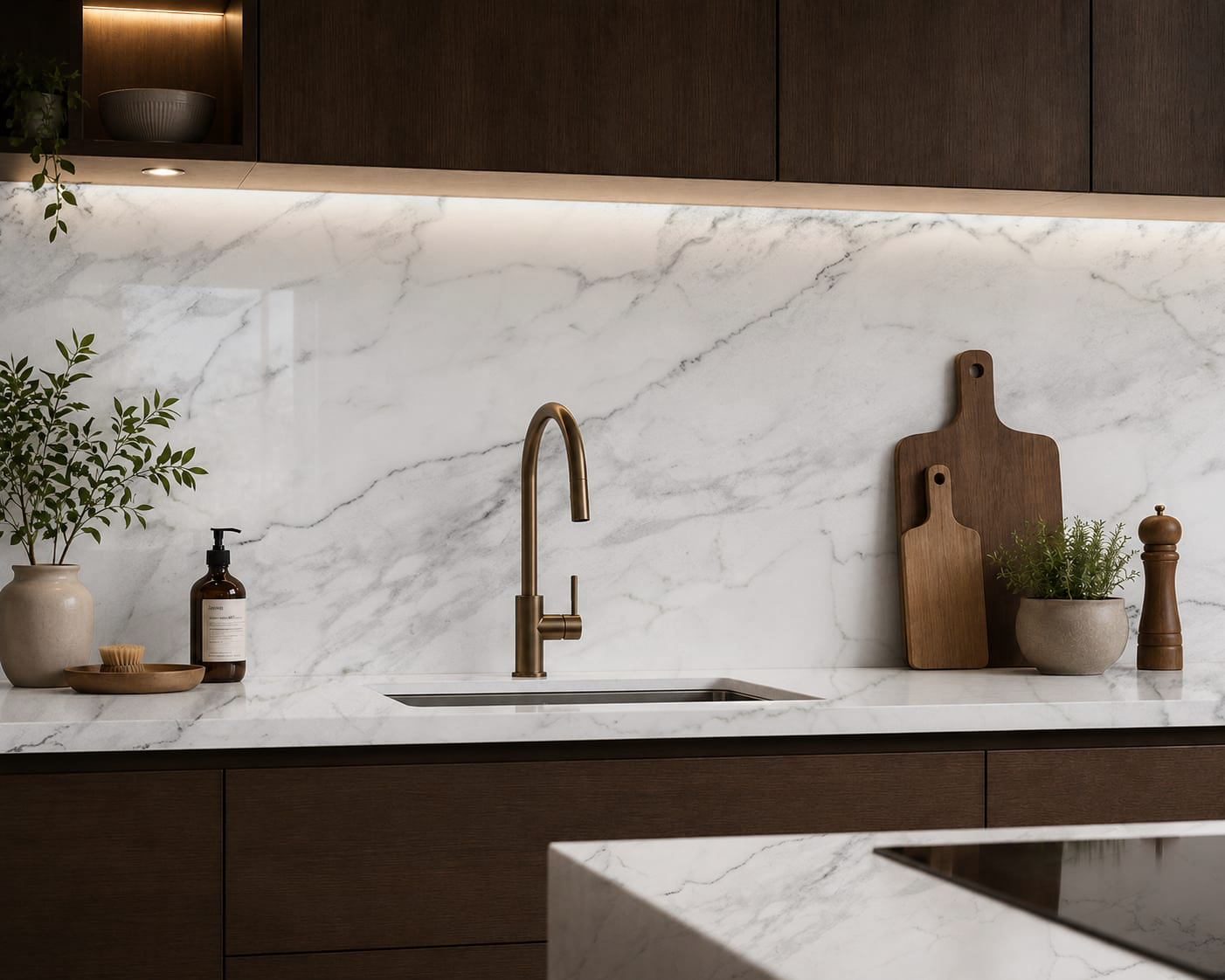
Choosing the stone for your kitchen slab is one of the biggest decisions in a new kitchen. It is the surface you cook on, clean every day and look at every time you walk in, and it will probably outlast the cabinets around it. Four materials come up again and again: granite, quartz, marble and sintered stone.
Each has real strengths. This guide compares them on what matters in an Indian kitchen, so you can pick the right one for the way you cook.
What an Indian kitchen slab has to handle
An Indian kitchen platform works hard. Turmeric, oil, tamarind and lemon land on it every day. Heavy kadais and pressure cookers get set down on it. Steel vessels slide across it. And it gets wiped down several times a day. A good kitchen slab has to resist stains, scratches, heat and acids, without needing constant care.
Quartz
Quartz stone is an engineered surface made mostly of natural quartz, bound with a little resin and pressed under vacuum into a dense slab.
Where it shines:
- It doesn't stain. The surface has no pores, so turmeric, oil and tamarind wipe away. Pacific Surfaces quartz is rated "not affected" for stain resistance (ASTM C1378).
- It never needs sealing.
- It resists scratches from everyday cooking, with a Mohs hardness of 6.5 to 7.5.
- It is food safe. Is a quartz countertop safe to cook on? Pacific Surfaces quartz is certified to NSF/ANSI 51 for food contact.
- It gives you a consistent pattern across the whole kitchen, including white quartz and marble quartz designs that look like stone but behave far better.
What to watch: quartz is best kept away from direct, intense heat, so use a trivet for pans straight off the flame. It also isn't suited to open-air kitchens, where strong sunlight can fade it over time.
Granite
Granite is natural stone, quarried and cut into slabs. Stone granite has been the default kitchen slab in India for decades, and for good reason.
Where it shines:
- It handles heat very well, so a hot pan set down for a moment is unlikely to harm it.
- It is very hard and resists scratches.
- It is fine outdoors, because natural stone doesn't fade in the sun.
- Every kitchen granite slab is one of a kind, with natural patterns and colours.
What to watch: granite is slightly porous, so it needs sealing when fitted and resealing every year or two to keep oil and turmeric from soaking in. Patterns vary from slab to slab, which makes matching a long kitchen platform harder, and joints are more visible on busy designs.
Marble
Nothing quite matches the look of real marble. Italian marble and white marble such as statuario marble, with its bright white base and bold grey veining, have been used in grand homes for centuries.
Where it shines:
- Its beauty is unique, and no two slabs are the same.
- It stays cool to the touch, which pastry chefs like for rolling dough.
What to watch: marble is soft and porous, and it reacts with acids. In an Indian kitchen, that matters. Lemon, tamarind, tomato and vinegar etch dull marks into the polish, turmeric and oil can stain it, and steel vessels can scratch it. It needs sealing and careful daily care. Many people love marble for a kitchen in pictures, then find it hard to keep looking new.
If you want the marble look, marble quartz gives you the same white base and veining on a surface that doesn't stain, etch or need sealing. Our guide to marble quartz shows the designs.
Sintered stone
Sintered stone is a newer material, made by fusing natural minerals at very high heat and pressure, without resin. It is closely related to large-format porcelain slabs.
Where it shines:
- It handles high heat very well.
- It resists UV light, so it works outdoors.
- It is non-porous and resists stains.
What to watch: sintered stone is usually made in thinner slabs and is more brittle at the edges, so it can chip if a heavy pot knocks the edge or a corner. On many products, the pattern is printed on the surface rather than running through the slab, so a chip or a cut edge can show a plain body underneath. It is also harder to cut, so it needs a fabricator with experience in the material.
How they compare
- Stains: quartz and sintered stone resist stains best. Granite resists them once sealed. Marble stains and etches easily.
- Heat: sintered stone and granite handle heat best. Quartz needs a trivet for pans straight off the flame. Marble can mark.
- Scratches: quartz and granite resist everyday scratches well. Sintered stone is hard on the surface but can chip at edges. Marble scratches easily.
- Upkeep: quartz and sintered stone need no sealing. Granite needs resealing every year or two. Marble needs regular sealing and careful cleaning.
- Looks: marble and granite are natural and one of a kind. Quartz gives a consistent pattern, including marble looks. Sintered stone offers many printed designs.
- Outdoors: granite and sintered stone. Quartz and marble are best kept indoors.
For a closer look at the two most popular choices, read our guide to quartz vs granite for your kitchen.
Which stone should you choose?
There is no single best stone for every kitchen, but for most Indian homes the choice comes down to two.
Choose quartz if you want a kitchen slab that stays clean with almost no effort. It is the best fit for daily Indian cooking, with turmeric, oil and tamarind on the counter, and it gives you the marble look without the worry. Quartz kitchen countertops also let you match the platform, island and backsplash exactly.
Choose granite if you want natural stone, cook with a lot of direct heat, or are building an outdoor kitchen. Granite kitchen countertops are tough and heat tolerant, and they will last for decades with occasional sealing.
Choose marble only if you love its look more than anything else and are happy to care for it, or use it where there is less cooking, such as a bar or a display counter.
Choose sintered stone if you need a surface that takes very high heat or sits in full sun, and you have a fabricator experienced in cutting it.
Many homes mix materials. A quartz kitchen platform inside, a granite counter on the terrace and quartz in the bathrooms is a combination we see often. Whatever you choose, plan the kitchen platform design around the stone, from the slab size and thickness to the edge and the sink.
Talk to us
Pacific Surfaces makes quartz at our plant in Hosur and supplies natural granite, so we can help you compare both side by side. See our quartz collection and granite collection, read our quartz countertop maintenance tips, or find a dealer near you to see full slabs in person.