Quartz wall cladding for showers and wet areas: a complete guide
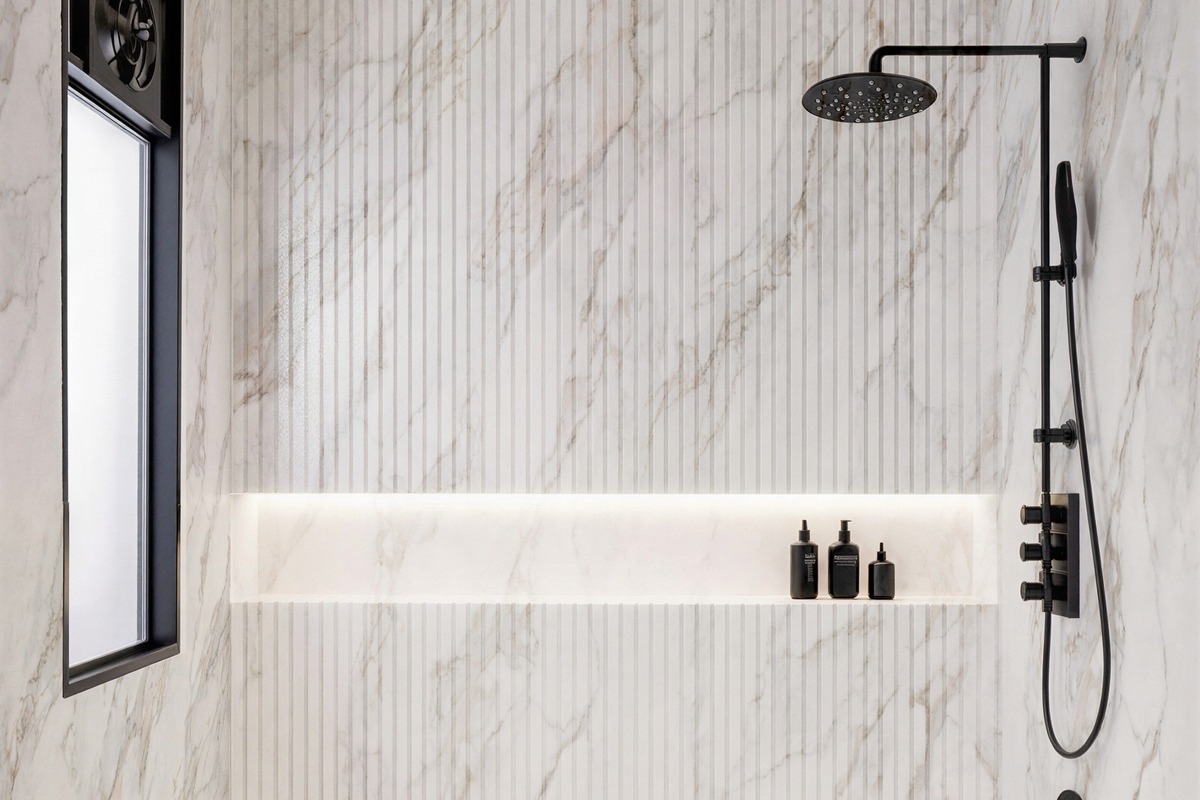
Tiled showers look good on the day they are finished. Within a year or two, the grout lines start to darken, soap scum settles into them, and the corners need scrubbing. Quartz wall cladding solves that problem by covering the shower walls in large, smooth slabs with almost no joints.
This guide covers why quartz suits wet areas, where it works best, how thick it should be, how it is fitted, and how to keep it clean.
Why quartz suits a shower
A shower wall is wet every day and steamy for long stretches. The surface has to keep water out, resist stains from soaps and hair products, and stay easy to clean. Quartz stone handles all three.
- It doesn't absorb water. Pacific Surfaces quartz is tested at below 0.03% water absorption (EN 14617-1), so water, soap and shampoo stay on the surface.
- It doesn't stain. Stain resistance is rated "not affected" (ASTM C1378), so soap marks and shampoo spills wipe away.
- It needs no sealing. Unlike marble or natural stone, quartz never needs a sealer to keep water out.
- It has very few joints. Large slabs mean a shower wall can have just a handful of seams instead of hundreds of grout lines, and fewer joints means fewer places for mould to grow.
Is a quartz countertop safe in a bathroom? Yes. The same non-porous surface that makes quartz countertops hygienic in a kitchen keeps a bathroom easy to clean, and Pacific Surfaces quartz holds Greenguard Gold certification for low indoor emissions, which matters in a small, warm, closed room.
Where quartz works in a wet area
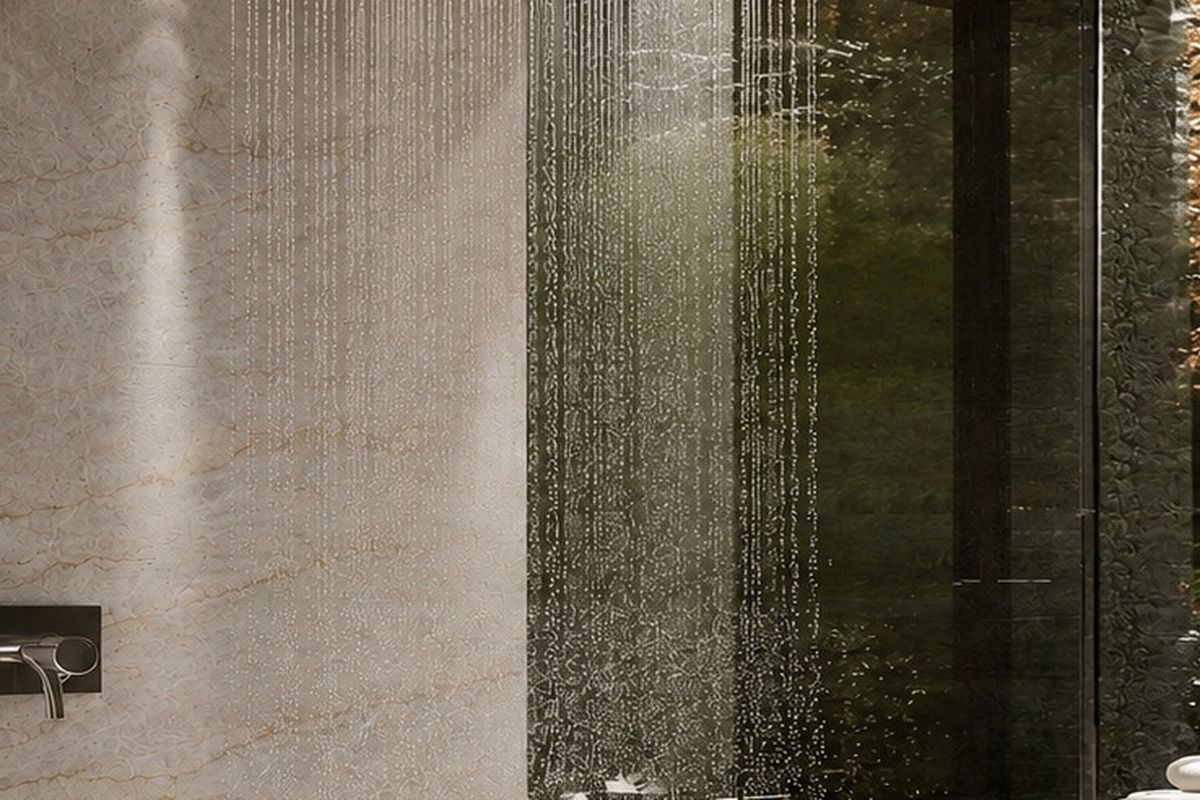
Quartz wall cladding works on every vertical surface in a bathroom:
- Shower walls, from floor to ceiling, with no grout lines to clean.
- Shower niches and shelves, cut from the same slab so they match the wall.
- Shower benches and ledges.
- Bathtub surrounds and tub decks.
- The wall behind the vanity, carried straight up from a quartz bathroom vanity top.
- Thresholds and kerbs at the shower entry.
Using the same quartz slab for the vanity, the walls and the shower gives the whole bathroom one continuous look.
Which thickness for walls
For shower walls and wall cladding, 12 mm quartz is the usual choice. It is light enough to fix securely to a wall without loading the structure, and thick enough to stay flat and strong. Use 20 mm where the quartz has to carry weight or take knocks: shower benches, ledges, niche shelves, kerbs and thresholds. Our guide to quartz countertop thickness explains the options.
Slab size and joints
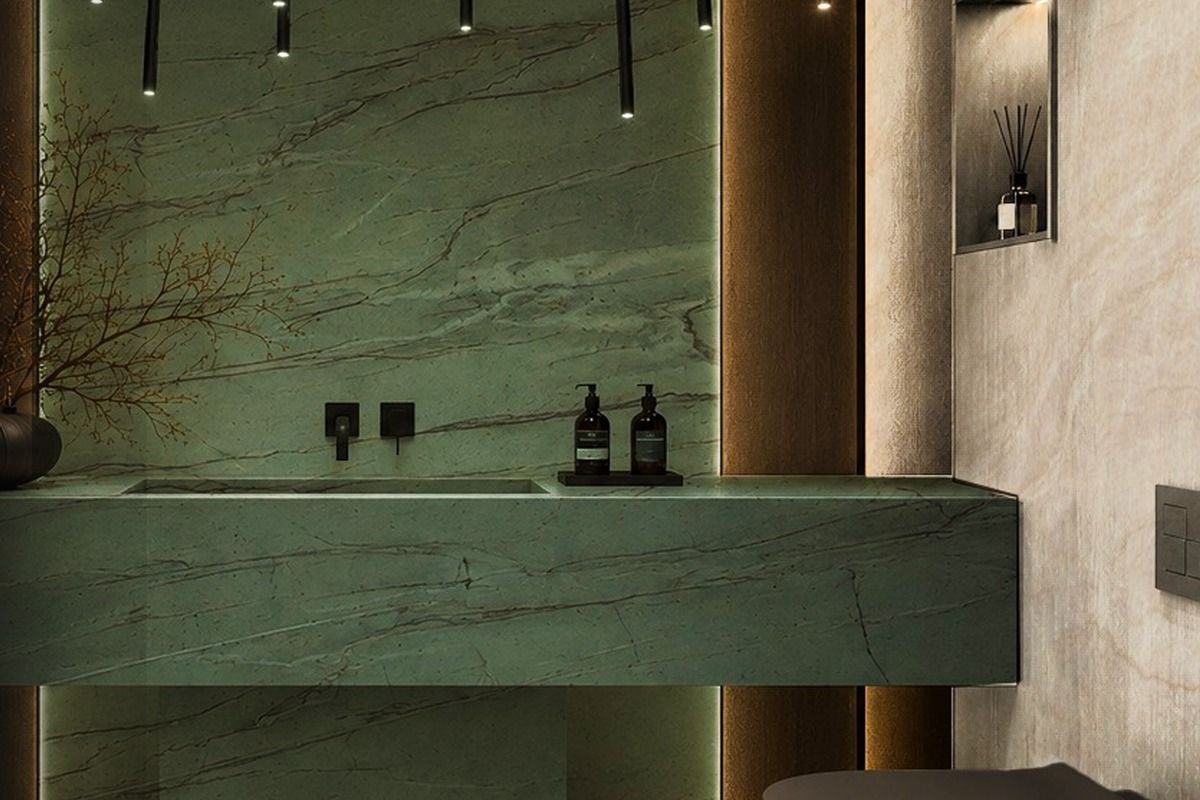
The fewer the joints, the cleaner the shower. Quartz slab size matters here more than anywhere else. A super jumbo quartz slab from Pacific Surfaces measures about 3.5 m by 2 m, so a standard shower wall can often be covered with one or two pieces. On a veined design, a large slab also lets the veining run unbroken from floor to ceiling, as on this green bathroom wall.
Where joints are needed, a good fabricator places them at the corners or lines them up with the shower glass, and fills them with a colour-matched silicone so they almost disappear.
How quartz wall cladding is fitted
Quartz wall cladding should always be fitted by an experienced fabricator. The basic steps are:
- Waterproof first. Quartz keeps water out of the slab, but the wall behind still needs a proper waterproofing membrane, the same as for tiles.
- Get the wall flat. The slabs are fixed to a flat, level, sound wall, so uneven plaster is corrected before fitting.
- Fix with the right adhesive. The fabricator uses an adhesive suited to stone and wet areas, with mechanical support for tall panels where needed.
- Cut the openings. Holes for the shower valve, mixer and niche are measured and cut before the slab goes up.
Seal the joints. Joints and edges are finished with a mould-resistant, colour-matched silicone.
A note on shower floors and steam rooms
Quartz is ideal on walls, benches and ledges. For the shower floor, polished quartz is too slippery underfoot when wet, so ask about a textured finish and its slip resistance, or choose a dedicated anti-slip floor. For steam rooms and saunas, where heat stays high for long periods, check with us before specifying quartz.
Colours and finishes
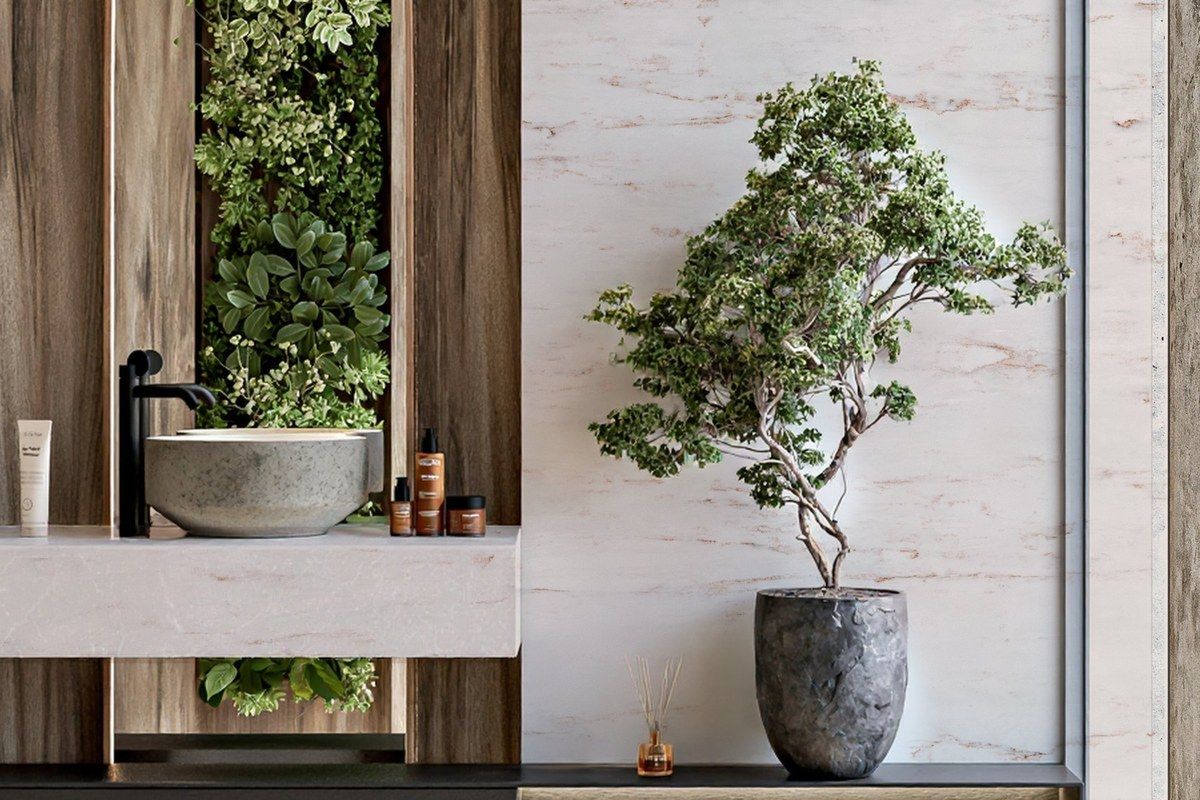
Shower walls are large, so the colour sets the mood of the whole bathroom.
White quartz keeps a small bathroom bright and makes it feel bigger. Veined marble quartz gives the look of a marble shower without the sealing, etching and staining that real marble brings to a wet room. Warm creams and soft blush tones, like the French Vanilla wall above, suit bathrooms with wood and brass. Deep greens, greys and blacks make a strong statement in a powder room or hotel bathroom.
For the finish, matte and suede hide water spots and soap marks better than polished, which helps on a shower wall that is wet every day. Polished quartz looks crisp and bright, and suits the wall behind the vanity, where it gets less water.
Caring for quartz shower walls
The quartz countertop maintenance tips for a kitchen work just as well in the shower:
- Squeegee or wipe the walls after showering to stop water spots and soap build-up.
- Clean once a week with a mild, pH-neutral cleaner and a soft cloth or sponge.
- Avoid bleach, strong acids, limescale removers and abrasive pads, which can dull the surface.
- If hard water leaves marks, use a cleaner made for quartz or stone, then rinse with clean water and dry.
- Check the silicone joints every year or two and replace any that discolour.
Our care guide covers stubborn marks in more detail.
Plan your quartz bathroom
Quartz wall cladding gives a shower that is easier to clean, has fewer joints, and stays simple to keep looking new for years. Pair it with a matching quartz bathroom vanity top, and the whole bathroom reads as one surface. Our guide to quartz bathroom vanity tops covers the vanity side, and our low silica quartz range makes on-site cutting safer for the fitters.
As a quartz company and one of the quartz slab manufacturers in India that presses its own slabs in Hosur, Pacific Surfaces can supply the walls, vanity and shower details from the same quartz slab. To see the range, find a dealer near you or get in touch with us.