Quartz for Vastu-Compliant Indian Homes, What Colours and Placements Work
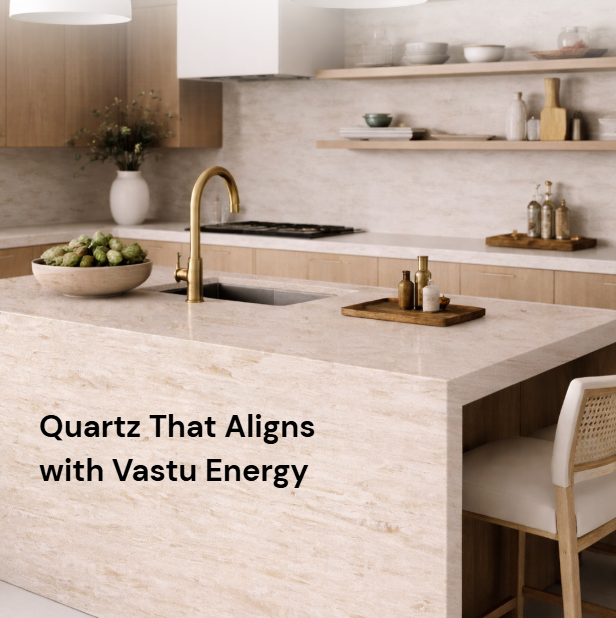
Vastu Shastra continues to be a decisive factor in Indian home design—especially in kitchens and bathrooms where materials, colours, and orientation are believed to influence energy flow. While quartz is often chosen for durability and aesthetics, aligning it with Vastu principles can become a strong differentiator for homeowners and designers alike.
Does Stone Surface Colour Affect Vastu?
Yes, according to Vastu principles, colours carry elemental associations (fire, water, earth, air, space) that influence the energy balance of a space. Since countertops and wall claddings occupy significant visual area, their colour can subtly impact the overall Vastu alignment of a kitchen or bathroom.
Quartz, being available in a wide spectrum from warm beiges to cool greys offers flexibility to align design with Vastu without compromising on performance.
Vastu-Recommended Kitchen Directions and Surface Colours
In Vastu, kitchen placement is ideally linked to the fire element, making direction and colour selection critical:
- South-East (Agni corner) – Ideal kitchen placement
- Best colours: warm tones like beige, cream, light brown, soft red undertones
- Quartz recommendation: subtle veined beige or warm white surfaces
- North-West – Acceptable alternative
- Best colours: light grey, off-white, soft metallic tones
- Quartz recommendation: neutral greys or white with fine patterns
- North or East – Less ideal but common in modern homes
- Best colours: light yellow, pale green, fresh whites
- Quartz recommendation: clean whites, soft pastel-toned quartz
Best Quartz Colours for North, East, and South-East Kitchens
To make this practical, here’s how quartz selections align with direction:
- South-East Kitchens
Go for warm quartz tones—ivory, sand, or beige with gentle movement. These enhance the fire element without overpowering the space. - East-Facing Kitchens
Opt for light, fresh colours like white or cream. These reflect morning light and support positive energy flow. - North-Facing Kitchens
Choose soft neutrals or light greens in quartz patterns. Avoid overly dark or heavy tones that may suppress energy.
Colours to Avoid (and What to Use Instead)
Some colours are traditionally discouraged in Vastu-aligned kitchens:
- Black or very dark tones → can absorb energy
✔ Replace with: dark-veined white quartz or mid-tone greys - Deep blues → associated with water, conflicting with fire
✔ Replace with: soft greys or neutral whites - Overly bold reds → can create imbalance
✔ Replace with: muted warm tones like terracotta-beige quartz
Quartz makes it easier to “balance” these restrictions by offering toned-down, elegant variations of otherwise strong colours.
Bathroom Vastu: Stone Selection Tips
Bathrooms are associated with the water element, so the material palette should reflect calmness and cleanliness:
- Ideal colours: white, light grey, pastel blue, soft green
- Avoid: very dark, heavy surfaces in small bathrooms
- Quartz advantage: non-porous, hygienic, and available in water-friendly tones
For flooring or wall cladding, lighter quartz shades can visually expand the space while aligning with Vastu recommendations.
Pacific Surfaces — Vastu-Friendly Collection Guide
For brands and homeowners looking to integrate Vastu into modern design, quartz offers unmatched adaptability.
Pacific Surfaces’ 200+ colour range includes:
- Warm-toned quartz ideal for south-east kitchens
- Neutral whites and greys suited for north and west orientations
- Soft pastel-inspired surfaces for bathrooms and east-facing spaces
This allows designers to meet both functional performance requirements (non-porous, low maintenance, durable) and cultural preferences like Vastu compliance—without compromise.
Vastu compliance doesn’t mean limiting design choices, it means making informed ones. Quartz surfaces provide the flexibility to align with directional energy principles while maintaining a premium, contemporary aesthetic.
For Indian homeowners, this combination of science-backed material performance + traditional design alignment is increasingly becoming the standard rather than the exception.