Engineered stone vs natural stone: what's the difference?
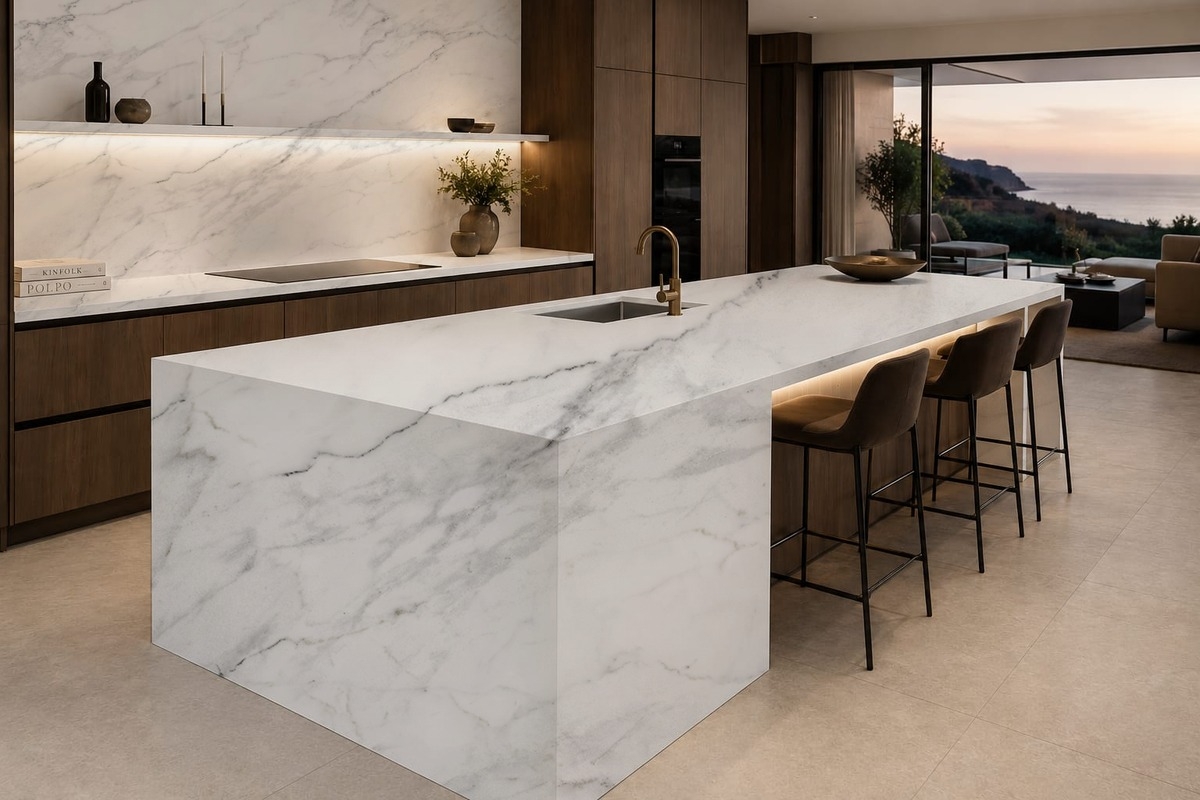
Walk into any stone showroom and you will see two kinds of slab side by side. Some were cut straight from a quarry. Others were made in a factory from crushed stone. They can look surprisingly alike, but they are made differently, and they behave differently once they are in your home.
This guide explains what natural stone and engineered stone are, how they compare, and where each one fits best.
What natural stone is
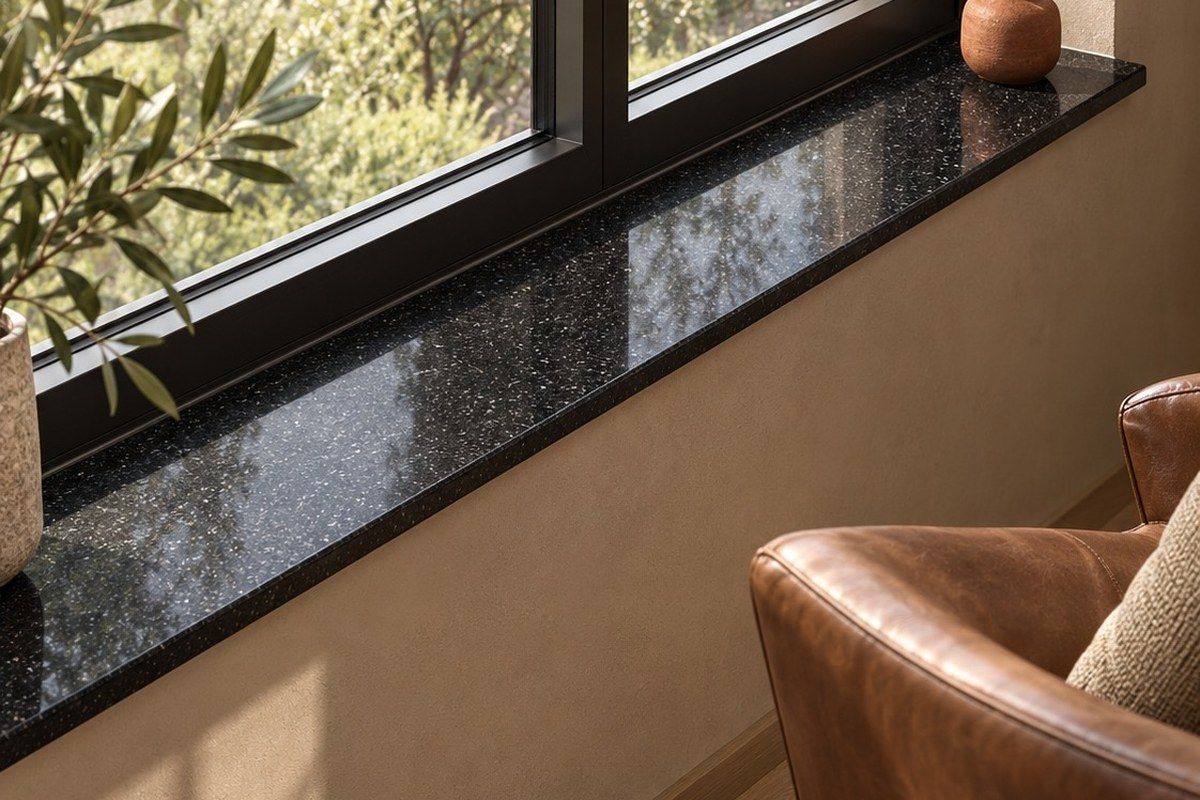
Natural stone is rock that formed in the earth over millions of years. It is quarried in large blocks, sawn into slabs, then polished. Nothing is added; what you see is what nature made.
The three you will meet most often for counters and floors are:
- Granite, which formed as molten rock cooled slowly deep underground. Stone granite is a mix of minerals such as quartz, feldspar and mica, which give it its flecks and speckles. It is hard and tough, and it has been the default kitchen granite slab in India for decades.
- Marble, which formed when limestone was transformed by heat and pressure. Italian marble and white marble, with their soft white base and flowing veins, are prized for their beauty, but marble is much softer than granite and reacts with acids.
- Quartzite, which formed from sandstone under heat and pressure. It is very hard and often looks like marble.
Because it is natural, every slab is one of a kind. Colour, veining and even hardness can vary from block to block, and sometimes within a single slab.
What engineered stone is

Engineered stone is made by people, from natural minerals. The most common type is quartz. Quartz stone is mostly crushed natural quartz, mixed with a small amount of resin to bind it and pigments for colour. The mix is pressed under vacuum and vibration, then cured into a dense slab. This process, called Bretonstone, was developed by the Italian company Breton, and it is what Pacific Surfaces uses at our plant in Hosur.
Other engineered surfaces include sintered stone, where minerals are fused at very high heat without resin, and hybrid surfaces such as our Ecosurfaces range, which blends premium minerals, quartz and recycled glass to make a low silica quartz surface.
Because it is made to a recipe, engineered stone is consistent. A design looks the same from slab to slab, and the surface is non-porous all the way through.
The key differences
Looks
Natural stone is unique. No two slabs of granite or marble are the same, and many people love that. The flip side is that it is harder to match slabs across a long kitchen platform, and what you see in a sample may differ from the slab that arrives.
Engineered stone is consistent. A quartz slab matches the sample and the next slab in the batch, so joints line up and large projects look uniform. Modern engineered stone can also copy natural looks closely. Marble quartz designs, for example, give the look of white marble without its weaknesses.
Stains
This is the biggest practical difference. Natural stone has tiny pores. Granite is only slightly porous and resists most stains once sealed. Marble is more porous and also reacts with acids, so lemon, tamarind and vinegar can etch dull marks into it.
Engineered quartz is non-porous. Pacific Surfaces quartz absorbs less than 0.03% water (EN 14617-1) and is rated "not affected" for stain resistance (ASTM C1378). Turmeric, oil and wine sit on the surface and wipe away.
Scratches and chips
Granite and quartzite are very hard and resist scratches well. Quartz is also hard, at 6.5 to 7.5 on the Mohs scale, and handles everyday kitchen use. Marble is soft and scratches easily.
On chips, engineered stone is generally more even, because it has no natural fissures. Natural stone can have hidden weak lines that a fabricator works around.
Heat
Natural stone handles heat better. Granite can take a hot pan set down for a moment. Quartz engineered stone countertops contain a small amount of resin, so they should be protected from direct, intense heat with a trivet.
Sun and outdoor use
Natural granite doesn't fade in sunlight, so it is the better choice outdoors. Resin-based engineered stone such as quartz can fade or yellow with long, direct sun, so it is best kept indoors.
Upkeep
Granite should be sealed when fitted and resealed every year or two. Marble needs sealing more often and gentle cleaning. Quartz needs no sealing at all, only a wipe with mild soap and water.
Safety
Is a quartz countertop safe in your home? Yes. A finished, installed counter of either kind is safe to live with. Pacific Surfaces quartz is certified to NSF/ANSI 51 for food contact and holds Greenguard Gold for low indoor emissions.
The safety question is about cutting, not living with stone. Most stone, natural and engineered, contains some crystalline silica, and cutting it without dust control creates harmful dust for fabricators. Standard quartz contains a high share of silica, which is why we make low silica quartz options in our Ecosurfaces range. Our guide to low silica quartz explains more.
Which should you choose?
Neither is better everywhere. Each wins in different places.
Choose engineered stone, such as quartz, for:
- Kitchen counters in daily use, where stains from turmeric, oil and tamarind are a constant risk. Quartz kitchen countertops stay clean with almost no effort.
- A marble look without the upkeep. Marble quartz gives the white base and veining of marble on a surface that doesn't stain or etch.
- Large projects that need every slab to match, such as long kitchen platforms, hotel bathrooms and offices.
- Bathroom vanities and shower walls, where a non-porous surface keeps cleaning simple.
Choose natural stone, such as granite, for:
- Outdoor kitchens, terraces and steps in full sun.
- Areas close to strong, direct heat.
- Homes where a one-of-a-kind natural pattern matters more than consistency. Granite kitchen countertops have a character no factory can copy exactly.
Choose marble mainly for low-use, decorative spaces, such as feature walls, flooring in formal rooms or a bathroom you don't use daily.
Many homes use both: quartz countertops in the kitchen and bathrooms, and granite outside. For a closer look at the two most popular choices, read our guide to quartz vs granite, or our guide to stone for kitchen slab, which also covers marble and sintered stone.
Engineered and natural stone from one supplier
Pacific Surfaces started in 2000 as Pacific Granites, working with natural stone, and has made engineered quartz since 2018. Today we press every quartz slab at our own Breton plant in Hosur and supply natural granite from our granite collection, so we can help you compare both honestly. Explore our quartz collection, find a dealer near you to see full slabs side by side, or get in touch with us.